The Psychology of Cinematic Comfort: Why We Return to Known Worlds
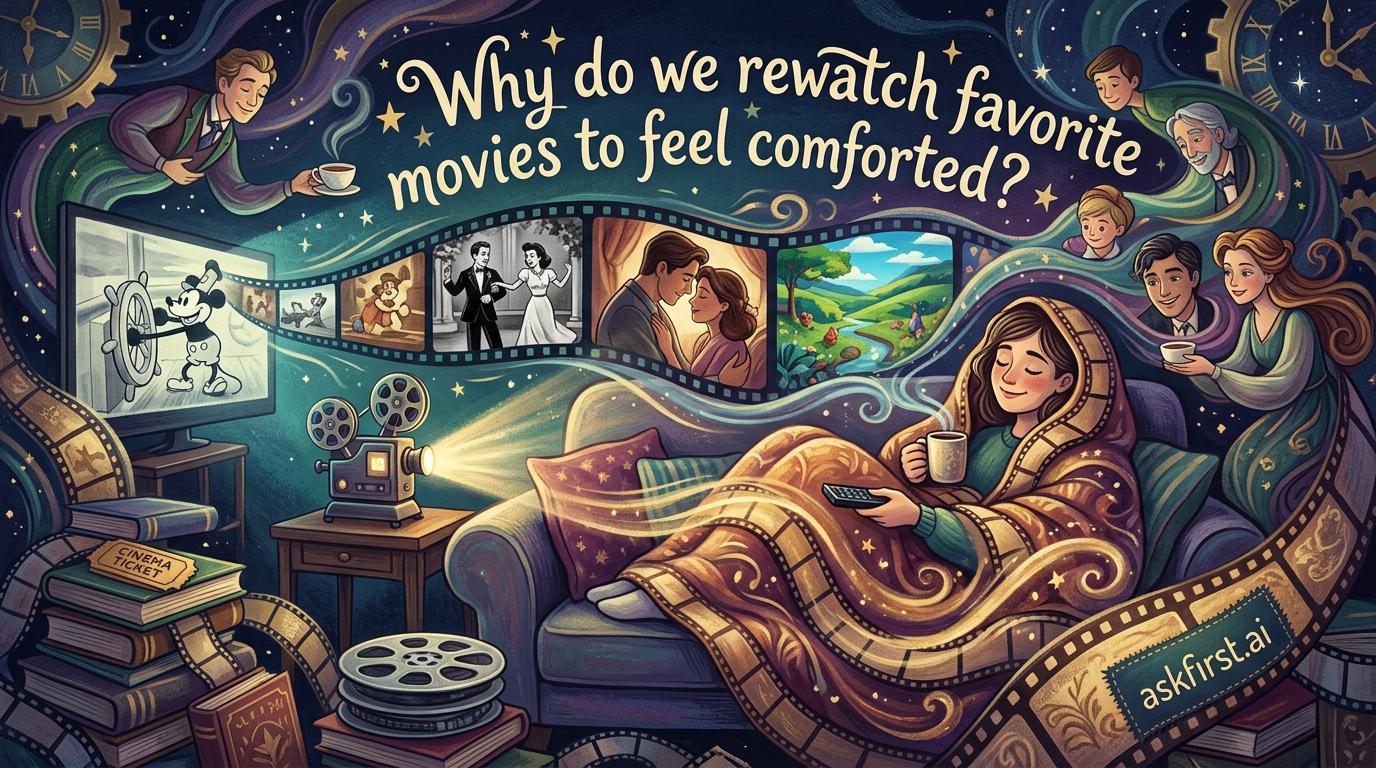
Human beings often exhibit a peculiar habit: despite having access to an infinite library of new content, they repeatedly return to the same handful of films. This phenomenon is often termed 'comfort watching,' and it is deeply rooted in evolutionary psychology and cognitive neurology. When life feels unpredictable or stressful, the brain seeks environments where outcomes are guaranteed.
The Cognitive Load of the Unknown
Processing new information requires significant mental energy. Every time a person watches a brand-new movie, the brain must dedicate resources to tracking plot twists, deciphering character motivations, and anticipating potential threats within the narrative. In contrast, rewatching a familiar movie allows the viewer to bypass these executive functions. This is known as 'cognitive offloading.' Because the brain knows exactly how the story ends and when the jokes arrive, it shifts into a state of relaxed vigilance, effectively conserving energy while receiving emotional nourishment.
The Emotional Regulation Effect
Rewatching a movie acts as a form of emotional regulation. When a person watches a film they love, they are essentially engaging in a 'safe simulation' of emotional experiences. This is sometimes called the 'parasocial interaction' benefit. By revisiting characters who feel like friends or allies, the viewer is reminded of familiar moral structures and resolutions. According to studies in personality psychology, individuals high in neuroticism or those experiencing high levels of transient stress are statistically more likely to engage in repetitive media consumption because it provides a reliable emotional reset button.
- The Predictability Heuristic: Humans are inherently loss-averse. Knowing exactly what happens at every turn eliminates the 'startle response' or the anxiety of a tragic ending, allowing the viewer to sit with the narrative arc in total security.
- Memory Anchoring: Favorite movies often act as time capsules. Returning to a film watched during formative years triggers autobiographical memory, allowing the viewer to reconnect with a version of themselves that feels more grounded or hopeful.
The Nostalgia Factor and Neural Pathways
Nostalgia is a powerful emotional tool. When rewatching a movie from one's past, the brain releases neurotransmitters like dopamine and serotonin associated with pleasant memories. This is not just 'living in the past'; it is a deliberate retrieval of a positive psychological state. The neural pathways associated with these films are reinforced through repetition, making the act of watching them as comforting as a familiar ritual or a warm physical environment.
The 'Safe Haven' Framework
Psychologists have proposed the 'Safe Haven' framework to explain why some media serve as better comfort objects than others. Key components include:
- Narrative Stability: The story must have a resolution that aligns with the viewer’s personal values.
- Character Loyalty: The protagonists must feel like extensions of the viewer’s social support network.
- Low-Stakes Tension: Even in high-action films, the comfort element relies on the viewer knowing that the 'bad' outcome is impossible.
Sociological Implications
In a world where societal demands can be overwhelming, favorite movies serve as a 'psychological shelter.' This behavior is a healthy, self-soothing mechanism. Rather than a sign of stagnation, the act of rewatching is a testament to the human desire for stability. It is a way to recalibrate one's internal state using the narrative tools that have proven successful in the past.
By engaging with stories we already know, we are not avoiding new information; we are curating our internal landscape to ensure we have the necessary emotional bandwidth to handle the challenges of tomorrow. It is a sophisticated, subconscious strategy for maintaining mental equilibrium, proving that sometimes, the most growth-oriented path is simply hitting 'play' on a classic.