The Architecture of Affection: Cultivating Intimacy Beyond Materialism
In an era increasingly defined by transactional relationships and the commodification of intimacy, the pursuit of genuine connection often becomes conflated with financial expenditure. We are conditioned to believe that love is best expressed through grand gestures, luxury gifts, or expensive dining experiences. However, the most profound bonds are forged in the crucible of time, attention, and intentionality—resources that are inherently non-monetary. To show love without money is not an exercise in austerity; it is an exercise in radical presence.
The Currency of Undivided Attention
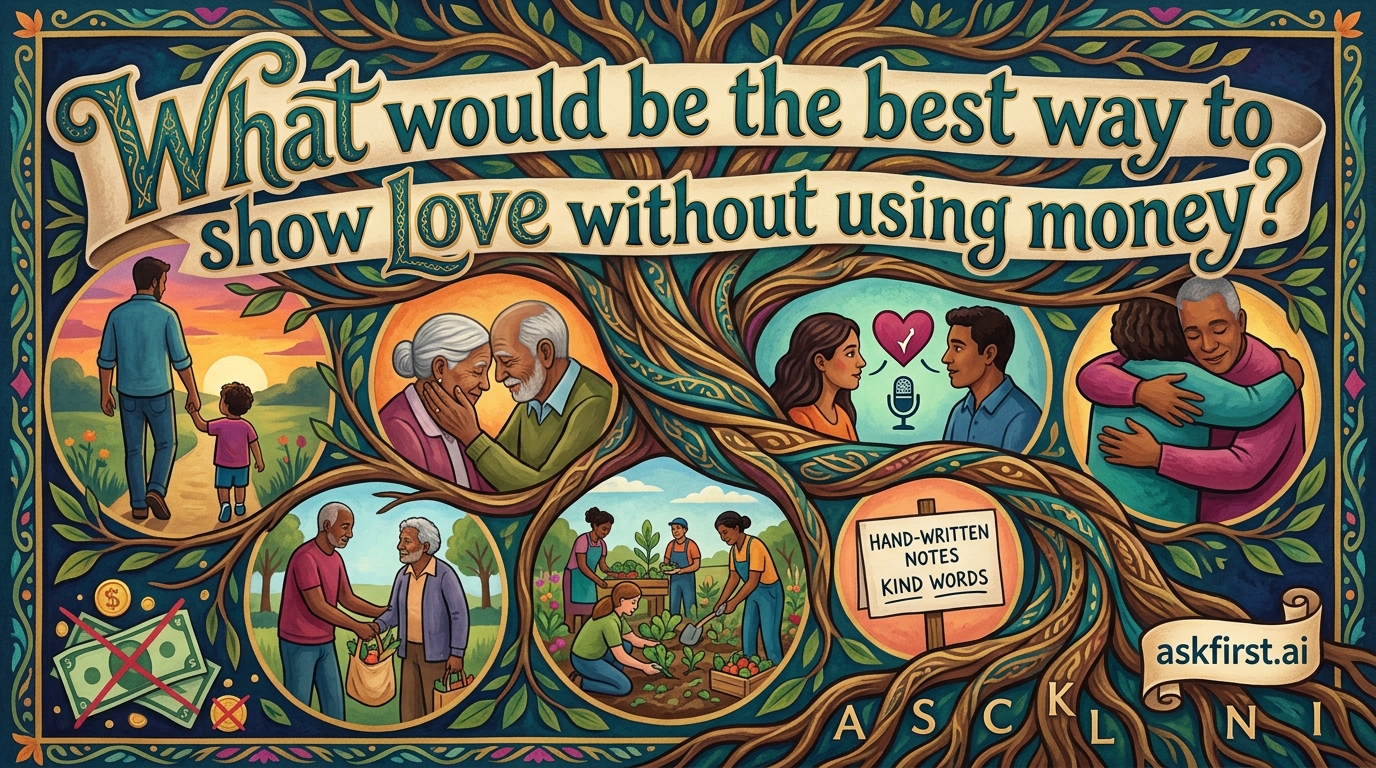
The most valuable asset any human being possesses is their focused attention. In his seminal work, The Road Less Traveled, psychiatrist M. Scott Peck defines love as "the will to extend one's self for the purpose of nurturing one's own or another's spiritual growth." This extension of self requires no capital, only the deliberate redirection of one’s mental and emotional energy.
To practice this, one must master the art of "active listening." This goes beyond merely hearing words; it involves observing the speaker’s body language, validating their emotions, and asking follow-up questions that demonstrate a deep curiosity about their inner world. When you silence your phone, lock eyes, and commit to listening without formulating a rebuttal or offering unsolicited advice, you are providing a sanctuary for the other person. This act of "holding space" confirms that their existence is significant enough to warrant the total suspension of your own agenda.
The Power of Acts of Service and Labor
Acts of service are perhaps the most tangible way to demonstrate care without spending a dime. The essence of this approach lies in identifying the "friction points" in a loved one’s life and systematically removing them.
Consider the philosophy of Gary Chapman, outlined in his foundational text, The 5 Love Languages. Chapman posits that for many, actions speak significantly louder than words. If your partner is overwhelmed by a chaotic living space, the act of deep-cleaning the kitchen or organizing their workspace is a profound declaration of love. It is not about the labor itself, but the message it conveys: "I see your burden, and I am choosing to share it with you."
Concrete examples of this include:
- Anticipatory Assistance: Preparing a meal using ingredients already in the pantry before they have to ask, or handling a chore they particularly despise.
- Skill Sharing: If you possess a skill—whether it is fixing a leaky faucet, teaching them a language, or proofreading a document—offering that expertise as a gift is a high-value gesture.
- The "Low-Stakes" Favor: Running a routine errand that saves them twenty minutes of their day. These micro-moments of relief accumulate to build a foundation of deep, reliable trust.
Crafting Experiences and Memory-Making
The psychological concept of the "hedonic treadmill" suggests that people quickly adapt to material goods, rendering the joy of a purchased gift ephemeral. Conversely, shared experiences create "episodic memories," which tend to grow more valuable over time.
You do not need a budget to create a memorable experience. Instead, focus on novelty and curation. Create a scavenger hunt that leads your loved one to places significant to your relationship—the bench where you first spoke, the park where you took your first walk. Write a series of letters to be opened at specific emotional intervals. Plan a "thematic evening" at home where you research a specific culture, curate a playlist, and discuss a book or film you both find intellectually stimulating.
As noted by philosopher Alain de Botton in The Course of Love, the real work of companionship is found in the "mundane" aspects of life. Elevating a simple walk in the woods into a deliberate exploration of nature, or spending an evening reading poetry aloud to one another, creates a sense of intimacy that money cannot manufacture.
Vulnerability and Emotional Stewardship
Perhaps the most challenging and rewarding way to show love without money is through radical vulnerability. In her extensive research on human connection, Brené Brown, author of Daring Greatly, emphasizes that vulnerability is the birthplace of innovation, creativity, and change. To be truly known is to be truly loved.
Sharing your fears, your failures, and your aspirations—things you would never tell a stranger—is a profound gift. It invites the other person into the inner sanctum of your psyche. When you trust someone with your weaknesses, you are telling them that you value their judgment and their presence above your own need for a curated, invulnerable image. This "emotional stewardship" requires courage, but it creates a bond that is impervious to economic fluctuations.
Conclusion: The Philosophy of Presence
To express love without money is to shift one's focus from the "having" to the "being." It requires a departure from the consumerist mindset that equates value with price tags. By prioritizing undivided attention, performing acts of service that alleviate stress, curating shared experiences, and practicing radical vulnerability, you construct a relationship built on the only currency that truly matters: human investment.
The greatest gift you can ever give another person is the evidence of your commitment to their well-being, demonstrated through the quiet, consistent, and deliberate use of your time. In the final analysis, love is not a commodity to be bought; it is a discipline to be practiced, one moment of presence at a time.