The Psychology of Minimalist Wealth
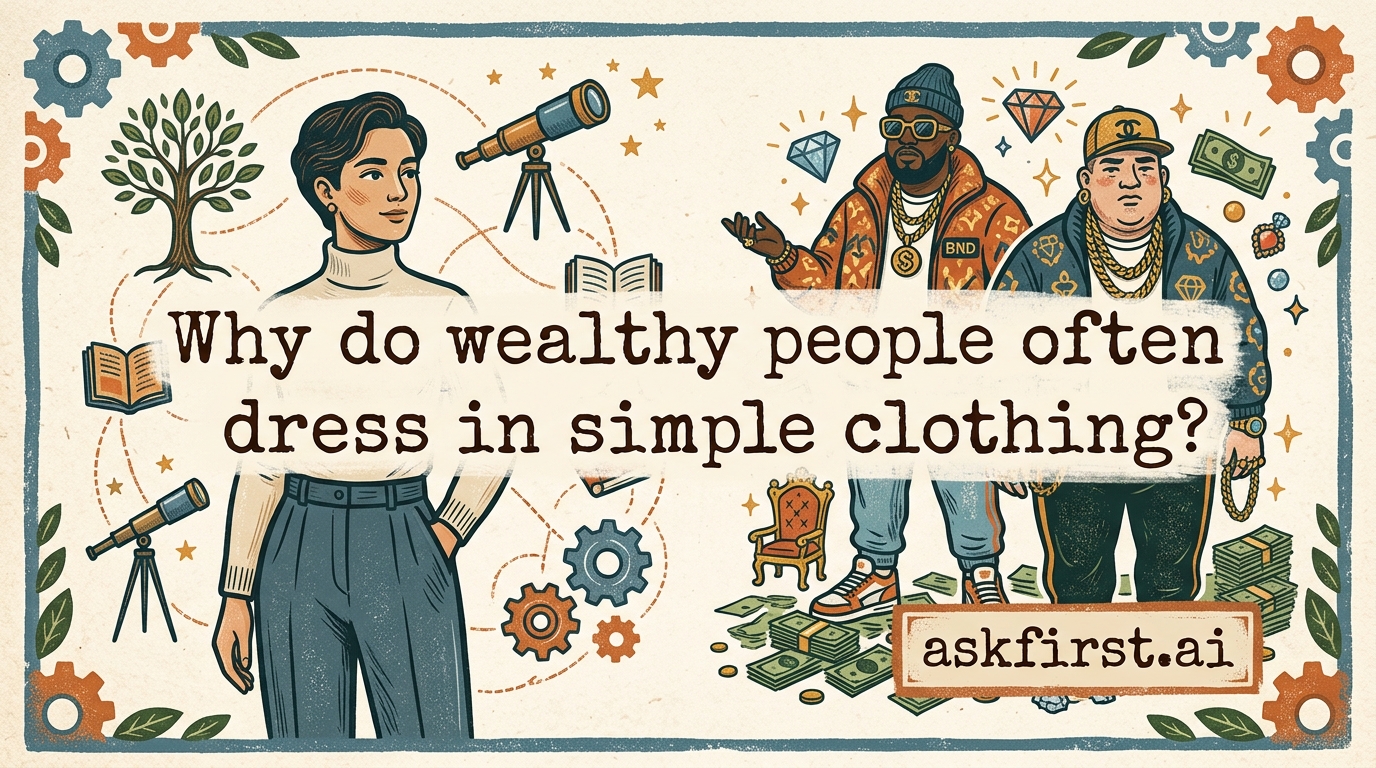
In the modern era, the perception of wealth has undergone a paradigm shift. While the stereotypical image of extreme affluence once involved flamboyant displays of gold, oversized logos, and excessive embellishment, the contemporary ultra-high-net-worth individual often gravitates toward a style known as 'quiet luxury' or 'stealth wealth.' This minimalist aesthetic is not merely a fashion choice; it is a calculated psychological strategy designed to optimize cognitive resources, establish social signaling, and project an image of effortless authority.
Cognitive Load and Decision Fatigue
One of the primary drivers behind the adoption of simple, uniform-like clothing among the elite is the mitigation of decision fatigue. High-achieving individuals frequently occupy positions where they must make thousands of high-stakes decisions every day. According to studies on willpower and executive function, the brain has a finite capacity for decision-making. By automating mundane daily routines—such as choosing an outfit—wealthy individuals preserve their cognitive bandwidth for complex problem-solving and strategic planning. This concept, championed by figures like Steve Jobs and Mark Zuckerberg, suggests that wearing the same style of clothing every day is an investment in mental productivity. By removing the friction of fashion choices, the mind remains sharp and focused on goals that carry significantly higher utility.
The Shift from Explicit to Implicit Signaling
Sociological research into social signaling suggests that luxury consumption has shifted from explicit to implicit markers. In the past, wearing logos served as a 'conspicuous consumption' tactic to signal status to the masses. However, as luxury goods became more accessible through fast fashion and counterfeits, the signal became noisy and less effective. Today, the wealthiest individuals utilize what economists call 'signaling via subtlety.' They invest in garments made from exceptionally high-quality materials—such as cashmere, vicuña, or bespoke cotton—that are recognizable only to those within their own social stratum. This creates an exclusive social code: those in the 'in-group' recognize the quality immediately, while the rest of the world perceives only a simple, modest look. This exclusivity reinforces status far more effectively than a loud, branded logo ever could.
The Power of Authenticity and Meritocracy
There is a powerful psychological association between simplicity and competence. Many of the most influential figures in tech, finance, and philosophy embrace a 'meritocratic aesthetic.' The underlying narrative is: 'My worth is determined by my output, not my appearance.' By adopting a plain dress code, individuals project an aura of someone who is too busy 'building the future' to worry about superficial trends. This signals that their identity is anchored in intellectual or professional achievements rather than material possession. This aesthetic communicates a lack of need for external validation, which is a hallmark of true confidence and high social standing.
The Durability and Timelessness Factor
Beyond psychology and social signaling, there is a pragmatic economic argument. Wealthy individuals often prioritize longevity over temporary trends. Fast fashion is designed to be disposable, whereas 'quiet luxury' focuses on investment pieces that remain stylish and functional for decades. This is an extension of the 'Vimes' Boots Theory of Socioeconomic Unfairness' (often cited in literary circles): buying a high-quality, long-lasting item is more economical in the long run than repeatedly replacing cheap, trendy goods. By choosing simple, classic silhouettes, the elite ensure their wardrobe remains evergreen, unaffected by the seasonal cycles of the fashion industry.
The Evolution of Status Symbols
As society moves toward valuing experiences over physical possessions, the trend of 'underdressing' becomes a ultimate symbol of power. In high-level boardrooms or tech hubs, wearing a perfectly fitted, plain t-shirt or a high-end knit sweater signals that the wearer is comfortable enough in their position that they do not need to impress anyone. In contrast, those who over-dress are often perceived as 'trying too hard,' which can ironically lower their perceived status. Thus, simple clothing acts as a form of social armor, allowing the wearer to remain unbothered by the performative pressures that affect the middle and upper-middle classes.
Conclusion
Ultimately, the choice to dress simply is a sophisticated blend of time management, internal self-actualization, and refined social communication. By stripping away the noise of fashion, the wealthy distinguish themselves through what they achieve rather than what they wear. This minimalist philosophy is a timeless approach that emphasizes substance, intelligence, and the quiet confidence of those who know exactly who they are and what they bring to the world.