The Hidden Architecture of Emotional Intimacy
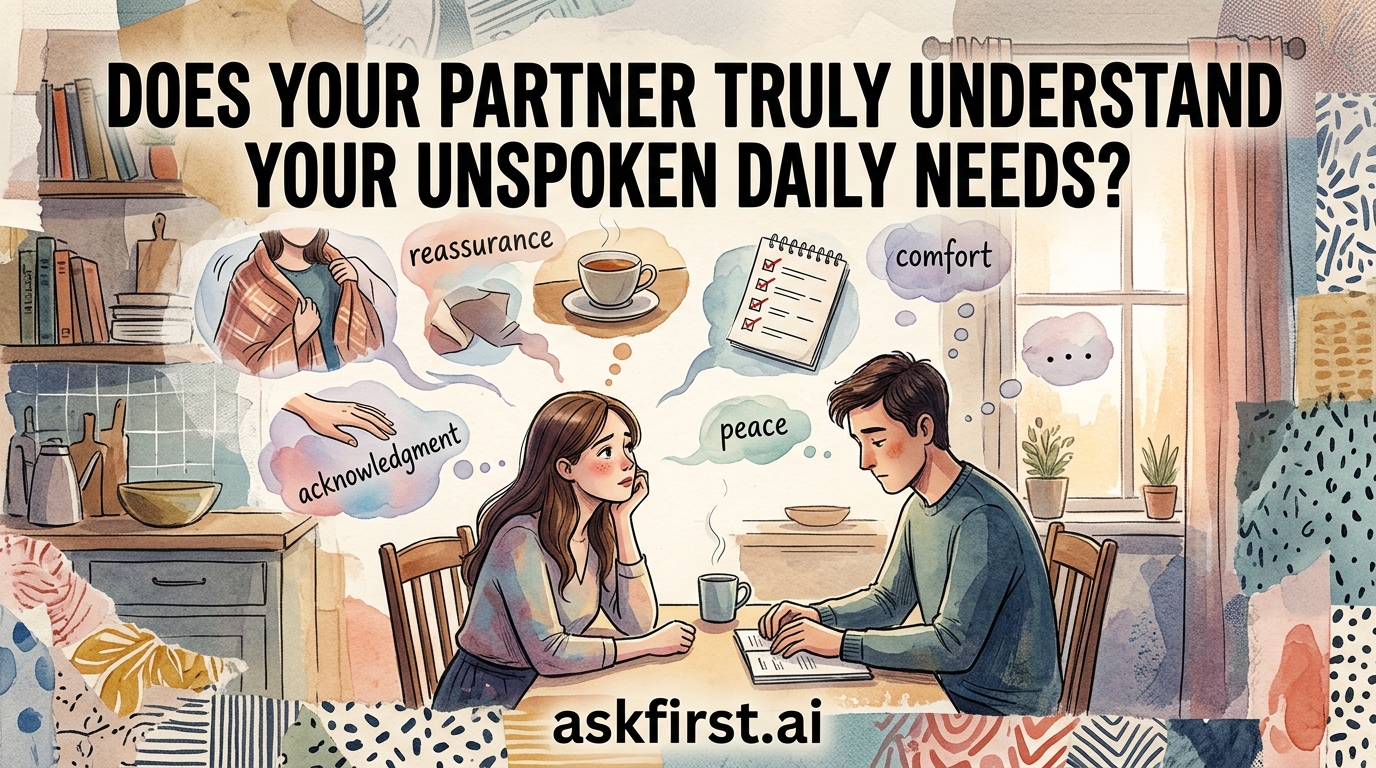
True understanding in a long-term partnership rarely stems from explicit demands or written chore lists. Instead, it flourishes within the silent language of 'unspoken daily needs.' These needs encompass the subtle requests for emotional support, the requirement for physical space, or the desire for shared micro-moments of joy that remain unvoiced. Achieving this level of attunement is not merely about luck; it is a refined skill set involving active observation, pattern recognition, and a deep commitment to the 'bid for connection.'
The Science of 'Bids for Connection'
Psychologist Dr. John Gottman, a leading expert on relationship stability, introduced the concept of the 'bid.' A bid is any attempt from one partner to another for attention, affirmation, affection, or any other positive connection. A simple glance out the window, a comment about a passing bird, or a sigh after a long workday are all subtle, often silent, bids. When a partner acknowledges these bids, they are actively decoding an unspoken need for validation. Research indicates that couples who remain together over decades are those who successfully 'turn toward' these bids more than 80% of the time. This turning toward acts as the foundational evidence that a partner truly understands the emotional undercurrents of the other person's day.
Patterns of Behavioral Decoding
To bridge the gap between spoken and unspoken, one must become a student of the other. Daily needs are often predictable if one understands the baseline personality traits of their partner. Consider the following categories of silent requirements:
- Cognitive Load Management: Does the partner need help with mental organization, or do they need autonomy to decompress?
- Sensory Regulation: After a chaotic day, does the individual require silence, specific sensory comforts like soft lighting, or high-energy socialization?
- Affirmation Styles: Does the partner feel supported by words of encouragement, or does they prefer acts of service that remove a physical burden?
Successful partners often engage in 'passive observation.' This means noticing when a partner's body language shifts upon entering the home or recognizing the specific way they prioritize tasks when stressed. By observing these patterns, one creates a mental database that allows for proactive support rather than reactive care.
The Myth of Mind Reading
There is a pervasive myth that if a partner 'truly loves you,' they will intuitively know what you need without being told. This expectation is a dangerous trap that leads to resentment. Intimacy is not telepathy. Even the most synchronized couples must maintain a bridge of communication. Understanding unspoken needs is not about predicting the future; it is about paying enough attention to the present moment to detect the signals before they become crises. It is the transition from 'hearing' the silence to 'interpreting' the silence.
Strategies for Enhanced Attunement
If the objective is to reach this zenith of connection, both partners can adopt specific practices:
- The Daily Debrief: Conduct a non-transactional check-in where the focus remains on emotional state rather than the logistics of household chores. Ask, 'What was the most draining part of your day?' rather than 'Did you finish your tasks?'
- Explicit Gratitude for Implicit Actions: When a partner fulfills a need that was not verbalized, explicitly acknowledge it. This reinforces the behavior and signals that the efforts are seen and appreciated.
- Active Curiosity: Replace assumptions with questions. Instead of assuming a partner needs space, ask, 'Would you prefer we spend time together tonight, or would you like an hour of quiet time?' This honors their agency while demonstrating care.
Why This Matters for Longevity
When a partner feels that their internal state is recognized without having to constantly explain themselves, they experience a profound sense of psychological safety. This safety allows the individual to be their most authentic self. It lowers cortisol levels, improves sleep quality, and deepens the bond of trust. When individuals feel 'seen,' they are far less likely to harbor hidden grievances. Over time, this creates a positive feedback loop: the more one is understood, the more secure they feel, which in turn makes them more capable of observing and meeting the needs of their partner.
The Path Forward
Ultimately, understanding unspoken needs is an iterative process. It requires humility, as one will inevitably misinterpret a signal from time to time. The goal is not perfection, but rather the genuine attempt to tune into the other person's frequency. By fostering an environment where small observations are valued as much as grand gestures, couples can build a durable, resilient, and deeply satisfying partnership that transcends the limitations of verbal communication. It is in the quiet spaces between words where the deepest layers of love are actually built and sustained.