The Psychology of The Binge-Watch Phenomenon
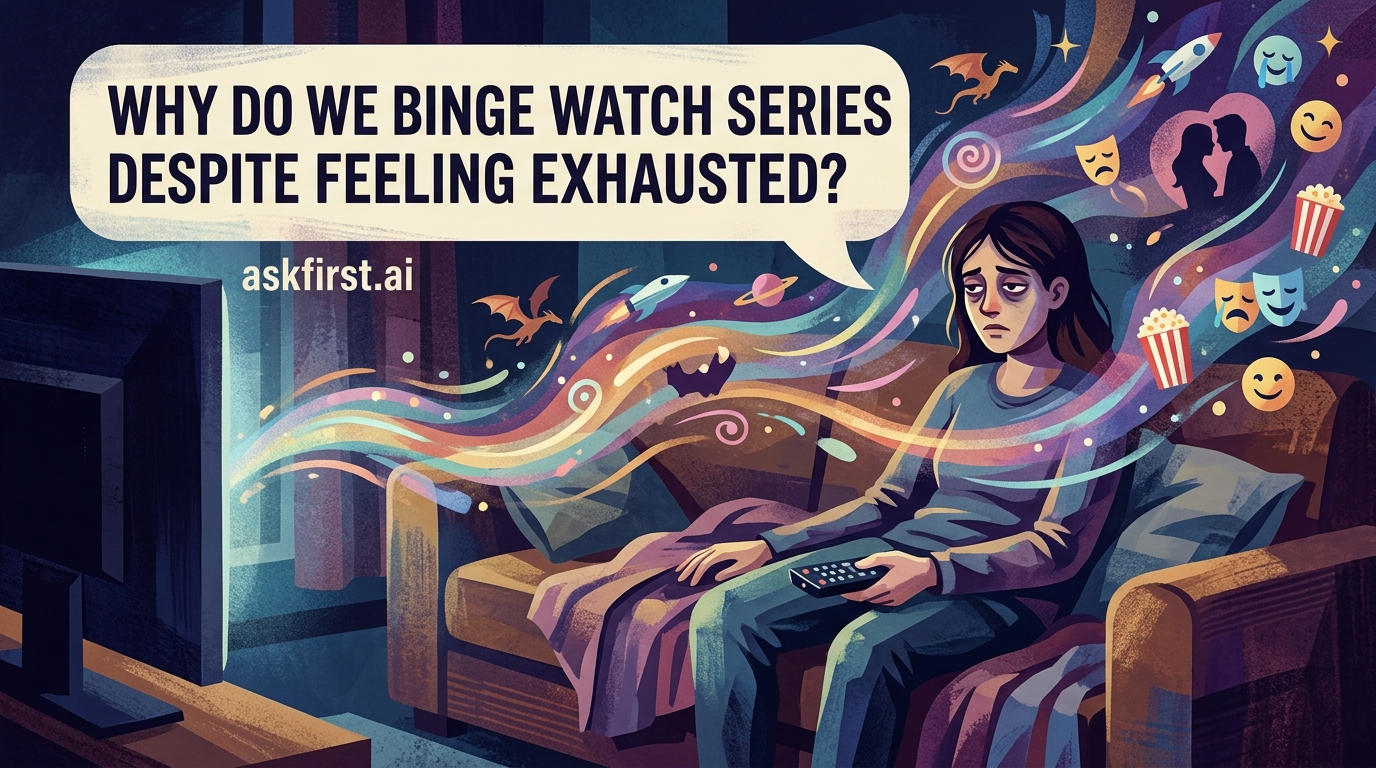
Binge-watching has become a quintessential modern ritual, yet it often leaves individuals feeling more drained than refreshed. The paradox of consuming content while physically and mentally exhausted is rooted in complex neurological and psychological mechanisms. Understanding why this happens requires looking beyond mere 'laziness' and into the fascinating intersection of brain chemistry, decision fatigue, and escapism.
The Dopamine Loop and The Illusion of Rest
At the core of the binge-watching experience is the brain's reward system. Every time an episode ends, the 'cliffhanger' effect triggers a micro-burst of curiosity and anticipation. This activates the release of dopamine, a neurotransmitter associated with motivation and reward. When a person is exhausted, their executive function—the part of the brain responsible for impulse control and long-term planning—is depleted. Because the prefrontal cortex is tired, it becomes significantly harder to resist the 'autoplay' feature. The brain mistakes the rapid-fire dopamine hits from streaming content for genuine rejuvenation. It is an illusion: the brain feels it is 'doing' something rewarding, even though the body is sedentary and the mind is merely processing passive information.
Decision Fatigue: The Hidden Driver
Daily life is an endless series of micro-decisions, from professional responsibilities to personal choices. By the evening, most people suffer from decision fatigue. This state occurs when the cognitive resources required to make choices are drained. When facing the binary choice of 'go to bed' versus 'start another episode,' the latter is cognitively cheaper. To sleep is to prepare for the challenges of the next day; to watch an episode is to defer reality. Choosing to binge is, paradoxically, a way to opt-out of making further decisions, creating a temporary sanctuary where the viewer has no responsibility to act.
The Need for Psychological Detachment
Research in organizational psychology suggests that psychological detachment—the process of mentally switching off from work-related stressors—is crucial for recovery. However, when the barrier between 'work' and 'home' becomes blurred, people struggle to find effective ways to detach. Binge-watching provides a high-intensity distraction that effectively crowds out ruminative thoughts. Unlike reading a book, which requires active imagination and sustained focus, streaming content is a low-effort, high-sensory experience. It acts as a cognitive 'soothing agent' that allows the brain to park its worries without requiring the heavy lifting of intellectual engagement.
The Social Currency of Content
Human beings are innately social animals who thrive on shared cultural experiences. In the modern era, television series function as the new 'water cooler' conversation. The fear of being left out, or the desire to participate in cultural discussions on social media, adds an external pressure to keep watching. Even when a person is physically depleted, the social drive to stay 'in the loop' acts as a secondary motivator, compelling the viewer to complete a series just to attain closure or the ability to contribute to a collective narrative.
Tips for Mindful Consumption
Understanding the mechanics of binge-watching is the first step toward reclaiming agency. Here are several strategies to mitigate the cycle of exhaustion-fueled consumption:
- Implement a 'One-Episode' Buffer: Force a five-minute gap between episodes to allow the prefrontal cortex to regain control.
- Externalize Your Limits: Use timer-based shutdowns or physical reminders to signal the end of a session, bypassing the reliance on willpower.
- Engage in Active Recovery: Swap one hour of passive streaming for activities that stimulate the parasympathetic nervous system, such as gentle stretching, meditation, or light reading, which actually restore energy rather than just consuming it.
- Recognize the Fatigue Signal: View exhaustion as a cue to initiate a wind-down routine rather than an invitation to engage the reward-seeking brain loop.
In summary, binge-watching is not a failure of character, but a natural response to the biological pressures of an information-saturated world. By recognizing that the drive to watch is often a physiological attempt to soothe a tired brain, individuals can begin to navigate their entertainment habits with greater intention, ensuring that their leisure time truly serves its purpose of restoring the mind.