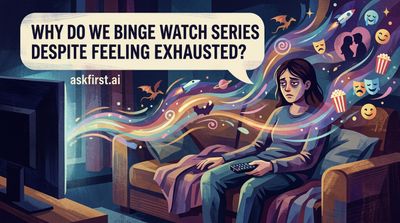
The Psychology of Cinematic Immersion: Solitude Versus Social Bonding. Deciding between a solitary viewing experience and a communal one is not merely a matter of convenience; it represents a fundamental divergence in how human psychology processes narrative, emotion, and sensory input. While both modalities offer distinct psychological rewards, understanding the mechanics of each can transform the way entertainment is consumed and appreciated.
The Case for Solitary Cinematic Immersion. Engaging with a film in complete solitude is often equated with deep-focus psychological states known as 'flow.' When watching a movie alone, the brain experiences a lack of external interference, allowing for a heightened sense of presence. This state of 'monotropic attention' permits the viewer to become fully absorbed in the diegetic world, picking up on subtle nuances, background audio cues, and intricate directorial choices that might be missed during conversation.
Research in media psychology suggests that solitary viewing serves as a powerful tool for emotional regulation. Without the 'social performance' aspect of having an audience, individuals can respond to thematic content with raw, uninhibited emotion. Whether it is cathartic weeping or uncontrolled laughter, the absence of a social barrier allows the viewer to process complex themes—such as existential angst or moral ambiguity—at their own cognitive pace. This is effectively an 'introspective engagement' model.
The Social Dynamic: Movies as a Catalyst for Connection. Conversely, communal viewing shifts the goal of the activity from pure narrative consumption to social bonding. Watching a movie with friends utilizes the phenomenon of 'co-viewing' to reinforce group identity. Humans are social primates, and sharing a stimulus, such as a gripping plot twist, induces a synchronous neurochemical response—specifically, the release of oxytocin, which facilitates interpersonal bonding.
When a group watches a film, the commentary provided during breaks or after the credits creates a secondary narrative: the construction of shared memory. This is termed 'social coconstruction' of meaning. The value of a film, in this context, is measured by the quality of the debate or camaraderie it sparks rather than the objective quality of the filmmaking itself.
Comparing Cognitive Loads.
- Solitary Viewing: Low social load, high cognitive bandwidth for narrative analysis. Ideal for complex dramas, foreign language films, or art-house cinema where total focus is required.
- Communal Viewing: High social load, moderate cognitive bandwidth for shared experience. Ideal for thrillers, comedies, or 'event' cinema where the collective reaction (the 'laugh-out-loud' or 'gasp' effect) enhances the entertainment value.
Navigating the Nuances: A Framework for Selection. Choosing the environment depends on the specific goals of the viewer. If the objective is to analyze the technical mastery of cinematography or to engage deeply with the psychological arc of a character, the isolated environment remains supreme. This is the realm of the film connoisseur.
However, if the objective is to mitigate feelings of loneliness, foster team cohesion, or celebrate a lighthearted blockbuster, the group environment is empirically superior. The presence of others acts as a 'social amplifier' for joy, making humorous scenes appear funnier and tension-filled scenes more exhilarating due to emotional contagion—the psychological tendency to mimic the emotions of those in our immediate environment.
Practical Recommendations for Optimal Viewing.
- For Intellectual Growth: Select complex, non-linear narratives and consume them in isolation. This creates an environment free from the distraction of commentary, allowing for critical analysis of themes and motifs.
- For Social Maintenance: Select high-energy films with clear, linear arcs. The goal here is interaction; if the film is too complex, the social purpose of the gathering will be overshadowed by the need to follow the plot.
- The Hybrid Approach: Utilize the 'first-watch' rule. Perform the initial viewing of a masterpiece alone to ensure an unfiltered, personal connection with the director's vision. Follow this with a second, social viewing to enjoy the communal reaction and to observe how others process the same artistic input.
Ultimately, the preference for solitary versus social viewing is not fixed. It is a dynamic spectrum that changes based on the viewer’s mood, the artistic nature of the media, and the current needs for either intellectual stimulation or social reinforcement. Recognizing these categories allows for a more intentional and rewarding relationship with cinema.