The Psychology of Wealth and Consumption
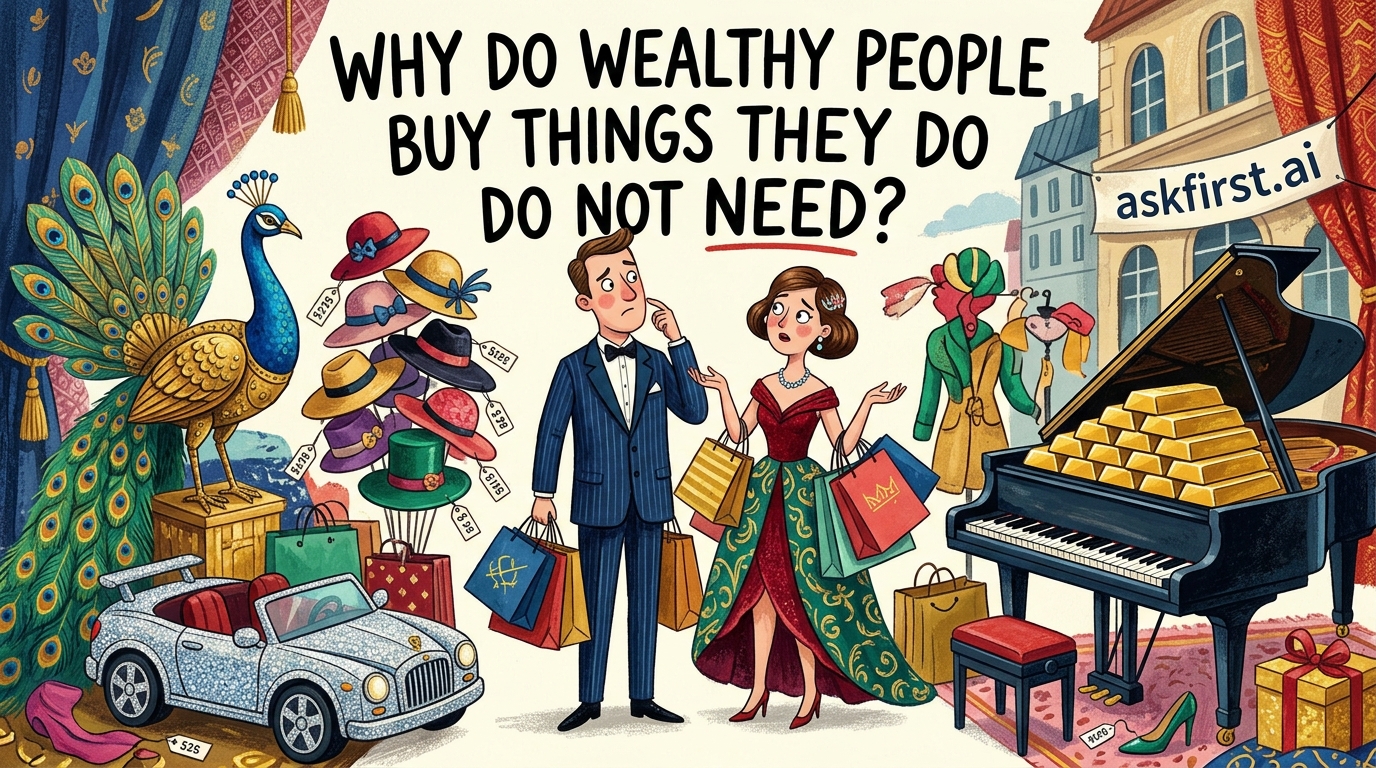
When observing the consumption habits of the affluent, it is common to wonder why individuals with practically unlimited resources continue to acquire items that appear unnecessary. This phenomenon is rarely about the utility of the object itself; rather, it is deeply rooted in complex psychological mechanisms, social signaling, and the evolution of status. Understanding these motivations requires a look beyond simple materialism and into the core of human social dynamics.
1. Signaling and Social Capital
One of the most potent drivers of unnecessary consumption is signaling. Sociologists, most notably Thorstein Veblen in his seminal work The Theory of the Leisure Class, coined the term conspicuous consumption. This theory posits that spending on luxury goods is a deliberate effort to display status. In circles where basic needs are long since met, wealth becomes a relative measure. By purchasing rare, expensive, or exclusive items, wealthy individuals signal their position in a social hierarchy. This is not merely about owning 'stuff'; it is about maintaining a membership card to a specific socioeconomic group. The object serves as a beacon, communicating competence, success, or exclusive access to those in the same cohort.
2. The Hedonic Treadmill
Human psychology is dictated by the hedonic treadmill, a concept suggesting that humans return to a relatively stable level of happiness despite major positive or negative events or life changes. When a wealthy person buys a luxury watch or a high-end vehicle, the initial dopamine surge is significant. However, the brain quickly adapts to this new baseline. Once the new purchase becomes 'normal,' the individual feels a slight decline in emotional satisfaction, triggering a desire for the next 'hit' or upgrade. Consequently, consumption becomes an ongoing cycle rather than a solution to a problem. The necessity is not found in the product, but in the internal requirement to maintain emotional equilibrium.
3. Investment and Asset Diversification
It is vital to distinguish between consumption and investment. Often, what appears to be a frivolous purchase—such as high-end art, classic cars, or limited-edition horology—is viewed by the wealthy as an alternative asset class. These items often function as hedges against inflation or store value better than currency. In this context, the 'need' is financial. A painting might be hung on a wall to be enjoyed, but its purchase is motivated by the expectation of future appreciation or the preservation of capital. By purchasing these items, the wealthy are often diversifying their portfolio, making the 'unnecessary' purchase a rational financial strategy in disguise.
4. Psychological Comfort and Control
For those who exist at the top of the economic pyramid, the pressures of decision-making and responsibility are immense. Research suggests that consumption can provide a sense of agency and control. When one’s environment is meticulously curated through the acquisition of specific items, it creates a personal sanctuary that feels predictable and managed. Furthermore, there is the aspect of aspiration. Even the ultra-wealthy often chase a version of 'self' that they have not yet achieved. If a high-net-worth individual feels their lifestyle lacks a specific flair or identity, they may use purchases to perform an experiment in self-actualization, testing whether a new environment or set of tools can bridge the gap between their current reality and their idealized self.
5. The Culture of Networking
Many luxury purchases serve as social lubricants. Access to exclusive clubs, yacht shows, or high-stakes gala events often requires the purchase of goods that align with the aesthetic and functional standards of those circles. Buying a specific type of boat or a particular designer garment may be the price of entry into a business-critical social network. In these instances, the item is not purchased for its utility as a product, but for its utility as a connector. It is an investment in human capital disguised as a retail transaction.
6. Summary: The Utility of Perception
The fundamental error in analyzing these behaviors is viewing 'need' strictly in terms of biological or survivalist utility. For the wealthy, 'need' is often redefined to include social maintenance, asset preservation, and psychological comfort. While an outsider sees a redundant purchase, the actor sees a move in a complex game of social signaling and long-term asset management. The accumulation of these items is essentially a feedback loop where the individual is constantly optimizing their presence within their ecosystem. As long as status remains a factor in human society, and as long as humans seek to externalize their inner identity, the consumption of 'unnecessary' goods will remain a defining feature of the wealthy landscape.