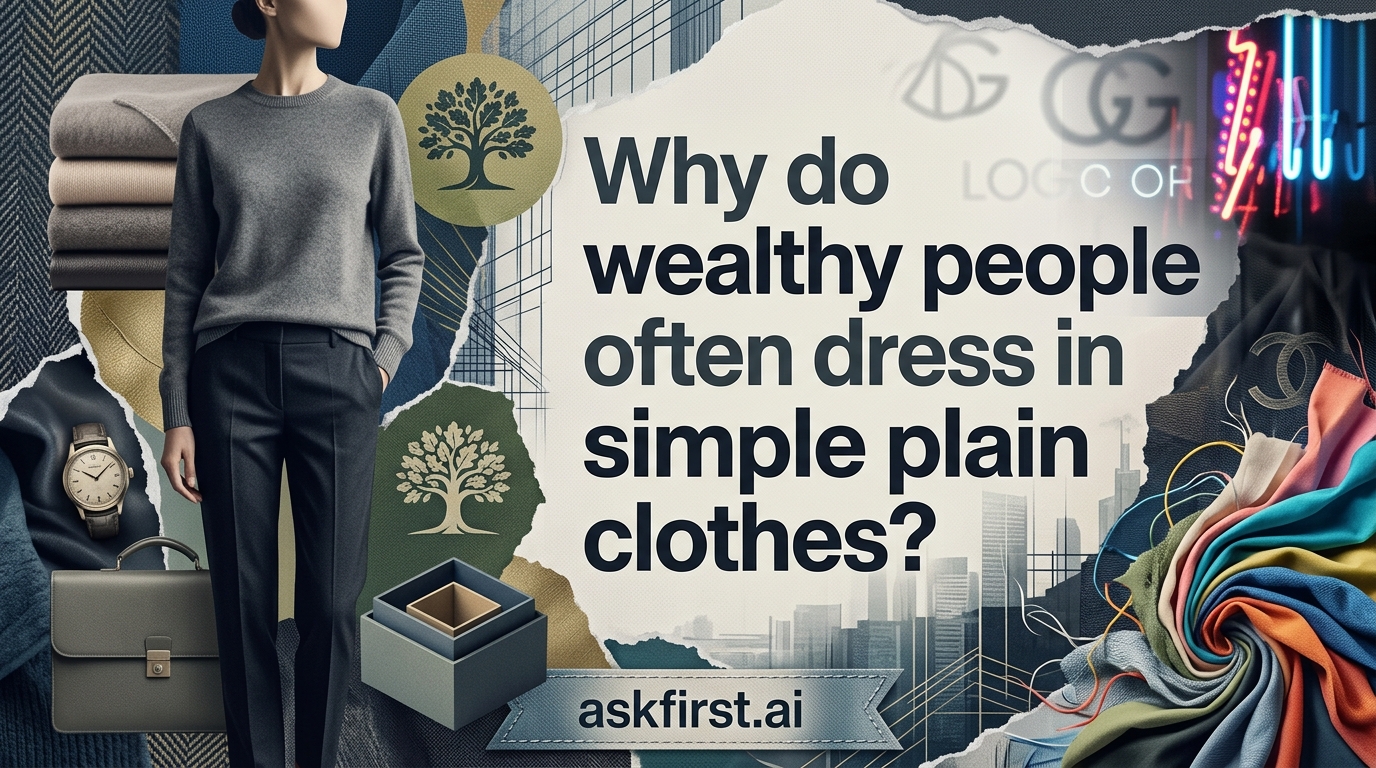
The Psychology of Stealth Wealth
The phenomenon of high-net-worth individuals opting for understated, plain, or minimalist attire is far from a coincidence; it is a calculated psychological and social strategy often referred to as 'Stealth Wealth' or 'Quiet Luxury.' While the general public often associates extreme wealth with flashy logos, opulent jewelry, and flamboyant fashion statements, the true masters of capital often head in the opposite direction. This departure from conventional status signaling serves several complex purposes, ranging from cognitive efficiency to social signaling.
The Burden of Decision Fatigue
One of the primary drivers behind this sartorial simplicity is the avoidance of decision fatigue. High-achieving individuals frequently occupy roles that require processing vast amounts of complex information and making high-stakes decisions throughout the day. Psychologists define decision fatigue as the deterioration of the quality of decisions made by an individual after a long session of decision-making. By adopting a 'uniform'—such as the iconic black turtleneck of Steve Jobs or the simple gray t-shirts favored by Mark Zuckerberg—these individuals remove a layer of trivial decision-making from their morning routine. This preserves precious mental energy for tasks that truly generate value and innovation, rather than wasting it on the minutiae of wardrobe selection.
Inverting the Signal: The Logic of Understatement
In sociology, Thorstein Veblen introduced the term 'conspicuous consumption' in 1899 to describe the practice of buying expensive goods specifically to display one's wealth. However, in the contemporary era, the paradigm has shifted. For many ultra-wealthy individuals, the display of logos has become a form of 'low-status' signaling—something accessible to the aspirational class. True wealth, by contrast, relies on 'in-group' signaling. To the untrained eye, a plain cashmere sweater might look like an ordinary piece of knitwear, but to the initiated, the quality of the material, the fit, and the craftsmanship communicate status more effectively than any neon brand name ever could. This is the ultimate form of elitism: wearing something that is exceptionally expensive but entirely invisible to those who do not have the background to recognize its quality.
Control and Autonomy
Beyond status, there is the element of autonomy. Clothing is a powerful tool of personal branding. For many, wearing plain, neutral-colored clothes acts as a buffer between their private and public identities. It allows them to blend into diverse environments, from boardrooms to casual coffee shops, without becoming a focal point of superficial judgment. By removing the distraction of clothing, they force the observer to focus entirely on their ideas, their personality, or their business objectives. In essence, the simplicity of their dress forces the world to evaluate them based on their character and achievements, rather than their appearance.
Financial Philosophy and Practicality
There is also a deeply practical side to this phenomenon. The wealthy are often hyper-focused on efficiency and longevity. Investing in a capsule wardrobe consisting of high-quality, timeless, and durable pieces often makes more financial sense than chasing seasonal trends. This is the 'cost-per-wear' philosophy. A single, meticulously tailored coat or a high-quality pair of boots made from premium materials can last for a decade, resisting the rapid cycles of 'fast fashion' that define modern consumption. This approach echoes the broader wealth-building principle of prioritizing assets that appreciate or endure over depreciating vanity items.
Cultural Signaling and Trust
In high-stakes industries like finance, tech, and venture capital, trust is the most valuable currency. Appearing too flashy or overly invested in one's personal appearance can sometimes signal insecurity or a lack of focus on the business at hand. By adopting a modest and consistent aesthetic, successful individuals signal that their energy is channeled into their work, their vision, and their long-term growth. It suggests a grounded nature, a characteristic often associated with competence and reliability. In a world full of noise, simplicity stands out as a signal of clarity, confidence, and seriousness of purpose.
Conclusion
The choice to dress simply is not a sign of a lack of style; it is a manifestation of a distinct philosophy that prioritizes mental bandwidth, sophisticated signaling, and enduring quality. It is a quiet rebellion against the frantic pace of consumerism and a testament to the idea that true influence and power rarely need to shout to be heard. By embracing this aesthetic, the wealthy effectively control the narrative of their lives, focusing on the substance of their contributions rather than the artifice of their appearance.