The contemporary experience of young people is defined by a unique convergence of hyper-connectivity, economic volatility, and shifting social paradigms. While every generation faces the challenges of transitioning into adulthood, the current cohort—often referred to as Gen Z and the early stages of Gen Alpha—operates under a set of stressors that are unprecedented in their intensity and scope. Understanding these pressures requires looking beyond individual psychology and examining the structural, technological, and cultural forces at play.
The Digital Panopticon: Social Media and Performance
Perhaps the most significant differentiator for young people today is the "always-on" nature of their social lives. According to Dr. Jean Twenge in her seminal work iGen: Why Today’s Super-Connected Kids Are Growing Up Less Rebellious, More Tolerant, Less Happy—and Completely Unprepared for Adulthood, the ubiquity of smartphones has fundamentally altered the adolescent developmental arc.
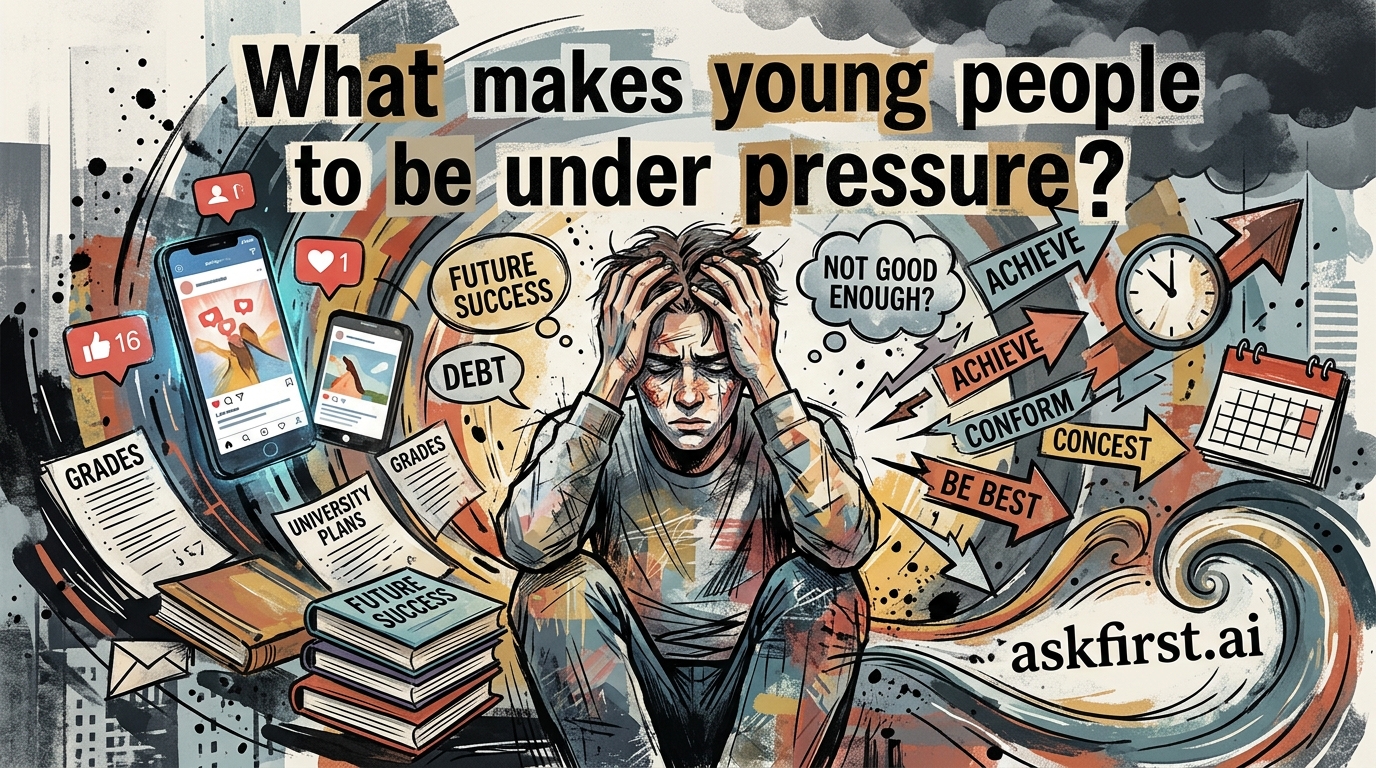
The pressure to curate a "perfect" digital identity creates a constant state of comparison. Young people are no longer just comparing themselves to their peers in a classroom; they are comparing their unfiltered daily lives to the meticulously edited highlights of millions of strangers globally. This leads to:
- The Fear of Missing Out (FOMO): A persistent anxiety that others are having more rewarding experiences, which can trigger feelings of isolation and inadequacy.
- Quantifiable Validation: The reliance on "likes," "views," and "shares" as metrics of personal worth creates a volatile feedback loop where self-esteem becomes tied to algorithmic approval.
The Academic-Industrial Complex and Future Anxiety
The traditional path from education to career has become increasingly fraught with uncertainty. In his book Excellent Sheep: The Miseducation of the American Elite and the Way to a Meaningful Life, Professor William Deresiewicz argues that the modern educational system has transformed students into "high-functioning robots" who are terrified of failure.
Young people are under immense pressure to treat their education as a high-stakes investment. The rising cost of higher education, coupled with a fiercely competitive job market, means that any perceived misstep—a gap year, a change in major, or a lower-than-perfect GPA—is viewed as a potential catastrophe. This "resume culture" forces young people to prioritize extracurricular activities, internships, and networking over genuine intellectual exploration or rest, leading to widespread burnout before they even enter the workforce.
Economic Instability and the "Cost of Living" Crisis
Financial anxiety is no longer an adult-only concern. Young people are acutely aware of the macroeconomic shifts that threaten their future stability. In The Defining Decade: Why Your Twenties Matter—And How to Make the Most of Them Now, Dr. Meg Jay highlights how the modern economic environment makes traditional milestones—like homeownership or long-term financial security—seem like moving targets.
When young people observe their parents struggling with stagnant wages and rising inflation, or witness a global housing market that feels increasingly inaccessible, they internalize this insecurity. This manifests as a "scarcity mindset," where they feel they must work harder and faster than previous generations just to reach the same baseline of survival. This economic pressure is not merely about money; it is about the loss of agency and the feeling that the "social contract" of hard work leading to prosperity has been broken.
The Erosion of "Third Places" and Physical Community
Sociologist Ray Oldenburg coined the term "third places" to describe the vital social environments—parks, libraries, cafes, community centers—that exist outside of the home ("first place") and the workplace/school ("second place"). As these spaces have diminished in favor of private, digital, or commercialized environments, young people have lost critical venues for unstructured social development.
Without these safe, low-stakes environments, social interaction becomes more formal, more pressured, and more reliant on digital mediation. The lack of physical community contributes to a profound sense of loneliness. When interaction is moved behind a screen, the nuance of human connection is often lost, making it harder for young people to develop the resilience and empathy required to navigate complex real-world social dynamics.
The Weight of Global Existentialism
Finally, we must acknowledge the "macro" stressor: the state of the world. Through 24-hour news cycles and social media, young people are exposed to global crises—climate change, geopolitical conflict, and systemic inequality—in real-time. Unlike previous generations, who might have learned of international issues through filtered media, today’s youth are confronted with the unfiltered, visceral reality of these crises from a young age. This produces a sense of "eco-anxiety" or existential dread, where they feel responsible for solving massive, systemic problems that they did not create, often leading to a sense of nihilism or paralysis.
Conclusion
The pressures placed on young people today are not merely the result of individual temperament; they are the logical output of a society that prioritizes output over well-being, digital connectivity over physical community, and economic survival over holistic development. Addressing these pressures requires a systemic shift: fostering environments that prioritize mental health, de-emphasizing the toxic metrics of social media, and rebuilding the physical spaces that allow for genuine human connection. By recognizing these structural stressors, we can begin to offer the support and perspective necessary to help the next generation navigate this complex landscape with greater resilience and purpose.