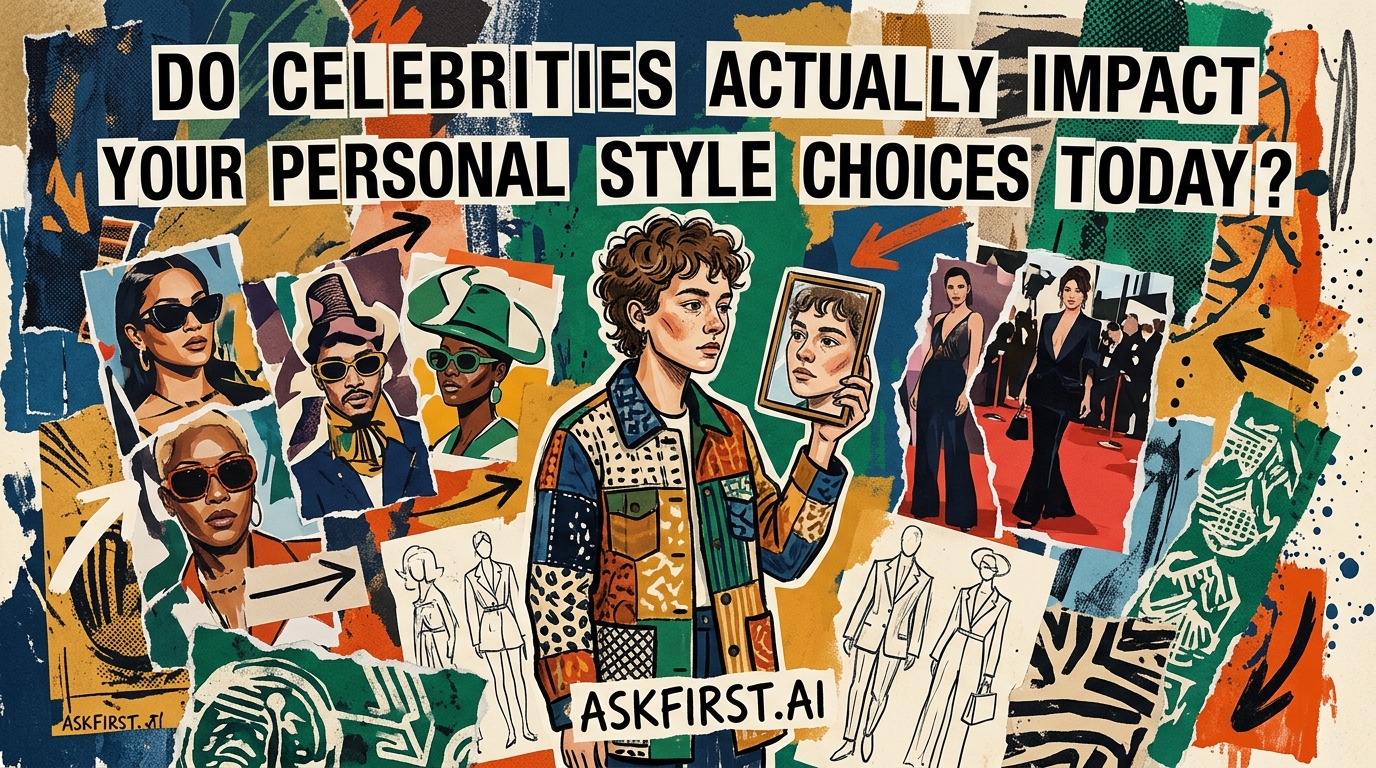
The Invisible Hand of Celebrity Influence on Personal Identity
Modern fashion is rarely a solo endeavor. While the average consumer often believes their style choices are the result of autonomous personal taste and aesthetic preference, psychological and sociological research suggests a more complex reality. Celebrity influence, whether direct or subtle, serves as a cornerstone of contemporary style evolution. This deep dive examines the mechanisms behind this phenomenon and how it continues to shape the sartorial landscape.
The Psychology of Social Proof and Aspiration
The fundamental reason celebrities dictate trends lies in the principle of social proof. Humans are inherently social animals who look to others to guide their behavior, especially in high-uncertainty scenarios like fashion and grooming. When an admired public figure adopts a specific silhouette, color palette, or accessory, it acts as a cultural shorthand for 'desirability.'
- Aspirational Mirroring: Individuals often choose clothing that aligns with the social identity of a celebrity they admire. By mimicking a specific style, the consumer creates a psychological bridge to the prestige associated with that figure.
- The Halo Effect: Research in cognitive psychology confirms that attributes attributed to a person (like beauty or intelligence) tend to spill over into perceptions of their clothing. If a beloved actor wears a specific brand, that brand inherits the 'halo' of the actor’s perceived quality and status.
Digital Osmosis: The Shift from Red Carpet to Real-time
Historically, style trends took months or years to trickle down from the fashion house to the high street. In the digital age, this process has been compressed into seconds. The rise of social media platforms has transformed every celebrity post into a micro-campaign for a specific aesthetic.
- Direct Links: Fashion tagging and affiliate marketing allow followers to purchase the exact items worn by celebrities immediately upon seeing them.
- Influencer Culture: Even micro-celebrities play a role here. Their style feels more 'attainable,' creating a powerful feedback loop where personal style is constantly adjusted to align with current digital aesthetics.
- Algorithmic Curation: Social media algorithms prioritize images of high-status individuals, ensuring that their style choices remain the most visible, thereby reinforcing them as the standard for 'normal' or 'desirable' fashion.
The Myth of Individuality vs. Collective Conformity
Many consumers adamantly believe their style is unique and independent of external influence. However, sociological studies, such as the 'Theory of Trickle-Down Fashion,' suggest that styles move through social strata. While the consumer might feel they are 'discovering' a look, they are often participating in a trend cycle that was carefully curated by stylist-celebrity partnerships long before it hit the mainstream market.
Key factors in this systemic influence include:
- Curated Aesthetics: Celebrity stylists often work to create 'looks' that are visually distinct yet marketable, ensuring that the influence is both pervasive and profitable.
- The Frequency Illusion: Seeing a specific style multiple times across various celebrities creates a cognitive bias known as the frequency illusion. The consumer begins to believe that this style is 'everywhere' and therefore a mandatory update for their own wardrobe.
Can True Personal Style Exist?
Despite the massive influence of celebrity culture, personal style remains a blend of external input and internal values. To cultivate an authentic sense of style in an age of constant input, one should focus on:
- Fabric Composition and Longevity: Choosing quality materials over trend-chasing.
- Understanding Body Geometry: Focusing on what fits one’s own physical build rather than mimicking a celebrity’s styling choices.
- The Capsule Wardrobe Approach: Selecting items that function well together regardless of the seasonal trends pushed by public figures.
In conclusion, while the influence of celebrities on personal style is undeniable, it is not absolute. The truly stylish consumer understands that fashion is a dialogue. By acknowledging the psychological pressures exerted by celebrity culture, individuals can learn to filter out the noise and select elements that truly resonate with their own identity, rather than becoming passive vessels for celebrity-endorsed trends. Embracing a critical eye allows for a transition from being a trend-follower to becoming a deliberate architect of one's own visual identity.