The Psychology of Wealth and Understated Fashion
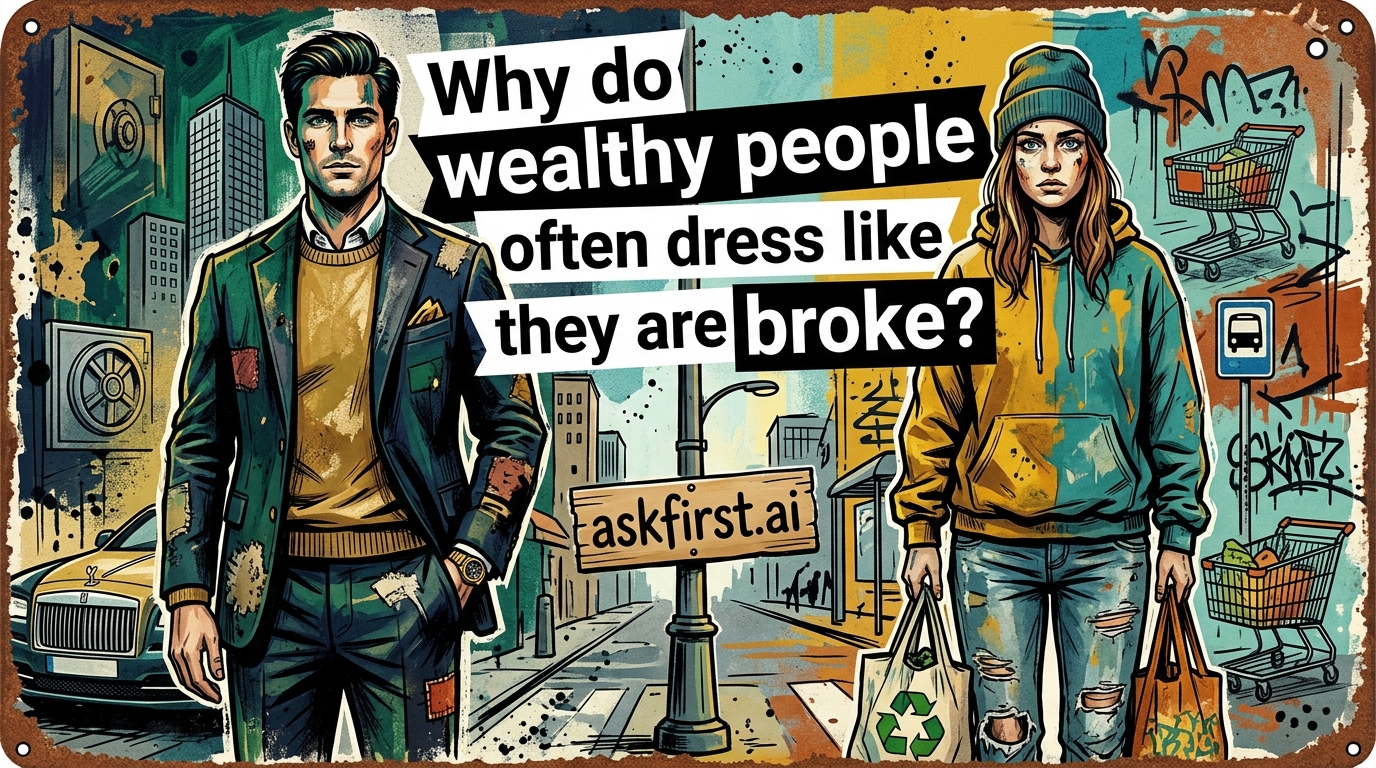
In the realms of high finance, Silicon Valley boardrooms, and global elite circles, a fascinating phenomenon persists: the intentional downplaying of personal wealth through clothing. While one might expect the ultra-wealthy to drape themselves in visible logos and ostentatious jewelry, many of the world's most successful individuals opt for minimalist, nondescript, and sometimes frayed attire. This deliberate rejection of traditional luxury signaling is often termed 'stealth wealth' or 'quiet luxury.'
The Signaling Theory
From a socio-economic perspective, clothing acts as a signal. In the 19th century, economist Thorstein Veblen introduced the concept of 'conspicuous consumption,' where individuals bought expensive goods primarily to display their economic power. However, as luxury goods became more accessible through mass-market imitations, the elite needed a new way to differentiate themselves.
Internal Signals: When status cannot be easily identified by a brand logo, the wealthy shift toward 'in-group signaling.' They wear items that look ordinary to the general public but are immediately recognizable to other wealthy individuals—such as a specific cut of cashmere or a handmade shoe without a label. This creates an exclusive social code that the uninitiated cannot decipher.
The Avoidance of 'The Nouveau Riche' Label: Dressing modestly prevents an individual from appearing like someone who is trying too hard to impress. The truly secure elite often view loud branding as the sign of someone who is insecure about their place in the hierarchy. By dressing down, they signal that they have nothing to prove.
The Cognitive Load and Efficiency Argument
Beyond status signaling, there is a strong practical motivation for the minimalist wardrobe adopted by titans of industry. Many successful CEOs and entrepreneurs view decision-making as a finite daily resource.
Reducing Decision Fatigue: By choosing a 'uniform'—such as the classic grey t-shirt or the ubiquitous black turtleneck—individuals eliminate the daily friction of deciding what to wear. This saves valuable mental energy for high-stakes business decisions.
Focus on Functionality: Wealthy individuals often prioritize comfort and utility over aesthetic artifice. High-performance gear, merino wool base layers, and durable textiles are often chosen not for their price tag, but for their ability to withstand travel, long meetings, and varied climates. The garment becomes a tool, not a decoration.
The Cultural Shift: 'Quiet Luxury'
Societal trends have moved away from the logomania of the late 20th century. Modern prestige is increasingly tied to intellectual capital rather than material accumulation. Dressing 'broke' or nondescript allows the wealthy to traverse social environments without drawing unwanted attention or triggering envy.
Mobility and Privacy: In a world where surveillance and public scrutiny are constant, dressing in a way that blends into the background offers a degree of protection and anonymity. An individual wearing a designer suit is a target for solicitations; an individual in a plain hoodie is generally left alone.
Values and Ethics: There is also a growing trend among the elite toward intentional living. Many prioritize sustainable, long-lasting garments over the churn of seasonal fashion trends. A high-quality, worn-in piece of clothing is seen as more authentic than something bought for the sake of the season.
Conclusion: The Ultimate Flex
Ultimately, dressing like one is 'broke' is the ultimate display of confidence. When a person possesses the absolute assurance that their bank account, their connections, and their social standing are secure, they no longer require the crutch of outward appearance to define them. It is a paradox: the less effort they put into appearing wealthy, the more they distinguish themselves as members of an exclusive class. In this light, the faded hoodie or the simple pair of jeans is not an expression of poverty; it is an assertion of autonomy, where one defines their own status rather than letting the brand on their chest do the talking. For those who have reached the zenith of their respective fields, the only status symbol left is the freedom to dress exactly how they want, regardless of what anyone else thinks.