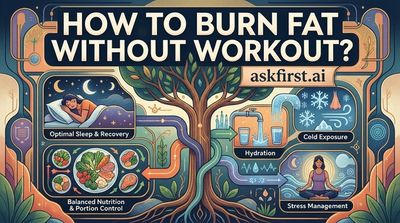
Sustainable Weight Loss: A Comprehensive Physiological and Behavioral Framework
Losing weight quickly is a common goal, but the human body is a complex biological system governed by thermodynamics, hormonal signaling, and evolutionary survival mechanisms. To achieve rapid yet safe fat loss, one must move beyond the simplistic "calories in, calories out" model and adopt a multi-faceted approach that addresses metabolic health, muscle preservation, and nutritional density.
The Thermodynamics of Rapid Fat Loss: The Caloric Deficit
At the foundational level, weight loss is governed by the laws of thermodynamics. To lose fat, you must maintain a caloric deficit, meaning you expend more energy than you consume. Dr. Eric Helms, in his seminal work The Muscle and Strength Pyramid: Nutrition, emphasizes that the size of the deficit determines the rate of loss, but too aggressive a deficit leads to muscle catabolism and metabolic adaptation.
A "fast" approach typically involves a deficit of 500 to 1,000 calories per day, which generally yields a loss of one to two pounds per week. To accelerate this without sacrificing lean tissue, you must prioritize high-protein intake. Protein has a higher thermic effect of food (TEF) than carbohydrates or fats, meaning your body burns more calories simply processing it. Aiming for 0.8 to 1.2 grams of protein per pound of body weight is the gold standard for preserving muscle while shedding adipose tissue.
Nutritional Strategies: Beyond Calorie Counting
To lose weight quickly, you must stabilize blood glucose levels. Insulin is a storage hormone; when levels are chronically high, the body enters a fat-storage mode. By reducing the intake of refined sugars and processed carbohydrates—a strategy championed by Dr. Jason Fung in The Obesity Code—you allow your insulin levels to drop, facilitating the mobilization of stored body fat for fuel.
- Prioritize Whole Foods: Focus on cruciferous vegetables, lean proteins (chicken, white fish, tofu), and healthy fats (avocados, nuts). These foods provide satiety, preventing the hunger pangs that lead to "diet cheating."
- Intermittent Fasting: Implementing an 18:6 fasting window (eating within a six-hour period) can accelerate weight loss by extending the duration during which your body utilizes fat stores. This is not merely about calorie restriction; it is about hormonal optimization.
- Hydration: Often, the brain misinterprets thirst as hunger. Drinking at least 3 liters of water daily can boost your metabolic rate by up to 30%, according to research published in the Journal of Clinical Endocrinology and Metabolism.
The Role of Resistance Training
Many individuals make the mistake of focusing solely on steady-state cardiovascular exercise, such as long-distance jogging. While effective for calorie burning, it does not build the metabolic "engine" required for long-term weight maintenance. Resistance training—lifting weights—is non-negotiable.
When you lift heavy, you trigger muscle protein synthesis. Muscle tissue is metabolically expensive, meaning the more muscle you have, the higher your basal metabolic rate (BMR) becomes. Even while you sleep, your body will burn more calories if you have a higher muscle mass. Focus on compound movements: squats, deadlifts, presses, and rows. These exercises recruit the largest amount of muscle fibers and trigger the greatest hormonal response, including the release of growth hormone, which aids in fat mobilization.
Behavioral Science and Stress Management
Rapid weight loss is as much a psychological challenge as a physical one. High levels of the stress hormone cortisol, often caused by chronic sleep deprivation or work-related stress, can lead to increased abdominal fat storage. According to Dr. Matthew Walker in his book Why We Sleep, getting less than seven hours of sleep significantly impairs glucose metabolism and increases ghrelin, the hormone responsible for hunger.
To maintain momentum:
- Track Everything: Use a food scale to ensure accuracy. Human estimation of portion sizes is notoriously inaccurate.
- Strategic Refeeds: If you are dieting for more than four weeks, implement a "refeed" day where you increase your carbohydrate intake to maintenance levels. This signals to your body that it is not in a state of famine, preventing the downregulation of thyroid hormones that typically accompanies aggressive dieting.
- Consistency Over Intensity: A 90% adherence to a moderate plan will always outperform a 50% adherence to an "extreme" plan.
Conclusion: The Path Forward
Losing weight fast is achievable through a combination of a significant caloric deficit, high-protein intake, resistance training, and hormonal management. However, the speed of weight loss should never come at the expense of metabolic health. By focusing on nutrient-dense foods and building muscle, you are not just losing weight; you are restructuring your body composition. Remember that the goal is not just to reach a lower number on the scale, but to improve your body’s functional capacity and longevity. Consistency, discipline, and a scientific approach are the only reliable pathways to lasting results.