The Digital Plague: Unpacking the Most Annoying Online Behaviors
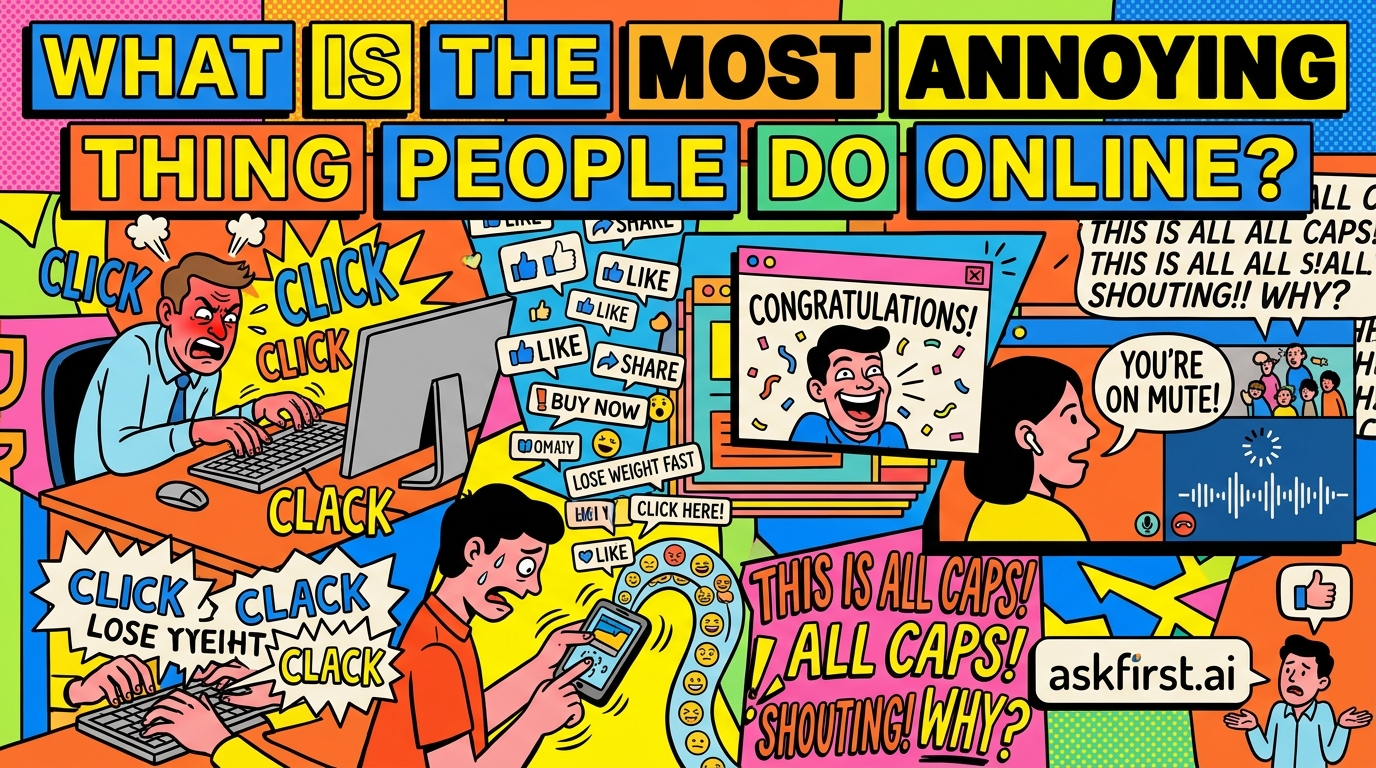
The digital landscape, while offering unprecedented connectivity, has simultaneously cultivated an environment where social friction is practically inevitable. As we navigate the complex web of social media, forums, and professional communication platforms, certain behaviors consistently emerge as the most grating and disruptive to the collective experience. While opinions vary, the consensus among communication experts and behavioral psychologists points to a specific culprit: performative outrage and the weaponization of bad-faith argumentation.
This phenomenon, often categorized under the umbrella of "performative discourse," transcends mere disagreement. It represents a fundamental breakdown in how humans process information and interact with dissenting viewpoints. Below, we explore why this behavior is so corrosive and examine other pervasive habits that degrade the quality of our online lives.
1. The Toxicity of Performative Outrage
Performative outrage is the act of expressing extreme indignation—often on behalf of others or regarding minor slights—primarily to signal one’s own moral superiority to an audience. In his seminal work The Coddling of the American Mind, authors Greg Lukianoff and Jonathan Haidt discuss how social media incentivizes "call-out culture," where the primary goal is not reconciliation or understanding, but the public shaming of perceived transgressors.
When a user engages in performative outrage, they are not seeking a solution; they are seeking social capital. This behavior is exhausting because it forces every digital conversation into a binary of "good vs. evil," leaving no room for nuance, context, or the possibility of a genuine misunderstanding. It creates a state of constant anxiety where users fear that a poorly phrased sentence could lead to a digital mobbing.
2. Bad-Faith Argumentation and "Sealioning"
Closely related to outrage culture is the practice of bad-faith argumentation. Perhaps the most infuriating iteration of this is a tactic known as "Sealioning." Coined by webcomic artist David Malki in Wondermark, sealioning involves a person persistently requesting "evidence" or "civil" explanations from someone who has already stated their position.
The "sealion" maintains a veneer of polite curiosity while relentlessly badgering the victim, with the sole intent of exhausting the other person’s patience and derailing the conversation. By forcing the victim to provide endless citations, the sealion creates the illusion that the victim’s argument is unsupported. It is a form of intellectual harassment that turns the democratic ideal of debate into a tool for psychological attrition.
3. The "Reply Guy" and Unsolicited Corrections
In the professional and creative spheres, the "Reply Guy" phenomenon—popularized by various internet culture critics—remains a top source of irritation. This refers to individuals who habitually jump into threads, often by women or marginalized groups, to provide unsolicited advice, condescending corrections, or "well, actually" rebuttals.
This behavior is particularly annoying because it assumes an inherent hierarchy of knowledge. Whether it is a stranger correcting a technical detail in a lighthearted post or a "mansplainer" lecturing an expert in their own field, these interactions serve to silence users rather than contribute to the discourse. It transforms a platform meant for sharing into a platform for gatekeeping.
4. Clickbait and the Intentional Obfuscation of Truth
Beyond interpersonal behavior, the structural annoyance of online life is the intentional manipulation of curiosity. The "clickbait" industry, documented extensively by media researchers like Ryan Holiday in Trust Me, I’m Lying, relies on exploiting human psychology to generate revenue.
When a headline promises the resolution of a mystery or a shocking revelation, only for the user to navigate through five pages of advertisements and filler content to find nothing of substance, it breeds a deep, systemic distrust. This "content farming" turns the internet into a landfill of information, where the effort required to find a nugget of truth is disproportionate to the reward. It is a violation of the user's time and attention, and it is perhaps the most pervasive annoyance we face daily.
5. Context Collapse and the Loss of Nuance
Finally, we must address "context collapse," a term popularized by danah boyd in her research at Microsoft Research and the Berkman Klein Center. Context collapse occurs when the different "audiences" of our lives—parents, colleagues, friends, and strangers—all converge into one digital space.
When people fail to account for this collapse, they often post things that are inappropriate for the setting, or conversely, others interpret posts without the necessary context. This leads to endless misunderstandings and the "policing" of tone. When users lose the ability to read the room, the internet becomes a place of constant conflict, where every post is treated as a formal policy statement rather than a casual human expression.
Conclusion: Reclaiming the Digital Commons
The most annoying things people do online are almost always rooted in a lack of empathy. Whether it is the person seeking status through performative outrage, the sealion seeking to exhaust their opponent, or the content farm seeking to monetize our attention, these behaviors share a common thread: they treat the internet not as a space for human connection, but as a resource to be exploited.
To mitigate these annoyances, we must adopt a more intentional approach to our digital footprint. This means practicing "digital hygiene"—refusing to engage with bad-faith actors, resisting the urge to perform for an audience, and remembering that there is a human being on the other side of the screen. While we cannot eliminate these behaviors entirely, we can choose not to be the source of them, thereby fostering a more functional, and perhaps even pleasant, digital environment for everyone.