The Invisible Orchestration of Human Connection
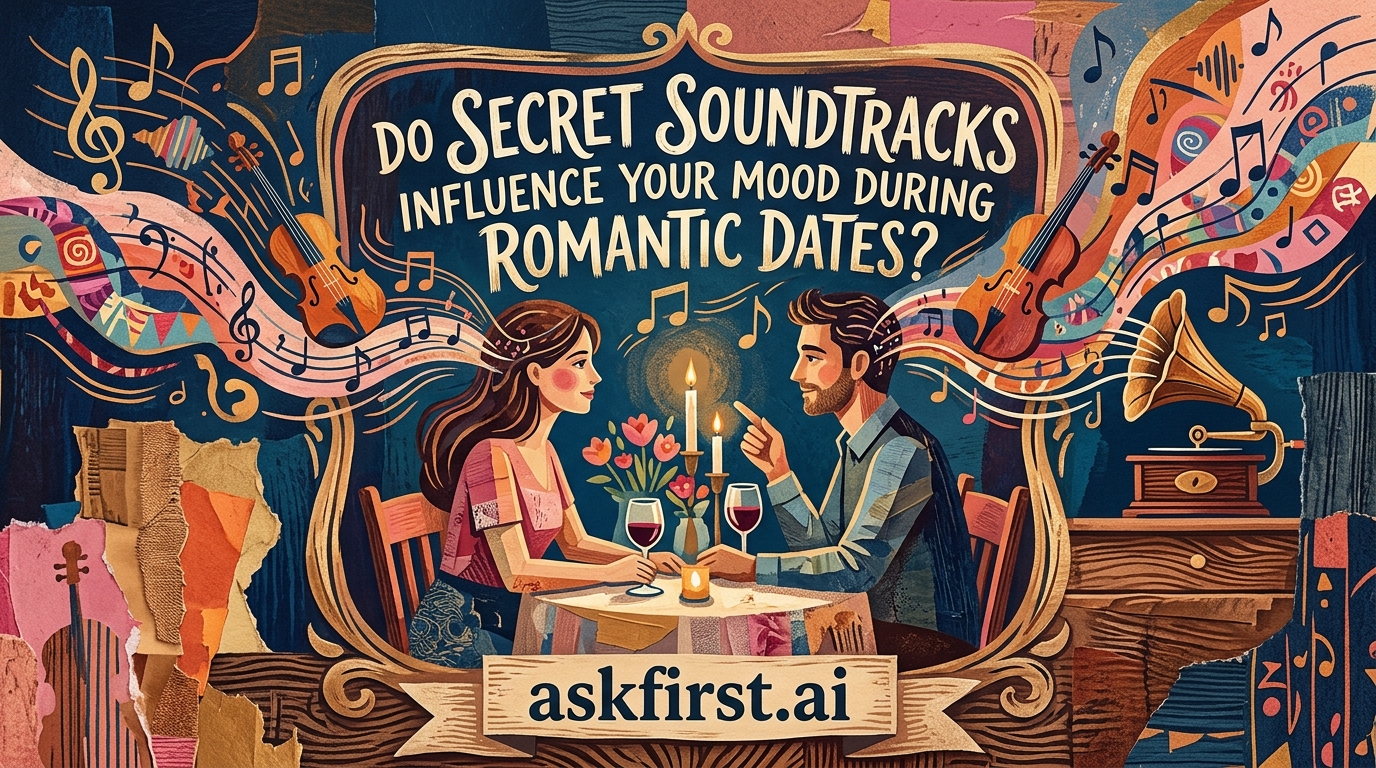
Music possesses a profound, almost primal ability to bypass the logical centers of the brain and trigger direct emotional responses. When considering the backdrop of a romantic encounter, the presence of background audio—or a 'secret soundtrack'—is far from trivial. It serves as an atmospheric architect, shaping the perception of intimacy, pace, and vulnerability. Scientific research consistently demonstrates that auditory environments can subconsciously dictate the trajectory of interpersonal dynamics.
The Psychology of Sonic Priming
At the core of this phenomenon is sonic priming. Just as visual cues influence expectations, music prepares the brain for specific social states. When a romantic partner selects a playlist, they are essentially curation a shared reality. Fast-tempo music increases physiological arousal, mimicking the sensations of excitement or nervous tension, whereas lower-frequency, melodic compositions promote a parasympathetic nervous response, encouraging relaxation and openness. By choosing the right soundscape, individuals are effectively modulating the physiological state of their companion.
The Role of Contextual Association
Humans are associative learners. If a specific piece of music is played during a positive experience, the brain creates a neural link between that melody and the dopamine release associated with the pleasant encounter. This is known as context-dependent memory. During a date, playing a track that mirrors the tone of a past joyful memory can trigger a subconscious feeling of comfort or 'deja-vu' affection.
- Synchronized Affect: Research suggests that couples who experience synchronized emotional states are more likely to report higher levels of satisfaction. Music acts as a bridge for this synchronization.
- Reduced Cognitive Load: Background music can fill awkward silences, reducing the 'evaluative' pressure often felt during the early stages of dating, thereby allowing natural personality traits to emerge.
The Science of Tempo and Entrainment
One of the most fascinating aspects of music psychology is entrainment, the process by which our internal rhythms, such as heart rate or breathing, sync with an external pulse. In a romantic setting, a 'secret soundtrack' with a mid-range tempo (60–80 beats per minute) is often ideal. This mirrors a calm human resting heart rate, creating a sense of safety. Conversely, chaotic or overly complex jazz can induce cognitive dissonance, making it difficult for the brain to focus on conversation.
The 'Secret' Power of Minimalist Soundscapes
While popular music carries personal associations, minimalist soundscapes or 'atmospheric' tracks are often more effective for fostering long-term attraction. Why? Because they minimize linguistic interference. Lyrics force the brain to process semantic information, which can distract from the nuances of non-verbal communication. Instrumentals, however, allow the subconscious to interpret the music as a peripheral 'feeling' rather than a distinct 'message.' This leads to a more fluid, organic conversational flow.
Structuring the Romantic Atmosphere
To effectively utilize the influence of sound, consider the following three-tier approach to environmental design:
- The Entry Phase (The Warm-Up): Use light, acoustic melodies to welcome the partner, easing any tension from the commute or the day's stress.
- The Deepening Phase (The Connection): Transition to slower, more rhythmically subtle compositions that facilitate sustained eye contact and deep dialogue.
- The Closure (The Memory Anchor): Utilize a track with a distinct, positive emotional resonance to solidify the evening's positive memory.
Busting the 'Silence is Golden' Myth
There is a common belief that absolute silence is the most romantic state. However, in modern urban environments, total silence is rare and often uncomfortable, as it highlights ambient noise (traffic, appliances, distant chatter). Controlled, low-level music acts as a 'sonic shroud,' creating a private bubble. This perception of privacy is essential for romantic vulnerability. By masking external distractions, the soundtrack allows both participants to feel as though they exist in a space isolated from the rest of the world.
Conclusion: Curating Intimacy
Ultimately, a 'secret soundtrack' is a powerful tool for social calibration. It does not dictate love, but it creates the conditions under which it can flourish. By understanding the intersection of tempo, association, and silence, individuals can curate environments that support authenticity and closeness. Music remains one of the few universal languages capable of aligning hearts and minds, turning a standard encounter into a memorable experience that resonates long after the last note has faded.