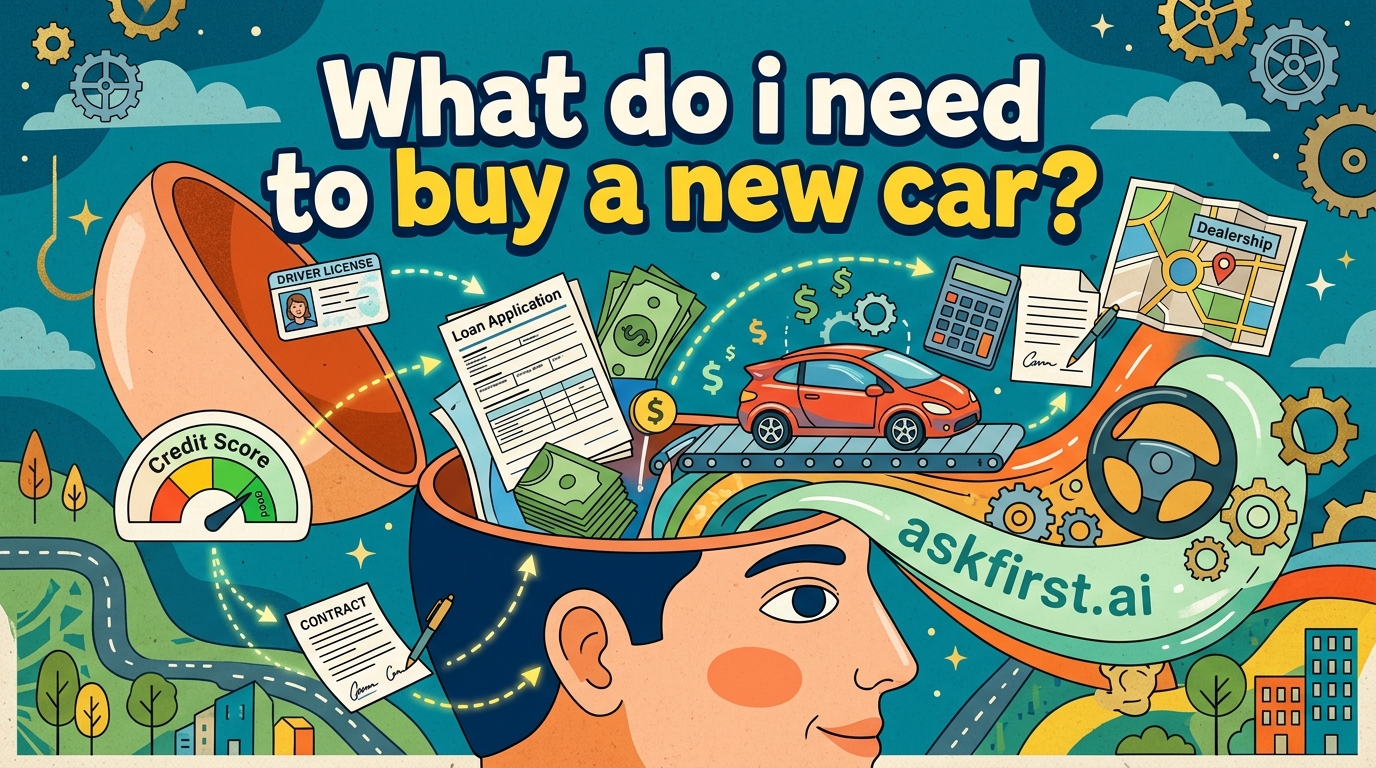
Purchasing a new vehicle is a significant financial commitment that requires careful planning, rigorous research, and a clear understanding of the transactional process. Whether you are stepping onto a dealership lot for the first time or upgrading your current transportation, the process is governed by a series of logical steps that ensure you remain in control of your budget and your future asset.
1. The Pre-Purchase Financial Assessment
Before engaging with a salesperson, you must establish a concrete financial baseline. According to the late personal finance expert Dave Ramsey in his book The Total Money Makeover, the golden rule of car buying is to avoid financing whenever possible, or at the very least, to ensure that car payments do not exceed 10% of your take-home pay.
- Credit Score Check: Your credit score is the single most influential factor in determining your interest rate. Check your score via services like Experian or Equifax at least one month before shopping. A score above 740 typically secures the best tier of financing.
- The Down Payment: Aim for a down payment of at least 20% of the vehicle’s purchase price. This protects you from "negative equity," a scenario where you owe more on the car than it is worth, often referred to as being "underwater" on a loan.
- Total Cost of Ownership: Do not focus solely on the sticker price. Research the insurance premiums for your specific model, projected maintenance costs, and fuel efficiency. The Kelley Blue Book (KBB) website is an industry standard for calculating the "5-Year Cost to Own," which includes depreciation and taxes.
2. Research and Vehicle Selection
Modern car buying is an information-driven process. You should never walk into a dealership without having identified the specific make, model, and trim level you desire.
- Identify Your Needs vs. Wants: Are you commuting long distances (favoring fuel efficiency or hybrid technology) or hauling heavy equipment (requiring towing capacity and torque)?
- Independent Reviews: Consult objective platforms like Consumer Reports. Their annual Auto Issue provides rigorous testing data on reliability, safety, and road performance. Unlike dealership marketing materials, these reports highlight common mechanical failures reported by actual owners.
- The Test Drive: Never skip the test drive. Spend at least 30 minutes in the vehicle. Test the ergonomics, the visibility of the blind spots, and the responsiveness of the infotainment system. Ensure that your daily necessities—such as child seats or sports gear—fit comfortably in the interior and cargo areas.
3. The Documentation Requirements
When you are ready to finalize the purchase, the dealership will require specific paperwork to verify your identity and legal standing. Ensure you have the following items organized in a folder:
- Valid Driver’s License: This is non-negotiable for both the test drive and the final registration.
- Proof of Insurance: Most dealerships will require you to provide proof that your new vehicle is covered by an active policy before you drive off the lot. Contact your insurance agent ahead of time to get a quote and prepare to add the new vehicle to your policy.
- Proof of Income: If you are financing, the lender may require recent pay stubs or tax returns to verify your ability to repay the loan.
- Trade-in Documentation: If you are trading in an old vehicle, bring the title, the current registration, and all sets of keys. Having a pre-determined value for your trade-in (researched via Edmunds.com) will prevent you from being lowballed during the negotiation.
4. Navigating the Negotiation and Closing
Negotiation is where most consumers lose their leverage. The key is to negotiate the "out-the-door" price, which includes the base price, taxes, registration fees, and dealer documentation fees.
- Avoid Monthly Payment Traps: Salespeople often ask, "What monthly payment are you looking for?" Avoid answering this question. If you focus on the monthly payment, the dealership can extend the loan term (e.g., from 60 to 84 months) to lower the payment while increasing the total interest you pay over the life of the loan.
- Understand Add-ons: Dealers often push "extras" like extended warranties, nitrogen-filled tires, or paint protection. In most cases, these are high-margin items that offer little value to the consumer. As noted by Remar Sutton in Don't Get Taken Every Time, you should be wary of any "dealer prep" fees or unnecessary protection packages that inflate the final cost.
Conclusion
Buying a new car is as much about patience as it is about capital. By conducting thorough research through reputable sources like Consumer Reports and Kelley Blue Book, maintaining a strict budget, and arriving at the dealership with all necessary documentation, you transition from a vulnerable buyer to an empowered consumer. Remember that the dealership needs your business as much as you need the vehicle; if the numbers do not align with your financial goals, you must be prepared to walk away. The best deal is one where you feel comfortable with your long-term financial stability, not just the excitement of the new car smell.