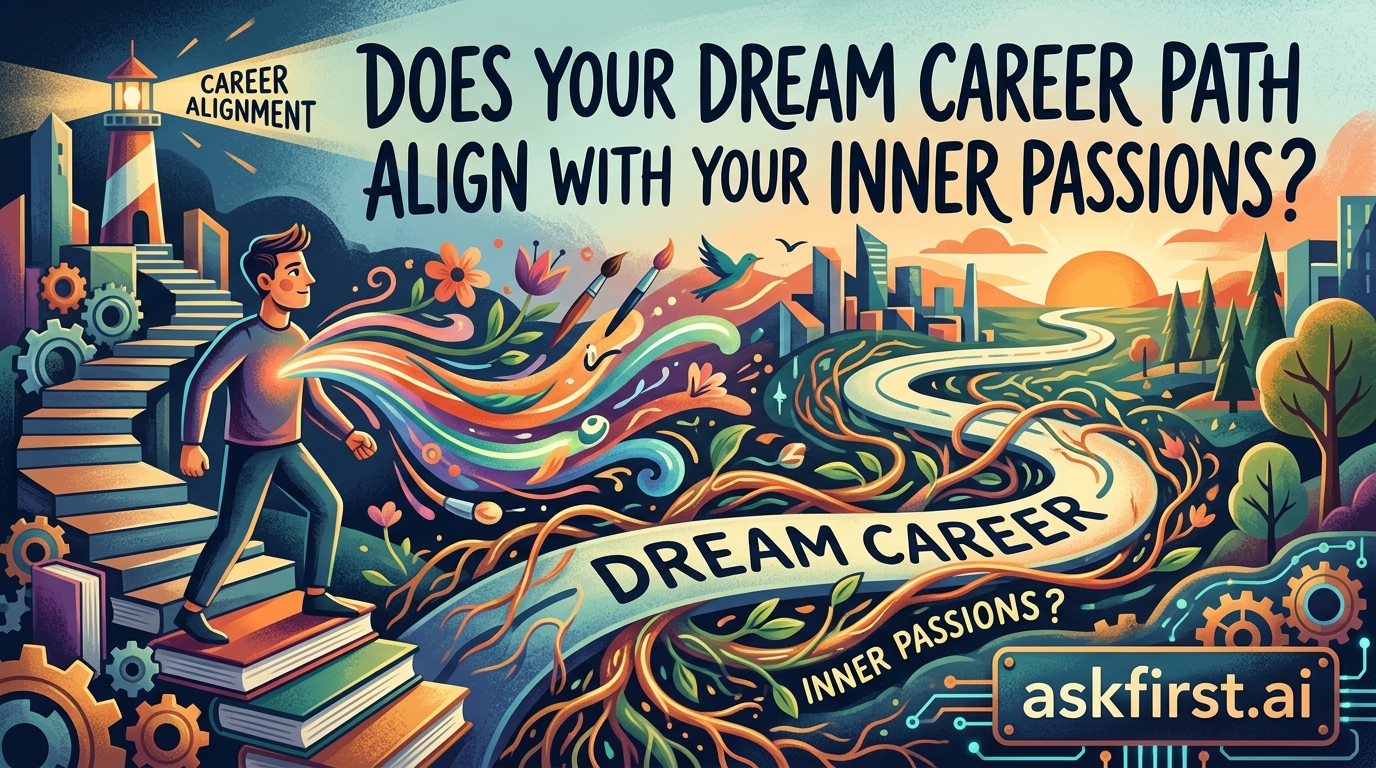
The Fundamental Alignment of Purpose and Profession
The pursuit of a career often becomes a mechanical process of matching skills to market demand. However, the most successful and enduring professional journeys are those tethered to an individual's innate interests and core values. Aligning a dream career with inner passions is not merely a philosophical luxury; it is a proven strategy for sustained high performance and psychological well-being. When the work performed daily mirrors the values held internally, the cognitive dissonance between labor and life satisfaction diminishes.
The Science of 'Ikigai' and Flow
Psychological research, particularly the concept of 'Flow' developed by Mihaly Csikszentmihalyi, highlights that human beings reach peak productivity when tasks are intrinsically rewarding. When passion meets proficiency, individuals enter a state of deep immersion where time seems to vanish and effort becomes effortless. This alignment creates a robust defense against professional burnout. Modern studies in organizational behavior consistently show that employees who identify with their tasks report lower stress levels and higher creative output. The concept of Ikigai—a Japanese term meaning 'a reason for being'—perfectly encapsulates the intersection of what one loves, what one is good at, what the world needs, and what one can be paid for.
Identifying Genuine Passion vs. Temporary Interests
Distinguishing between a fleeting hobby and a true passion requires rigorous self-analysis. A true passion is typically characterized by:
- Persistence: Does the interest sustain itself even when the activity becomes difficult or tedious?
- Curiosity: Is there an ongoing desire to learn, grow, and improve within this specific domain?
- Value Resonance: Does the pursuit reflect a deeper core belief, such as a drive for justice, creative expression, or analytical problem-solving?
Many individuals mistake 'interest'—which is often passive—for 'passion,' which is active and demanding. A dream career path requires the latter. If the vision for a career is rooted in external rewards, such as status or wealth, it often leads to what researchers call the 'Hedonic Treadmill,' where initial satisfaction quickly evaporates as one adjusts to a new standard of living.
Structural Alignment: The Strategic Pivot
For those currently operating outside of their passion, the transition requires a structural approach rather than an impulsive change. The most effective method is the 'Bridge Model':
- The Assessment Phase: Audit daily tasks and identify which activities generate genuine energy versus those that deplete it.
- The Skills Gap Analysis: Determine if current professional competencies can be applied within a new, more aligned framework. Often, the core skills (e.g., leadership, technical analysis, or project management) are transferable.
- Incremental Integration: Start by aligning small parts of the current professional life with passion projects. Volunteer for tasks or seek roles that incorporate elements of the desired career direction.
Busting the 'Follow Your Passion' Myth
Critics often argue that 'following your passion' is bad advice because it ignores market realities. However, this is a misunderstanding of the concept. The most successful career paths are those where passion is tempered by practical, deliberate practice. Cal Newport, in his work on career development, argues that 'passion' is rarely discovered; it is cultivated through mastery. By focusing on becoming 'so good they can't ignore you,' individuals naturally develop passion for their work as they gain autonomy and competence.
Long-Term Sustainability
In the year 2030 and beyond, the automation of repetitive tasks will prioritize human-centric skills like empathy, complex strategic thinking, and creative synthesis. Aligning a career with passion naturally cultivates these unique human qualities. When a professional is deeply invested in the outcome of their work, they naturally develop a high level of resilience. This resilience is the primary predictor of long-term success. Organizations thrive on the contribution of individuals who do not merely work for a paycheck but work for a purpose that resonates with their identity.
Ultimately, the path toward professional alignment is a journey of self-discovery and strategic adjustment. By prioritizing the integration of passion and labor, one does not just build a career; one constructs a lifestyle defined by meaning, contribution, and continuous personal evolution.