The Mirror Effect: Reality Television and Relational Perception
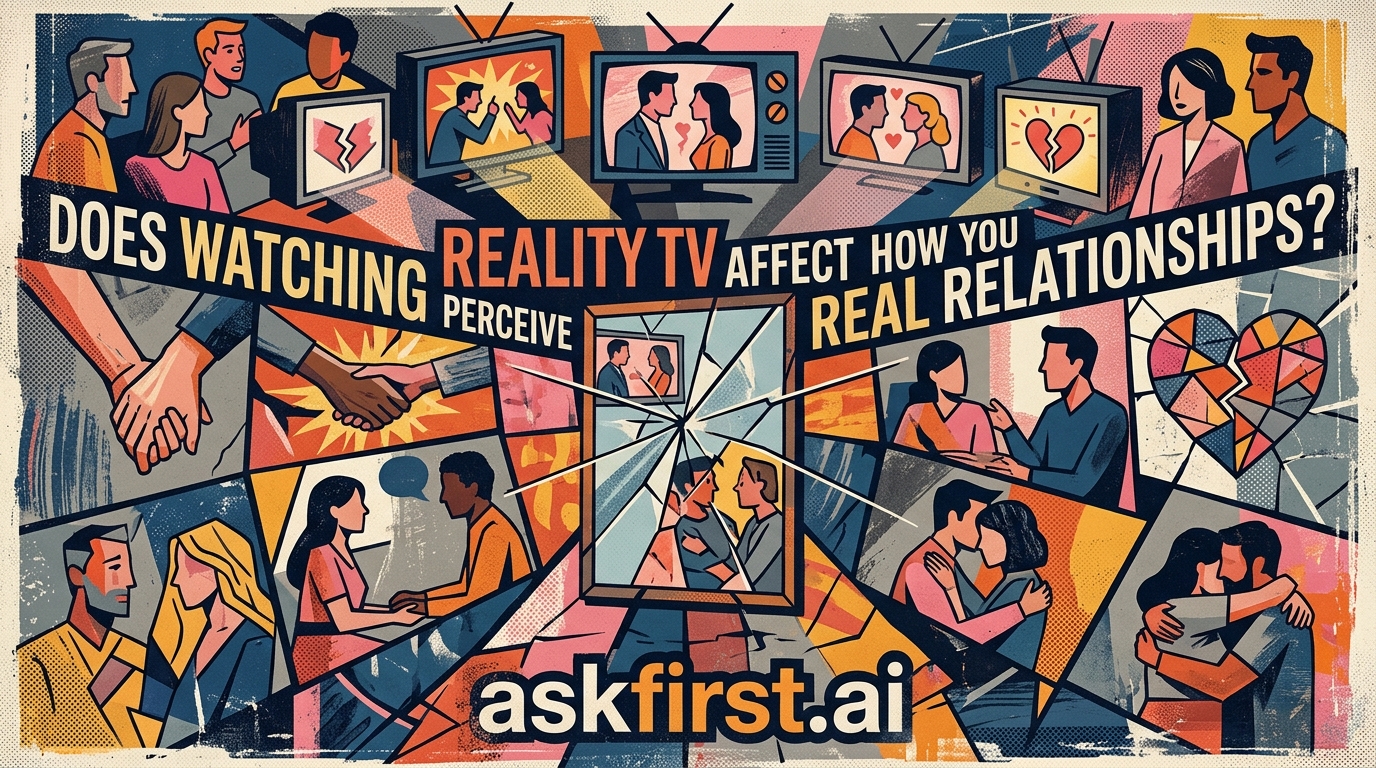
Reality television has become an inescapable cornerstone of modern culture. From high-stakes dating experiments to fly-on-the-wall domestic docuseries, the genre offers a lens into the lives of others. However, researchers in social psychology argue that these curated narratives significantly distort audience perceptions of healthy relationships, conflict resolution, and romantic expectations.
The Cultivation Theory Perspective
At the heart of this phenomenon lies Cultivation Theory, a communication framework suggesting that long-term exposure to media shapes how consumers perceive reality. In the context of reality TV, constant consumption can lead to the 'Mean World Syndrome' of romance, where viewers subconsciously begin to view real-world intimacy through the chaotic, high-drama lens of televised relationships.
- Heightened Expectation of Conflict: Reality producers rely on 'manufactured drama' to sustain audience retention. Consequently, viewers may grow accustomed to seeing toxic communication patterns—such as gaslighting, public outbursts, and ultimatums—as normal precursors to resolution.
- The Myth of Rapid Intimacy: Shows that force romantic pairings within days often ignore the developmental stages of genuine trust. This creates an 'emotional shortcut' fallacy, where viewers may feel that deep, life-altering love should happen instantaneously rather than through sustained effort.
Psychological Mechanisms at Play
Beyond simple observation, several cognitive mechanisms explain why these programs influence the viewer's psyche:
- Social Comparison Theory: Humans are evolutionarily wired to compare themselves to others to measure success. When reality TV stars showcase idealized bodies or performative grand gestures, viewers often fall into the trap of measuring their own partner against a non-existent, edited standard. This leads to profound dissatisfaction with mundane, authentic relationship experiences.
- Parasocial Interaction: The illusion of intimacy created by reality TV is powerful. Viewers often feel they 'know' participants, leading to a surrogate relationship. If the participant's relationship fails or succeeds, the viewer processes it as a model for their own behavior, internalizing lessons that may be rooted in production scripts rather than emotional intelligence.
- Confirmation Bias: If a viewer believes that all relationships involve struggle or betrayal, they will seek out shows that validate this viewpoint. This cycle reinforces existing insecurities and discourages the development of secure attachment styles.
Busted Myths and Real-World Impact
Many viewers fall prey to the myth that high-drama relationships are inherently more 'passionate' than stable, quiet ones. Psychological literature suggests the opposite; healthy relationships are often characterized by low drama and high reliability. Reality TV exploits the biological dopamine rush associated with volatility, making stable partnerships appear 'boring' in comparison. This cognitive shift can cause individuals to inadvertently sabotage healthy relationships because they feel a lack of the artificial 'high' they have been trained to associate with love.
How to Maintain Relational Integrity
To mitigate the subconscious influence of reality media, individuals should adopt a critical viewing strategy. First, recognize that these programs are entertainment, not education. They follow narrative arcs designed for ratings, not psychological well-being.
- Separate Performance from Presence: Acknowledge that the 'reality' on screen is a highly compressed, edited representation.
- Audit Your Expectations: If you find yourself holding your partner to standards seen on screen, step back and evaluate whether those standards are truly healthy or simply visually entertaining.
- Prioritize Real-Time Feedback: Focus on communication tools like active listening, empathy, and boundary setting—skills that are rarely emphasized in reality TV because they do not drive viewership through spectacle.
The Long-Term Outlook
While watching reality TV is not inherently damaging, its impact depends entirely on the viewer's level of media literacy. When individuals view these programs with a discerning eye, they can actually use them as learning tools—identifying toxic traits they wish to avoid in their own lives. However, for those who allow the genre to define their romantic paradigm, the risks of distorted intimacy are real. By choosing to prioritize the nuanced, quiet reality of mutual growth over the manufactured highs of screen-based drama, individuals can protect their relationships from the distorting mirror of modern media. True, lasting intimacy is rarely as loud as the television, but it is infinitely more rewarding.