The Paradox of Achievement: Navigating Professional Success and Intimacy
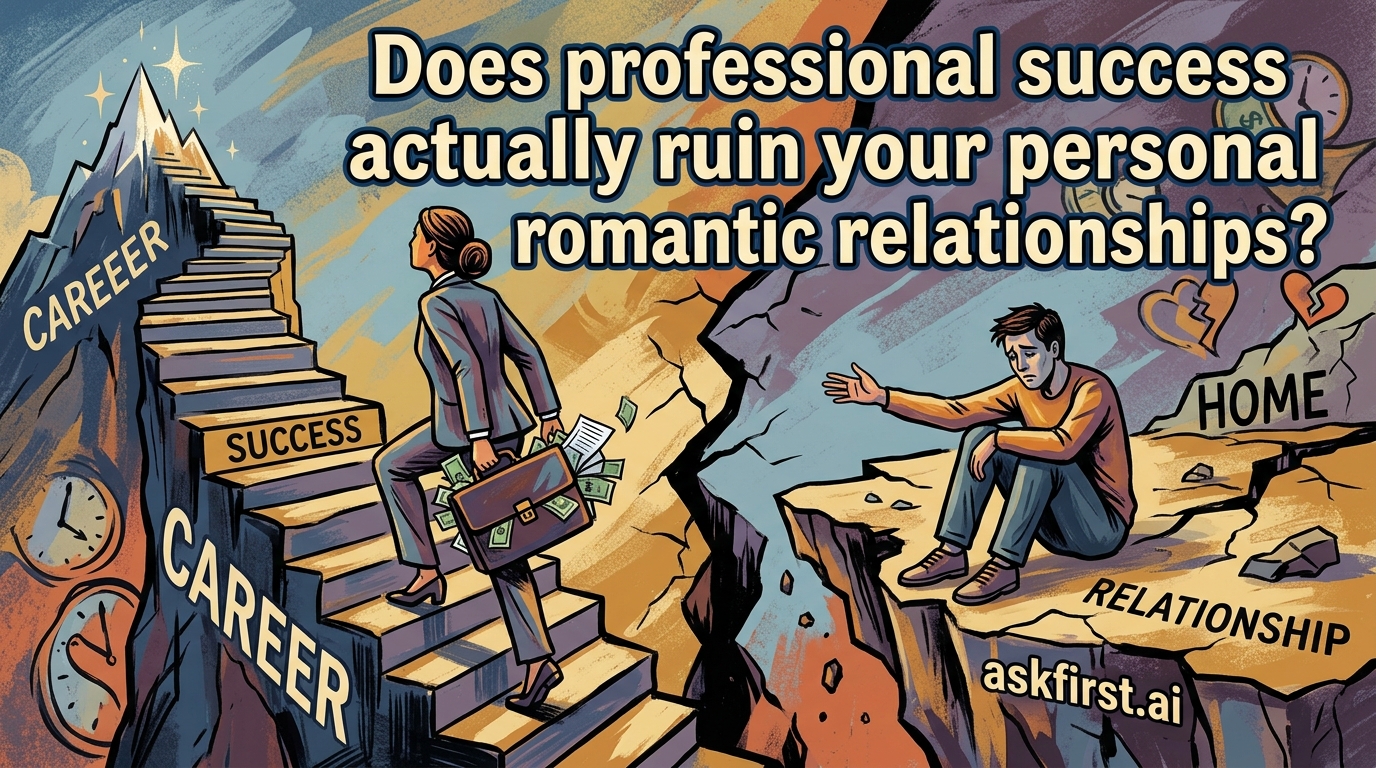
The perception that professional achievement acts as a poison to romantic stability is one of the most enduring myths in modern psychology. Often referred to as the 'Career-Success Paradox,' the belief suggests that the higher one climbs on the corporate or creative ladder, the more likely the foundation of their personal life is to crumble. However, research into relationship dynamics reveals that professional success does not inherently ruin romantic relationships; rather, it amplifies existing personality traits, communication styles, and boundary-setting capacities.
The Impact of Identity Alignment
When high achievers struggle in love, the issue is rarely the work itself, but the lack of identity differentiation. Psychologists note that individuals who tie their self-worth exclusively to their professional output often become 'void-fillers.' In a relationship, this manifests as a partner who is physically present but emotionally preoccupied with professional metrics.
- The Integration Model: High achievers who succeed in love view their career as a component of their life, not their sole identity.
- The Replacement Model: Individuals who treat work as a substitute for emotional validation often find that their professional success creates an 'intimacy gap,' leading to partners feeling secondary to the next quarterly review.
The Role of Boundary Management
One of the most critical factors distinguishing successful couples from those who succumb to career-induced burnout is the implementation of 'emotional boundaries.' Successful professionals often pride themselves on their ability to multitask. When this habit carries over into relationships—such as checking emails during a romantic dinner or attending to work calls during dedicated leisure time—the quality of connection diminishes rapidly.
Research indicates that partners feel most neglected not by the quantity of time spent working, but by the lack of 'high-quality presence.' Engaging in a conversation with a partner while mentally drafting a proposal creates a phenomenon known as 'attentional fragmentation,' which prevents the deep emotional synchronization required for lasting intimacy. Successful couples establish 'Tech-Free Sanctuaries' or 'Unplugged Hours,' effectively compartmentalizing their ambition to protect their sanctuary.
Psychological Hooks: Why We Believe Success Destroys Love
There is a deeply embedded societal bias that equates sacrifice with devotion. We often view someone choosing a partner over a promotion as 'romantic' and someone choosing a promotion over a partner as 'ruthless.' This cultural narrative creates a psychological conflict for driven individuals. They begin to view their career milestones as 'evidence' against their character. This is a cognitive trap.
Common Myths Debunked:
- The 'Time-Only' Fallacy: Many believe that more hours worked equals less love. In reality, it is the quality of engagement during those hours that determines relationship satisfaction.
- The Scarcity Mindset: There is a persistent myth that one only has a finite amount of emotional energy, implying that success at work must 'steal' energy from a relationship. Studies on neuroplasticity suggest that mental stimulation in one domain can actually increase an individual's resilience and capacity for complex problem-solving within a relationship.
Practical Strategies for Sustainable Harmony
For those striving to maintain a thriving career while cultivating deep intimacy, certain strategies have proven effective across decades of longitudinal studies:
- Shared Goal Setting: Successful partners align their life-missions. If the couple shares a common vision for their future, professional success becomes a collective win rather than an individual distraction.
- Active Appreciation Cycles: High-pressure careers often lead to 'emotional blindness,' where partners forget to acknowledge the small, day-to-day contributions of the other. Implementing a ritual of gratitude helps maintain the emotional 'bank account' even when one partner is under heavy professional demand.
- Strategic Communication: When an intense professional phase is imminent, proactive communication is the greatest antidote to relationship decline. Informing a partner about an upcoming 'crunch time'—and clearly stating when the period will end—prevents the buildup of resentment and mystery that often fuels conflict.
The Long-Term Perspective
Ultimately, professional success acts as a magnifying glass. If a foundation of trust, clear communication, and mutual respect is already present, professional achievement can serve to bolster a partnership, providing resources, stability, and shared pride. However, if the foundation is fragile, the stress of professional ambition will inevitably test the structural integrity of the union.
The conclusion is clear: Success does not ruin relationships; the failure to consciously manage the transition between 'executive' mode and 'partner' mode is what causes friction. By adopting a mindset of intentionality, where both the career and the romance are treated as vital, nurtured ecosystems, one can achieve extraordinary heights in both domains simultaneously. Success, when balanced with emotional intelligence, creates a synergistic effect that leads to a deeply fulfilled life.