The Psychology of Cinematic Immersion: Solitude Versus Social Viewing
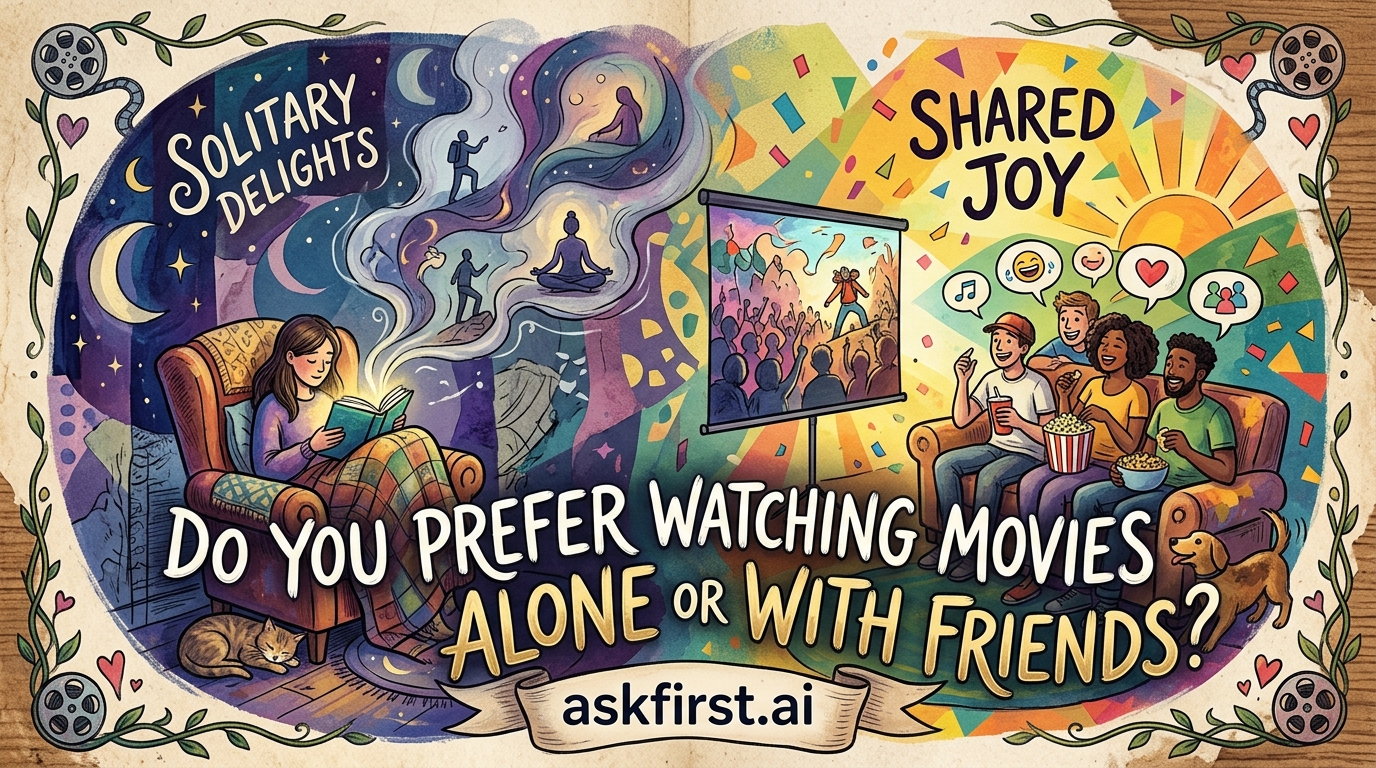
Choosing the environment for cinematic consumption is not merely a matter of convenience; it represents a psychological choice between two distinct modes of engagement: Introspective Immersion and Shared Communal Experience. Decades of research in media psychology suggest that these two modalities trigger different neural responses, influence emotional regulation, and alter the way stories are encoded into long-term memory.
The Case for Solitary Viewing: Deep Immersion
When an individual chooses to watch a film in solitude, they enter a state of high-arousal focus often referred to by psychologists as flow. Without the distraction of social performance—the subtle pressure to react, comment, or align one's emotions with others—the viewer becomes fully submerged in the diegetic world of the film.
- Enhanced Cognitive Processing: Research indicates that the absence of social stimuli allows the brain to allocate more cognitive resources toward complex plot nuances, intricate cinematography, and subtextual dialogue. This is particularly crucial for art-house cinema or dense narrative thrillers that require undivided attention.
- Emotional Autonomy: The viewer retains absolute control over their emotional trajectory. There is no need to censor reactions or mask vulnerability, allowing for a pure, uninhibited empathetic response to the film’s narrative arc. This is essential for films dealing with heavy existential themes where communal judgment might stifle genuine introspection.
- Controlled Pacing: Solitary viewers can pause, rewind, or re-examine frames without negotiating social friction, a feature highly valued by film analysts and academic researchers.
The Case for Communal Viewing: The Social Glue
Conversely, watching a film with friends functions as a social bonding ritual. Humans are inherently social creatures; the act of consuming art together mirrors the ancestral practice of gathering around a fire to share stories.
- Co-Regulation of Emotion: When friends watch a movie together, they engage in a phenomenon called emotional synchrony. Studies on collective viewing show that heart rates and physiological arousal markers often mirror each other across a group. This shared physiological state creates a powerful bond, essentially tricking the brain into feeling closer to the people in the room.
- The Feedback Loop of Meaning: Watching with others introduces a secondary layer of cognitive synthesis. Post-movie discussions, debates, and shared observations transform a static piece of media into a dynamic conversation, creating a 'third entity'—the discussion itself—which often provides more lasting satisfaction than the movie alone.
- Validation of Experience: Laughter, tension, and relief are heightened when they are validated by others. A jump-scare in a horror film or a comedic beat in a satire functions significantly better as a social catalyst, where the collective reaction amplifies the individual’s perception of the experience.
Comparative Analysis: Which is Superior?
| Feature | Solitary Viewing | Communal Viewing |
|---|---|---|
| Focus | Intellectual & Personal | Emotional & Social |
| Distractions | Minimal | Moderate to High |
| Memory Recall | Detail-oriented | Context-oriented |
| Primary Goal | Deep Exploration | Connection & Bonding |
The Neurobiological Perspective
Neurologically, solitary viewing engages the Default Mode Network (DMN), which is associated with internal thought processes and personal meaning-making. This explains why some people find solitary movie nights deeply restorative and transformative. Meanwhile, communal viewing activates the Mirror Neuron System and the Reward Circuitry (dopaminergic pathways) associated with social affiliation. The dopamine release is often higher in group settings because the brain equates shared enjoyment with tribal survival benefits.
Expert Recommendation: A Hybrid Strategy
For those seeking to maximize their engagement with cinema, a bifurcated approach is recommended. Treat first-time viewings of narratively complex, dialogue-heavy, or deeply personal films as solitary engagements. This ensures the cognitive load is not compromised by social expectations. Reserve communal viewings for films characterized by high kinetic energy, humor, or genre-staple tension—experiences designed to be echoed and shared.
Ultimately, the 'right' way to watch a film is contingent upon the goal of the viewer. If the objective is to analyze the work of an auteur, silence and solitude are the tools of the trade. If the objective is to nurture social bonds and collective emotional expression, the inclusion of peers is not just recommended—it is a functional necessity of human experience.