The Multifaceted Roots of Youth Indiscipline: A Comprehensive Analysis
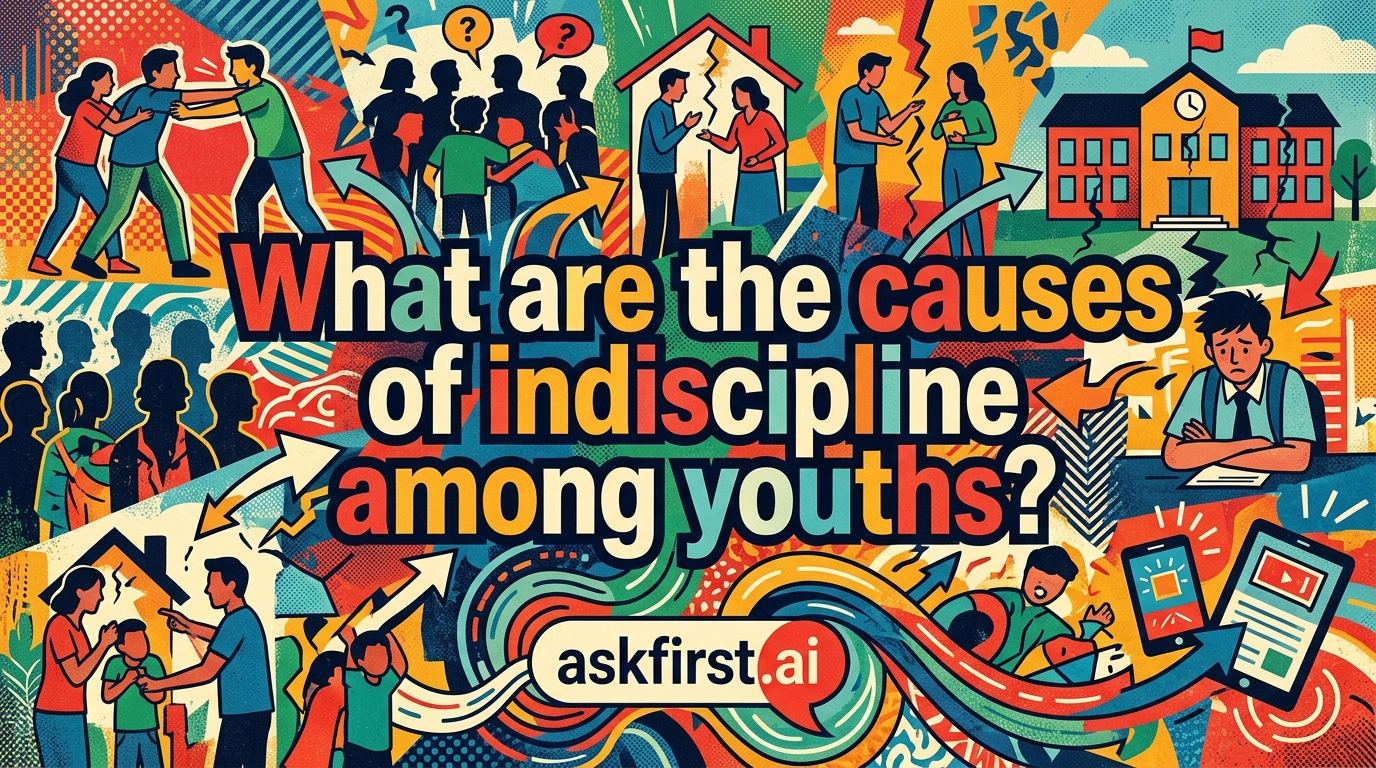
The phenomenon of indiscipline among the youth is a complex, multifaceted issue that has preoccupied sociologists, educators, and psychologists for decades. It is not merely a manifestation of "rebellion," but rather a symptom of deeper systemic, environmental, and developmental fractures. To understand why young people deviate from social norms and institutional expectations, we must look beyond the surface behavior and examine the intricate web of influences that shape their formative years.
The Erosion of the Primary Socialization Unit: The Family
The family is the first laboratory of social behavior. According to Urie Bronfenbrenner in his seminal work The Ecology of Human Development, the microsystem—the immediate environment of the child—is the most potent predictor of future conduct. When the family structure is unstable, whether due to economic hardship, divorce, or emotional neglect, the child often fails to internalize the foundational values of self-regulation and respect for authority.
- Permissive Parenting: As noted by Diana Baumrind in her studies on parenting styles, parents who adopt a "permissive" approach—lacking clear boundaries and consistent consequences—often raise children who struggle with impulse control. Without the "scaffolding" of discipline, youths find it difficult to navigate environments that demand adherence to rules.
- The Absence of Role Models: If parents themselves display disregard for laws or social etiquettes, the youth naturally mirror these behaviors. The "social learning theory" proposed by Albert Bandura in Social Learning Theory (1977) posits that individuals learn through observation; if the domestic sphere is characterized by volatility, the youth will inevitably replicate that volatility in school and society.
The Educational Environment and Institutional Failure
Schools are intended to be the secondary socialization agents, yet they often become sites of friction. Indiscipline frequently arises when the educational system fails to engage the student.
- Curriculum Disconnect: When the curriculum is perceived as irrelevant to the lived reality or future aspirations of the youth, academic frustration sets in. This frustration is often channeled into disruptive behavior. John Dewey, in Democracy and Education, argued that education must be an active process connected to the student's experience. When this connection is severed, the classroom becomes a space of alienation rather than growth.
- Teacher-Student Rapport: The quality of the human connection between educators and students is paramount. When students feel marginalized, misunderstood, or unfairly treated by authority figures, they often respond with defiance as a form of reclaiming agency.
The Sociocultural Influence of Media and Peer Pressure
In the digital age, the "peer group" has expanded to include global online communities. The influence of social media on youth behavior cannot be overstated.
- The Echo Chamber Effect: Platforms like TikTok and Instagram often reward sensationalist and rebellious behavior. Influencers who model "deviant" or anti-social lifestyles receive massive engagement, which the developing brain of a youth interprets as a blueprint for social status.
- Peer Conformity: During adolescence, the need for belonging is at its zenith. As described in Laurence Steinberg’s book Age of Opportunity, the adolescent brain is uniquely sensitive to social rewards. If the peer group culture prizes defiance—such as truancy, substance use, or disrespect—the individual is highly likely to conform to these norms to avoid social exclusion.
Economic Disparities and Systemic Alienation
Economic instability is a primary driver of youth indiscipline. When youths perceive that the "system" is rigged against them—that hard work does not lead to upward mobility—they may lose faith in social institutions altogether.
- Lack of Opportunity: In neighborhoods where unemployment is high and recreational facilities are non-existent, youths are often left in a state of aimlessness. This vacuum is frequently filled by anti-social activities. The "Strain Theory" developed by sociologist Robert Merton explains that when society provides goals (like wealth or status) but denies the legitimate means to achieve them, individuals often turn to illegitimate means (indiscipline or crime) to alleviate the strain.
- Urban Decay: Environmental psychology suggests that the physical environment influences behavior. Dilapidated neighborhoods, lack of community centers, and the prevalence of crime create a "broken windows" effect, where the normalization of disorder leads to further acts of indiscipline.
Conclusion: A Holistic Path Forward
Addressing youth indiscipline requires a departure from punitive measures that merely suppress symptoms. Instead, we must prioritize the restoration of stable family structures, the implementation of more inclusive and engaging educational models, and the creation of economic opportunities that provide youth with a stake in their own future. As Nelson Mandela famously stated, "Education is the most powerful weapon which you can use to change the world." By investing in the social, emotional, and economic well-being of the youth, society can pivot from a culture of rebellion to one of constructive participation. Understanding these causes is the first, essential step toward building a more disciplined and harmonious generation.