The Psychology of Institutional Trust versus Interpersonal Uncertainty
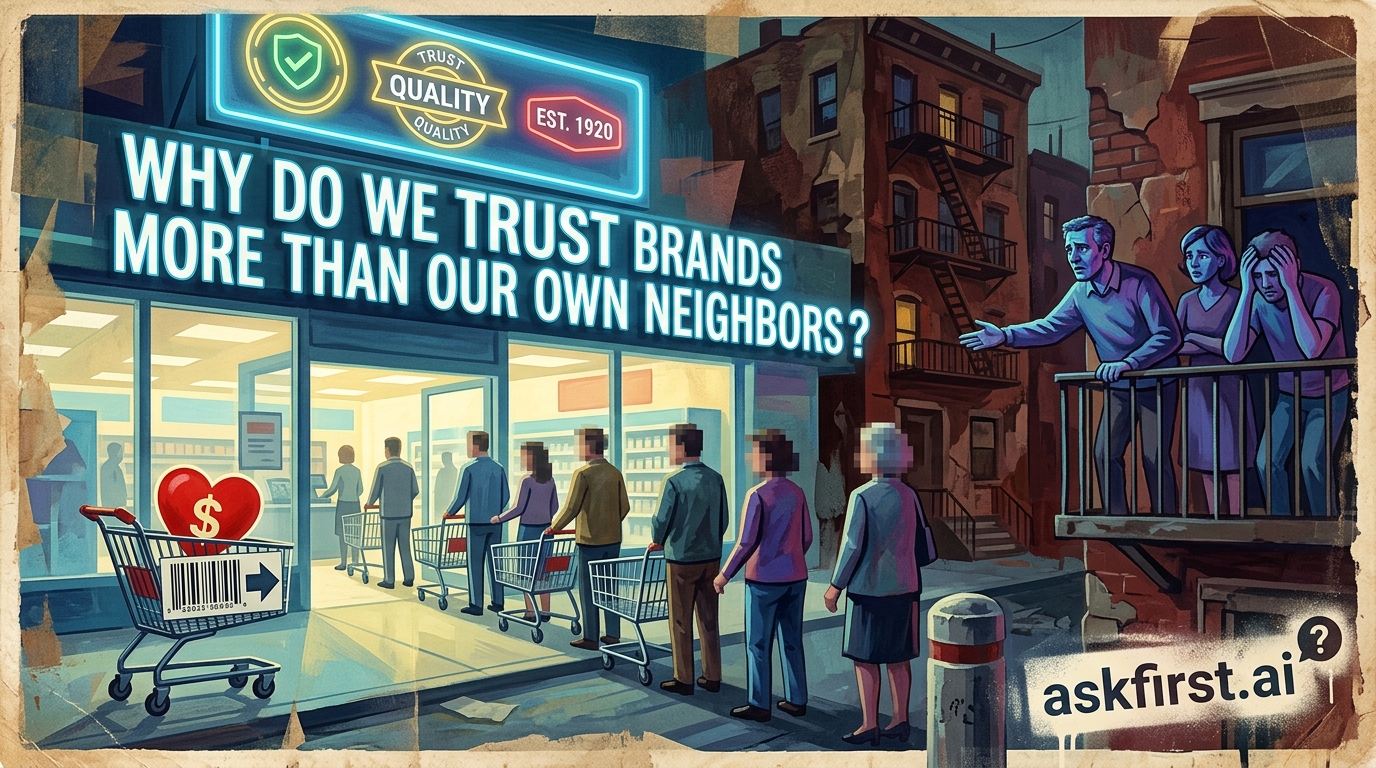
Modern human behavior presents a fascinating paradox: individuals often find themselves placing implicit, high-stakes trust in global corporations while viewing their immediate neighbors with suspicion or social distance. While the traditional view suggests that trust is built through proximity and shared experience, the evolution of consumer culture has shifted the locus of reliability toward brands. This phenomenon is rooted in predictability, psychological signaling, and the minimization of cognitive risk.
The Power of Radical Predictability
Humans possess an innate drive to reduce uncertainty in their environment. A neighbor is a complex, multifaceted individual with fluctuating moods, differing political views, and unpredictable behaviors. In contrast, a global brand offers radical consistency. When a person purchases a product from a multinational conglomerate, they are buying into a system of standardized quality control. The expectation of 'the same result, every time' provides a psychological safety net that an individual human interaction cannot guarantee. Brands commodify reliability, transforming it into a measurable, scalable asset that lowers the consumer's cognitive load.
Signaling and The Halo Effect
Brands function as powerful cultural signifiers. Through branding, companies manufacture a 'personality'—a curated set of values, aesthetics, and promises. This allows the consumer to align their self-identity with the brand. Research into the Halo Effect suggests that when a person holds a positive view of one aspect of a brand (such as its innovative marketing), they subconsciously attribute competence, ethics, and trustworthiness to other, unproven aspects of the corporation. Neighbors, conversely, lack this PR-driven machinery. Without a marketing department to manage their reputation, neighbors are perceived through their raw, unfiltered actions, which are susceptible to the negativity bias—where one minor interpersonal grievance overshadows a thousand acts of kindness.
The Architecture of Accountability
Trust is often contingent on the ability to enforce consequences. If a global brand delivers a faulty product, there is a legal and corporate infrastructure—refund policies, consumer protection laws, and public feedback loops—designed to address the issue. The framework of accountability is transparent and bureaucratic. Dealing with a neighbor, however, creates an 'awkwardness vacuum.' If a dispute arises between neighbors, the social cost of conflict is significantly higher, often leading to lasting discomfort in one's personal living space. Consequently, people subconsciously categorize brands as 'safer' entities because the conflict resolution mechanisms are transactional rather than social.
The Myth of Social Fabric and Modern Loneliness
Sociologists have noted that as society transitions toward more individualized lifestyles, the 'village' structure has decayed. Digital connectivity has replaced local community cohesion. Because people spend more time engaging with brand-curated content on digital platforms than interacting with their local environment, the emotional intimacy previously reserved for neighbors has been displaced onto the entities that dominate the digital landscape. We see brands as reliable companions because they are perpetually present in our information stream, whereas neighbors remain opaque 'strangers' behind closed doors.
Strategic Recommendations for Rebuilding Trust
- Active De-risking: Recognize that the trust placed in brands is often a substitute for the effort required to build social capital.
- Proactive Community Engagement: Moving beyond the digital sphere to initiate small, low-stakes interactions with neighbors can eventually replace the need for corporate mediation in simple daily tasks.
- Critical Consumption: Remain aware that branding is designed to simulate intimacy. By stripping away the 'lifestyle marketing' facade, individuals can better distinguish between a brand that provides a utility and a community that provides a support system.
Ultimately, the preference for brands over neighbors is not necessarily a failure of human character, but a calculated response to the complexity of the modern world. Corporations have spent trillions to perfect the art of being 'trustworthy.' To reclaim our local communities, we must apply that same intentionality to our human relationships, recognizing that while a brand provides a product, a neighbor provides the foundation of a resilient, living society.