The Threshold of Maturity: Navigating Life After 40
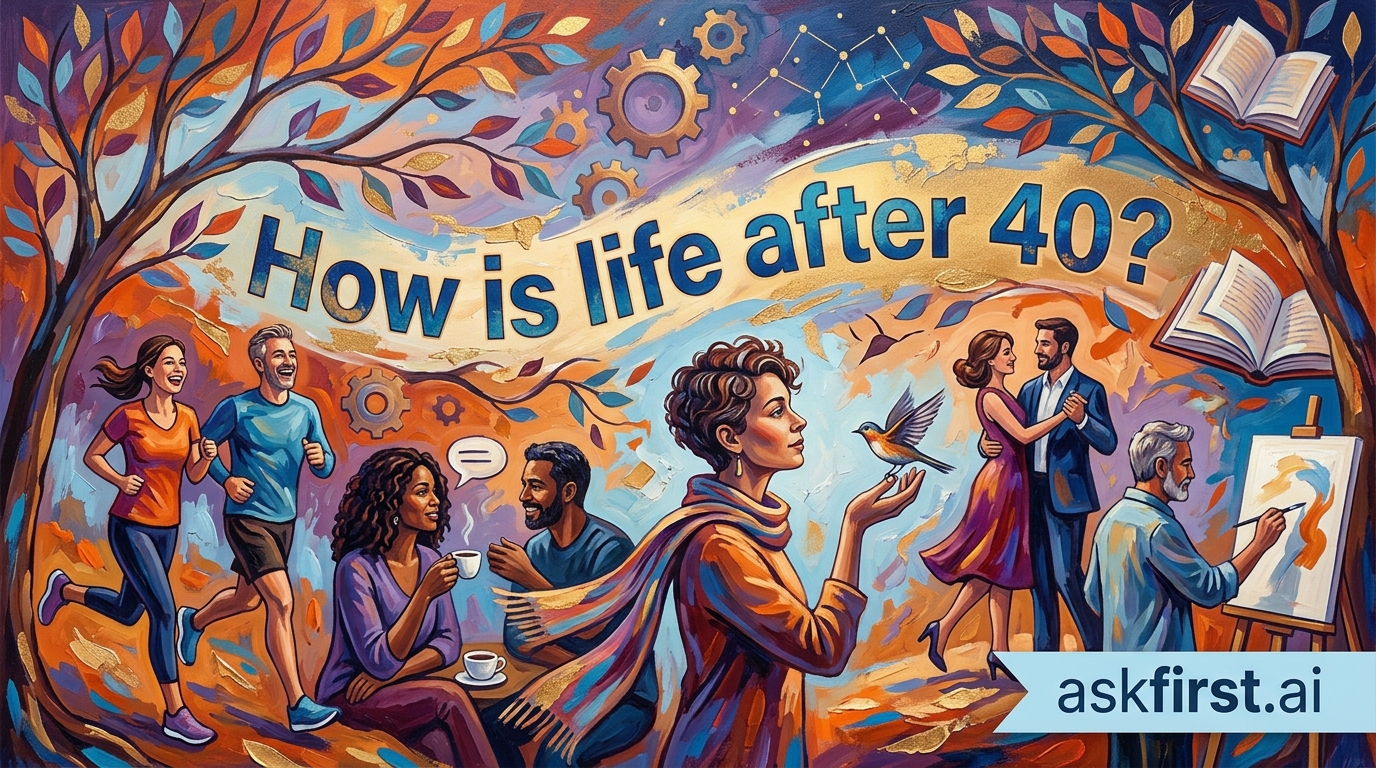
Entering the fourth decade of life is frequently framed in popular culture as a crisis, a period defined by fading youth and existential panic. However, in reality, reaching the age of 40—and the years that follow—is widely documented by psychologists, sociologists, and longevity experts as the "golden era" of human development. It is a transitional phase where the frantic, often insecure pursuit of external validation begins to wane, replaced by a profound sense of internal clarity and emotional regulation.
The Psychological Shift: The "U-Curve" of Happiness
One of the most compelling pieces of research regarding life after 40 is the "U-curve of happiness." Economists like David Blanchflower, a professor at Dartmouth College, and Andrew Oswald from the University of Warwick, have conducted extensive longitudinal studies across dozens of countries. Their research consistently shows that human happiness levels tend to dip in the late 30s and early 40s—the "midlife nadir"—but then begin a steady, upward climb throughout the 50s, 60s, and beyond.
The reason for this shift is largely attributed to the "socioemotional selectivity theory," a concept pioneered by Laura Carstensen, a professor of psychology at Stanford University. As individuals cross the 40-year mark, their perception of time changes. They realize that their time is finite, which leads them to prioritize emotionally meaningful goals over superficial ones. The anxiety of "becoming" someone is replaced by the contentment of "being" someone.
Physical Health: The Era of Intentionality
It is undeniable that the body undergoes physiological changes after 40. Metabolism slows, muscle mass may decrease if not maintained, and recovery times from injury or fatigue lengthen. However, this is not a decline; it is an invitation to transition from passive health to active, intentional wellness.
In the book Outlive: The Science and Art of Longevity, Dr. Peter Attia argues that the fourth decade is the critical window to shift one’s focus toward "Medicine 3.0." This approach emphasizes preventative maintenance—prioritizing VO2 max, muscle strength, and metabolic health. Unlike in one’s 20s, where health is often taken for granted, life after 40 rewards consistency. Those who integrate resistance training, cardiovascular health, and nutritional mindfulness into their routine often find that they possess more functional strength and endurance than they did at 25. The body becomes a project of stewardship rather than a machine that runs on its own.
Professional Mastery and the "Second Act"
The professional landscape after 40 is characterized by the accumulation of "tacit knowledge." In his book From Strength to Strength, Arthur C. Brooks discusses the concept of "fluid intelligence" versus "crystallized intelligence." Fluid intelligence—the ability to solve novel problems quickly—often peaks in early adulthood. However, crystallized intelligence—the ability to use accumulated knowledge, pattern recognition, and wisdom to solve complex problems—continues to grow well into the 60s and 70s.
This is why many of the world’s most successful entrepreneurs and leaders hit their stride after 40. They have seen the cycles of failure and success; they are less likely to be derailed by temporary setbacks. Many people use this period to pivot, seeking roles that offer more autonomy and purpose. This is the stage where the "career ladder" is often swapped for the "career portfolio," as people prioritize work that aligns with their values rather than just their paycheck.
Relationships and Emotional Intelligence
Life after 40 is often described as a period of "pruning" in one's social life. You stop wasting energy on superficial friendships or toxic dynamics. As noted in the works of developmental psychologist Erik Erikson, this stage of life is defined by "Generativity vs. Stagnation." The focus shifts toward mentoring the next generation, investing in deep family bonds, and cultivating a smaller, high-quality circle of friends.
Emotional regulation also hits a peak. Because you have likely experienced heartbreak, professional loss, and the inevitable cycle of change, you become more resilient. You stop taking minor inconveniences personally. You develop what is often called "the gift of gab and the power of silence"—knowing when to speak and, more importantly, when to remain unbothered.
Conclusion: The Liberation of Authenticity
Ultimately, life after 40 is a process of shedding. You shed the need for others' approval, the fear of failure, and the obsession with perfection. It is a decade defined by the realization that you are the author of your own narrative.
Whether it is the pursuit of new hobbies, the deepening of existing relationships, or the strategic optimization of one's physical health, the period after 40 is not a sunset; it is a second act that is often more vibrant, stable, and fulfilling than the first. By embracing the wisdom of experience and the intentionality of the present, life after 40 becomes less about what you have lost and everything about what you have finally gained: yourself.