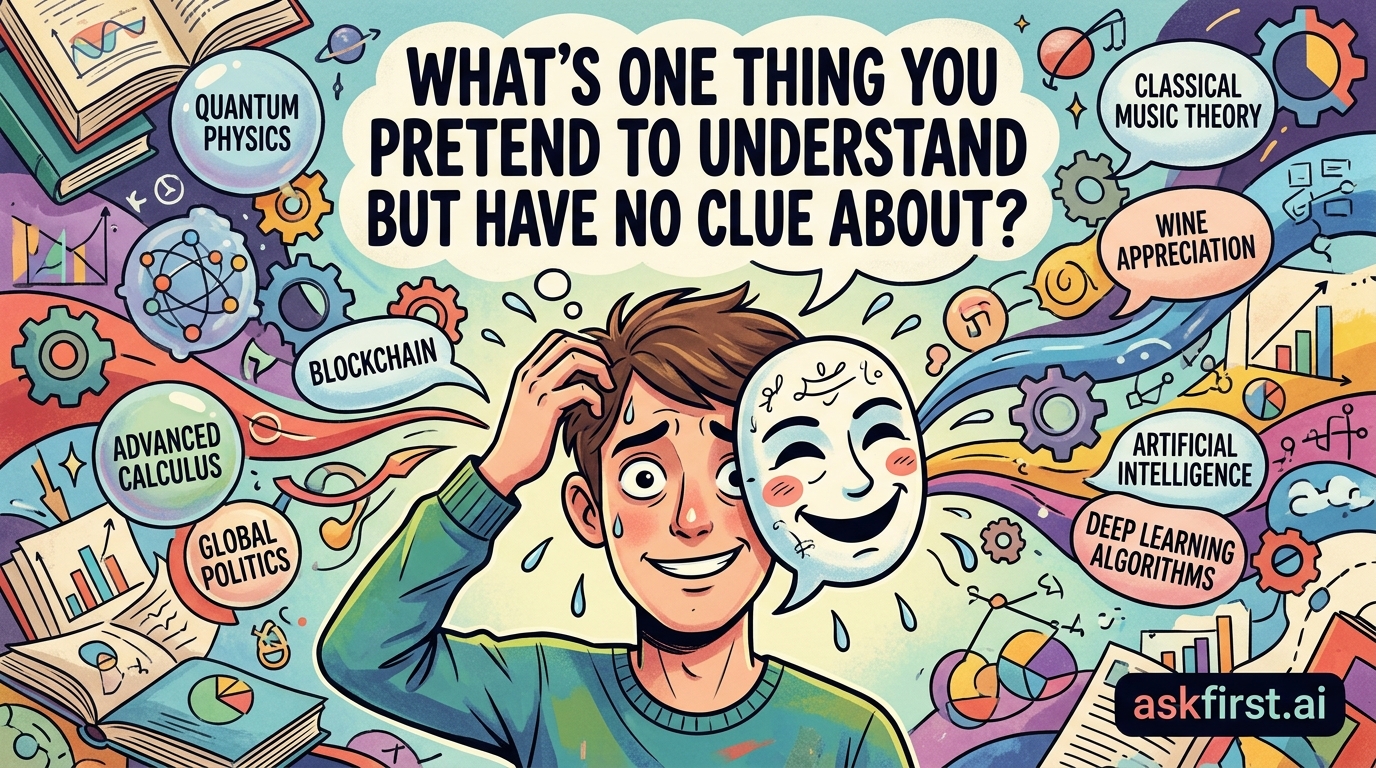
The Illusion of Objective Reality: Navigating the Quantum Enigma
In the pursuit of absolute knowledge, humans often find themselves standing on the precipice of the "explanatory gap." While we categorize the universe through the lenses of physics, biology, and philosophy, there remains a profound, unsettling domain where our intellect fails to grasp the fundamental mechanics of existence: Quantum Entanglement. Despite the mathematical frameworks provided by luminaries like Niels Bohr and Werner Heisenberg, the reality of "spooky action at a distance"—as Albert Einstein famously dubbed it—remains something we treat as a solved equation while, in truth, we have no intuitive clue as to how it functions.
The Mathematical Mirage vs. Physical Reality
When we discuss quantum entanglement, we are essentially reciting a script. We describe how two particles become linked, sharing a single quantum state regardless of the distance separating them. If you measure the spin of one particle, the other instantaneously assumes the corresponding state, faster than the speed of light.
We point to the Bell Test experiments, such as those conducted by Alain Aspect in the 1980s, as "proof" that locality is violated. However, stating the math is not the same as understanding the mechanism. We treat the wave function as a tangible entity, yet when pressed to explain why the universe preserves this correlation across light-years, our expertise dissolves into metaphors. We pretend to understand it because the math works, but we are essentially using a calculator to describe the ocean without knowing how to swim.
The "Shut Up and Calculate" Dilemma
The physicist N. David Mermin, in his seminal commentary on the nature of quantum mechanics, famously summarized the prevailing attitude in the scientific community with the phrase: "Shut up and calculate!" This is the ultimate intellectual "pretend" move. It suggests that as long as our equations predict the outcome of an experiment, we have fulfilled our duty as experts.
However, this approach ignores the ontological void. In his book The Ghost in the Atom, P.C.W. Davies explores the profound disconnect between the probabilistic nature of the quantum world and the deterministic reality we experience. We pretend that our macroscopic reality is built upon this foundation, yet we cannot bridge the gap between a superposition of states and the solid, singular chair you are sitting on. We have institutionalized a form of "learned ignorance," where we label our inability to visualize the phenomenon as "quantum strangeness" to avoid admitting that the phenomenon remains fundamentally incomprehensible to the human cognitive architecture.
The Failure of Intuition in High-Dimensional Spaces
Humans are evolutionary machines designed to understand three-dimensional space, linear time, and cause-and-effect relationships. We are hardwired to track predators and gather fruit. We are not wired to perceive the Hilbert space—the mathematical space where quantum states live, which possesses an infinite number of dimensions.
When researchers like Roger Penrose, in The Emperor’s New Mind, attempt to bridge the gap between consciousness and quantum mechanics, they are essentially trying to map the infinite onto the finite. We pretend to follow these arguments, nodding along to discussions about quantum gravity and microtubule vibrations, but we are merely rearranging symbols. We have no "clue" because our brains lack the hardware to simulate a non-local, multi-dimensional reality. We are like flatlanders trying to comprehend the concept of a sphere; we can see the shadow it casts on our plane, but the object itself is forever outside our grasp.
The Comfort of the Consensus
Why do we pretend? Because the alternative is admitting that our standard model of physics is a descriptive map, not the territory itself. In The Structure of Scientific Revolutions, Thomas Kuhn explains how scientific paradigms allow experts to function within a consensus. We rely on this consensus as a proxy for understanding. If the collective of world-class physicists agrees that entanglement is "real," we adopt that belief to maintain social and professional cohesion.
Consider the Many-Worlds Interpretation championed by Hugh Everett III. It is a brilliant way to avoid the paradoxes of measurement, but it requires us to accept that every choice we make branches the universe into infinite realities. We "pretend" this is a logical conclusion rather than a desperate attempt to keep the math intact. We accept the theory because it is the least uncomfortable way to ignore the fact that the universe’s core operating system is completely alien to our logic.
Conclusion: The Value of Intellectual Humility
Recognizing that we "pretend" to understand concepts like quantum entanglement is not a failure of intelligence; it is a necessary acknowledgment of our biological limits. We excel at building tools and measuring effects, but the "why" remains shielded by the limitations of our evolutionary heritage. By admitting that we are merely observing the shadows on the cave wall, we open ourselves to true discovery. The next great leap in human knowledge will not come from those who pretend they understand everything, but from those who have the courage to say, "I have no clue how this works, let us look closer." True expertise is knowing exactly where your understanding ends and the mystery begins.