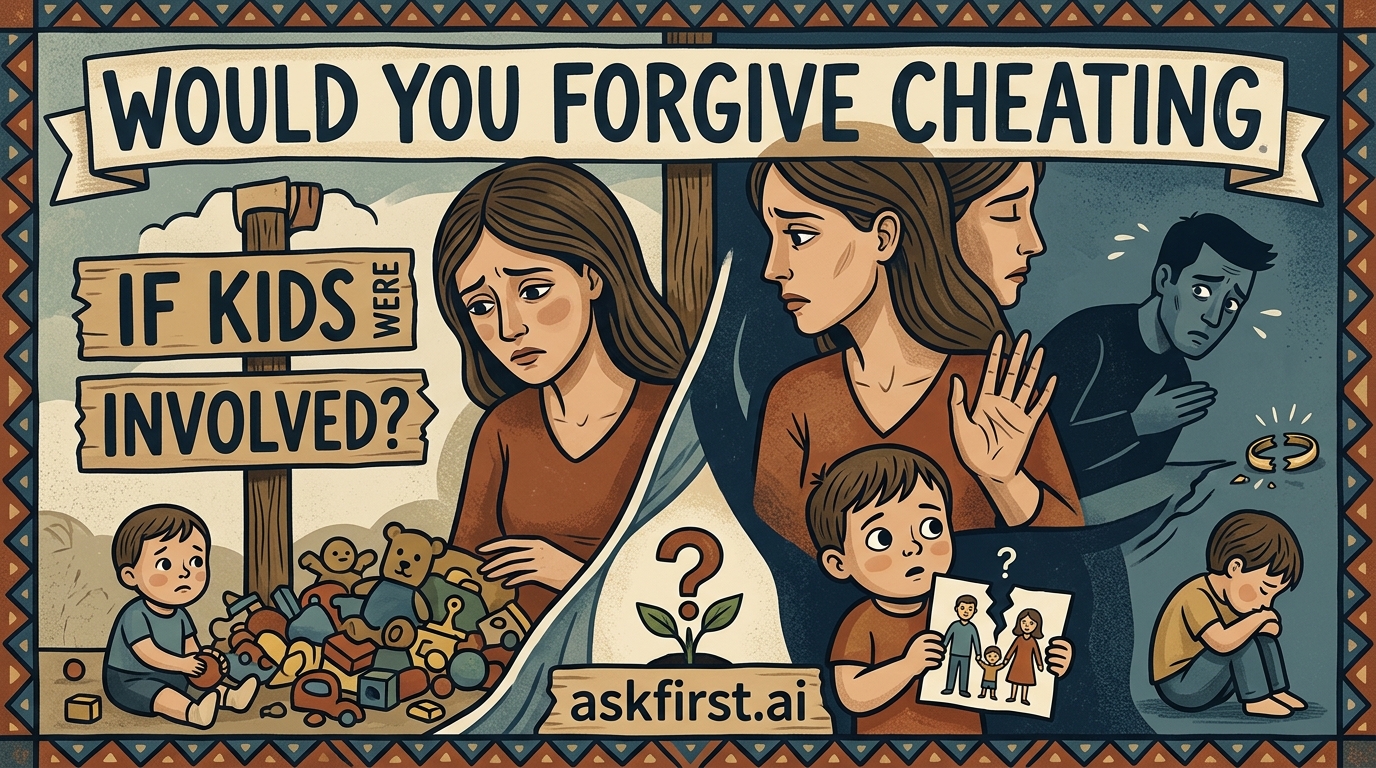
The question of whether to forgive infidelity when children are involved is one of the most complex dilemmas in modern relationship psychology. It sits at the intersection of personal integrity, parental responsibility, and the long-term emotional architecture of a family unit. There is no singular, universal answer; instead, there is a spectrum of decision-making frameworks that experts use to help individuals navigate this profound crisis.
The Developmental Impact of Parental Conflict
When children are involved, the primary concern shifts from the ego of the betrayed partner to the psychological stability of the child. Renowned family therapist Dr. John Gottman, in his seminal work The Seven Principles for Making Marriage Work, highlights that it is not necessarily the divorce itself that harms children, but the chronic, unresolved conflict between parents.
If a couple chooses to stay together for the sake of the children but fails to address the infidelity, the resulting "emotional cold war" can be more damaging than a clean separation. Children are highly attuned to micro-expressions and shifts in domestic tension. If they grow up in an environment where resentment, passive-aggression, or emotional distance is the norm, they may internalize these patterns, leading to distorted views of healthy relationships in their own adult lives. Therefore, the decision to "forgive" cannot be merely a passive act of staying; it must be an active, transformative process of reconciliation or a strategic, amicable dissolution.
The Distinction Between Forgiveness and Reconciliation
A critical error many people make is conflating forgiveness with reconciliation. As noted by Dr. Fred Luskin in his book Forgive for Good, forgiveness is an internal process aimed at releasing the burden of resentment for one’s own mental health. Reconciliation, by contrast, is a bilateral process that requires the restoration of trust, transparency, and behavioral change from the unfaithful partner.
In a household with children, one can choose to forgive—releasing the anger to maintain a functional co-parenting dynamic—without choosing to reconcile. For example, if a partner has a history of chronic infidelity or refuses to engage in therapy, the betrayed partner might choose to "forgive" in the sense of letting go of the toxic desire for revenge, while simultaneously moving toward separation to protect the children from a volatile environment. This distinction is vital for maintaining one's own sanity and providing a stable role model for the children.
The "Stay for the Kids" Myth
The historical narrative that one should always stay together for the children is increasingly being challenged by developmental psychologists. In The Unexpected Legacy of Divorce, Dr. Judith Wallerstein explores the long-term outcomes of children of divorce. Her research suggests that children often fare better when they are raised in two separate, peaceful households rather than one household characterized by contempt and betrayal.
If you choose to stay, it must be because both parties are committed to a rigorous process of repair. This usually involves:
- Radical Transparency: The unfaithful partner must be willing to provide full disclosure and answer questions, however painful, to rebuild the foundation of truth.
- Professional Intervention: Engaging in couples therapy is rarely optional in these scenarios. A neutral third party, such as those trained in the Gottman Method, provides the structure needed to navigate the fallout of betrayal.
- The "New" Marriage: Both partners must accept that the old marriage is effectively over. If they stay, they are building a new relationship from the ashes of the old one, which requires a fundamental shift in expectations and boundaries.
Assessing the Safety and Viability of the Relationship
Before deciding to forgive, one must conduct a cold, objective assessment of the relationship’s health beyond the act of cheating. Is this a singular lapse in judgment, or is it symptomatic of a deeper, characterological issue? If the infidelity is part of a pattern of narcissistic abuse or gaslighting, "forgiving" may simply grant the perpetrator license to continue the cycle.
In Boundaries: When to Say Yes, How to Say No by Dr. Henry Cloud and Dr. John Townsend, the authors argue that forgiveness does not equate to the removal of consequences. If the cheating partner does not demonstrate genuine remorse—defined as a change in behavior and a willingness to be held accountable—then staying "for the kids" is likely to result in the children witnessing a lack of self-respect in the betrayed parent. Children learn how to be treated by watching how their parents allow themselves to be treated.
Conclusion
Forgiving infidelity when children are involved is not a binary choice between "staying and suffering" or "leaving and destroying." It is a sophisticated exercise in risk management and emotional intelligence. If the goal is the well-being of the children, the most important factor is the restoration of peace and respect in the home. Whether that peace is achieved through the hard work of reconciliation or the dignified process of separation, the children’s long-term health depends on the parents' ability to prioritize emotional maturity over the impulse to either retaliate or suppress. Ultimately, forgiveness is a gift you give yourself to heal, while the structure of your family life must be built on a foundation of honesty that children can rely upon as they grow.