The Psychology of Shared Experiences: Movie Dates Versus Concert Nights
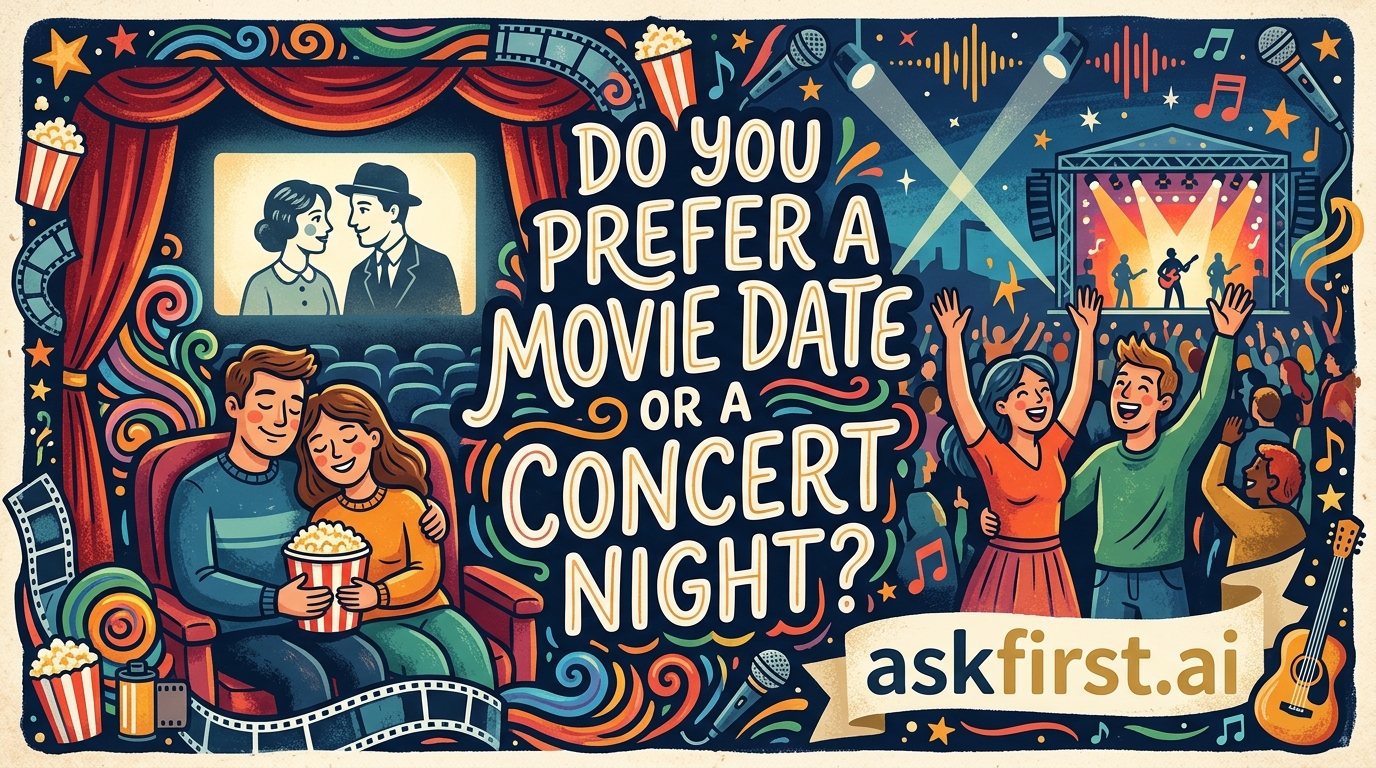
Choosing the ideal social outing often hinges on understanding the psychological impact of sensory environments. When comparing a movie date to a concert night, one is looking at two distinct categories of human connection: the passive-receptive experience versus the active-communal experience. Each format offers a unique framework for building intimacy or expanding social horizons.
The Movie Date: A Study in Intimacy and Synchronization
A movie date is fundamentally a passive experience, yet it serves as an excellent vehicle for what psychologists call 'affective synchronization.' When two individuals watch a film together, their physiological responses—such as heart rate and emotional engagement—often align. This synchronization creates a sense of shared reality without the pressure of constant verbal communication.
- Focus and Attention: A movie forces a shared focus on a third party (the narrative), which serves as a safety buffer for individuals who may feel awkward during long, one-on-one silences.
- Discussion Potential: The film provides a ready-made topic for conversation afterward, allowing partners to explore each other's values, moral compasses, and aesthetic tastes through the lens of character choices and plot developments.
- The Sensory Environment: Controlled environments, such as theaters, minimize distractions. This isolation can be beneficial for early-stage relationships where fostering focus on the partner is paramount.
The Concert Night: The Power of Collective Effervescence
Conversely, a concert night taps into a sociological phenomenon termed 'collective effervescence.' Coined by Émile Durkheim, this concept describes the feeling of intense unity and belonging that arises when a group of people gathers for a shared, high-energy event. Concerts are inherently active; they require movement, physical presence, and the collective expression of emotion.
- Oxytocin and Bonding: The combination of rhythmic music and collective motion is known to trigger the release of oxytocin, often called the 'bonding hormone.' This chemical reaction can create an intense, sometimes artificial, sense of closeness between companions that persists long after the music stops.
- High-Stakes Socialization: A concert is a high-stimulus environment. It tests how two people handle chaos, navigate crowds, and enjoy physical spontaneity. It is less about quiet conversation and more about shared excitement and stamina.
- Memory Formation: Because of the heightened emotional state and sensory input, concert nights are often archived in the brain as 'flashbulb memories.' These memories are more vivid and longer-lasting than the mundane recollection of watching a two-hour film, providing a stronger shared narrative for the future of the relationship.
Comparative Analysis: Which Fits Your Needs?
To determine the preference, one must evaluate the goals of the engagement. If the objective is to nurture deep conversation and establish a foundational understanding of one another's perspectives, the Movie Date acts as a structural guide. The dim lighting and low noise floor allow for subtle observation and gentle dialogue.
If the objective is to generate dopamine, build high-energy camaraderie, and experience a rush of shared adrenaline, the Concert Night is empirically superior. Research into the 'misattribution of arousal' suggests that the physiological excitement of a loud, upbeat concert can be subconsciously transferred onto one’s companion, increasing the perceived level of attraction or enjoyment of that person.
Strategic Considerations for Longevity
- For Introverts: Movie dates often provide a psychological reprieve, allowing for social connection without the overstimulation of loud, crowded venues.
- For Extroverts: Concert nights satisfy the need for external stimulation and high-octane interaction, preventing the feeling of confinement that can occur in a movie theater.
- The Relationship Phase: Early in a relationship, movies allow for low-risk discovery. As a relationship matures, the concert experience can be used to break the monotony of routine and reintroduce the thrill of collective excitement.
Ultimately, neither option is objectively better; they serve different psychological needs. The preference depends on whether one values the 'synchronized introspection' of a film or the 'collective effervescence' of a live performance. Both experiences, when chosen intentionally, serve as powerful tools for deepening human connection and crafting the shared history that defines meaningful personal relationships.