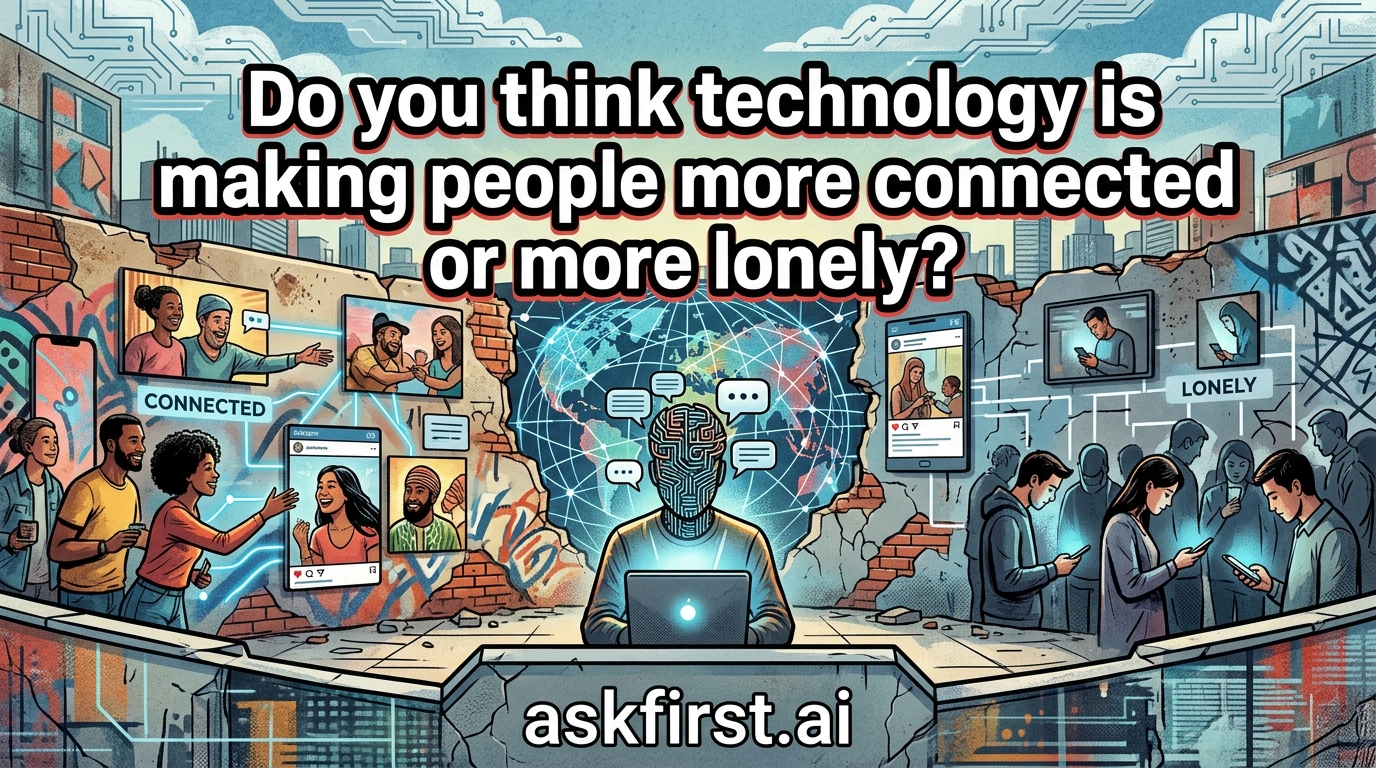
The debate surrounding whether technology fosters genuine human connection or exacerbates the modern epidemic of loneliness is one of the most pressing sociological inquiries of our time. As we navigate the digital age, we find ourselves in a paradoxical state: we are more technologically linked than any civilization in history, yet we report higher rates of social isolation, anxiety, and perceived loneliness. To understand this phenomenon, one must look beyond the mere utility of devices and examine the psychological and sociological shifts that have occurred since the dawn of the hyper-connected era.
The Illusion of Connectivity: The "Quantity vs. Quality" Fallacy
The primary argument for technology as a tool for connection is based on the accessibility of communication. Platforms like WhatsApp, Zoom, and social media networks allow us to transcend geographical boundaries. However, as Sherry Turkle, a professor at the Massachusetts Institute of Technology (MIT) and author of Alone Together: Why We Expect More from Technology and Less from Each Other, argues, we have traded conversation for mere connection.
Turkle posits that the digital interface often acts as a filter, allowing us to curate our personas and edit our interactions. In face-to-face conversation, we must navigate the messiness of human emotion, silence, and spontaneity. In digital communication, we can retreat into a "Goldilocks zone"—not too close, not too far, just right. The result is that while we may have thousands of "friends" or "followers," we are often left with a lack of deep, reciprocal intimacy. Real connection requires vulnerability, and digital platforms are fundamentally designed to reward performance rather than raw, unfiltered humanity.
The Erosion of "Third Places" and Physical Proximity
Sociologist Ray Oldenburg, in his seminal work The Great Good Place, identified the importance of "third places"—social surroundings separate from the two usual social environments of home ("first place") and the workplace ("second place"). Examples include coffee shops, community centers, and parks. Technology has significantly disrupted the necessity of these physical spaces.
When we choose to consume entertainment or socialize via digital screens, we bypass the serendipitous encounters that define organic community building. When a person spends their evening scrolling through social media feeds, they are engaging in a solitary activity that mimics the appearance of social participation. This is often referred to as "passive consumption." Unlike a physical gathering where one is forced to acknowledge the presence of others, digital environments allow us to be observers of other people’s lives without ever engaging in the mutual exchange of a real relationship. This leads to what researchers call "social comparison theory," where we constantly measure our internal reality against the curated external realities of others, often resulting in feelings of inadequacy and isolation.
The Neurobiology of Digital Interaction
From a biological perspective, human connection is built on the release of oxytocin, often called the "bonding hormone." Research in The Social Neuroscience of Human Attachment by Coan and Sbarra suggests that this neurochemical response is significantly more potent during physical touch, eye contact, and shared physical presence.
While video calls provide a visual and auditory approximation of presence, they lack the multi-sensory depth that human brains require to feel truly "seen." When we interact through a screen, we experience "Zoom fatigue," a phenomenon where the brain struggles to process non-verbal cues. This cognitive load leaves us feeling drained rather than invigorated by social contact. Consequently, even when we are technically "connected," our biology informs us that we are still alone. We are essentially starving for the depth of physical interaction while being fed the empty calories of digital engagement.
The Algorithmic Echo Chamber
Furthermore, modern technology is governed by algorithms designed to maximize engagement, not necessarily human well-being. These algorithms often prioritize content that triggers strong emotional responses, such as outrage or envy, which can polarize social groups. By isolating individuals within "echo chambers," technology can make us feel more disconnected from those who hold differing viewpoints.
In his book The Shallows: What the Internet Is Doing to Our Brains, Nicholas Carr explores how the constant stream of digital information alters our cognitive capacity for deep, sustained focus—a trait necessary for empathy. When we lose the ability to focus on one person or one topic, we lose the ability to empathize with the complex, slow-moving narratives of our friends and family. Loneliness, in this context, is not just a lack of people; it is the inability to bridge the gap between our internal experience and the external world.
Conclusion
Technology is neither inherently isolating nor inherently connecting; it is a tool that amplifies our human tendencies. If used intentionally to facilitate physical gatherings and deepen existing relationships, it can be a powerful bridge. However, when it becomes a replacement for the physical, vulnerable, and messy aspects of human interaction, it inevitably leads to a sense of profound loneliness. The solution does not lie in the rejection of technology, but in the restoration of the "human element." We must prioritize the quality of our interactions over the quantity of our notifications and recognize that a pixelated image of a friend is not a substitute for the presence of one. True connection requires the willingness to be uncomfortable, to be patient, and to step out from behind the screen and into the room with others.