The Psychology of Status and Self-Perception
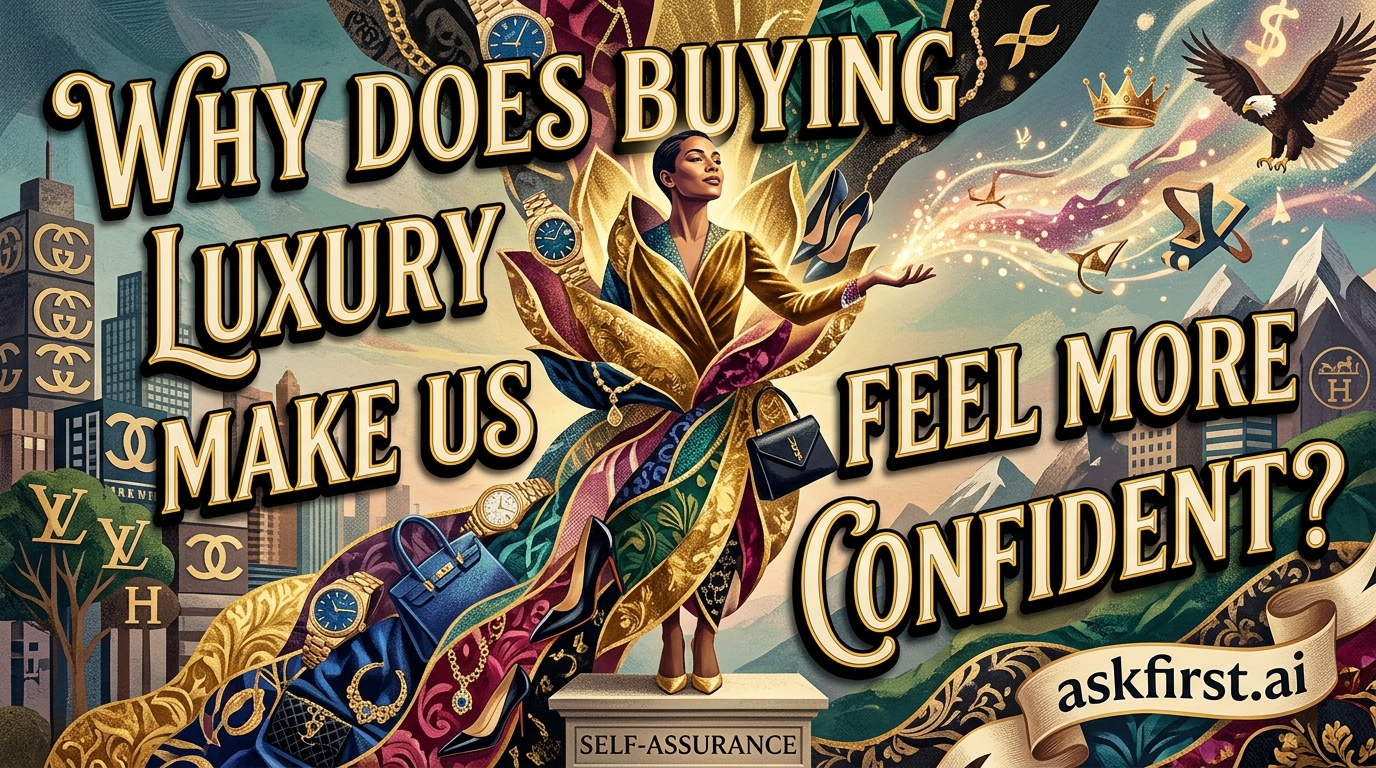
The allure of luxury goods extends far beyond the tactile quality of premium leather or the prestige of a well-known brand logo. It taps into the deep-seated psychological mechanisms of human social evolution. At its core, the acquisition of luxury items is often perceived as an 'extrinsic' reward that directly influences internal self-worth and outward social signaling. When an individual purchases a luxury item, they are not merely buying a product; they are participating in a complex ritual of identity construction and social signaling that historically served as a proxy for fitness, resource dominance, and survival capability.
The Signaling Theory of Confidence
From an evolutionary perspective, signaling theory suggests that individuals display high-cost items to broadcast their surplus resources. This is known as 'conspicuous consumption', a term coined by economist Thorstein Veblen. By wearing or using expensive goods, an individual signals to their peer group that they possess a high level of economic capacity. This signal acts as a psychological buffer, reducing social anxiety and creating a sense of 'social safety.'
- The Power of Recognition: Being recognized as a member of an exclusive club provides an immediate dopamine hit, which the brain interprets as a boost in social rank.
- The Halo Effect: Owning premium items often triggers a cognitive bias known as the 'Halo Effect.' People assume that someone with high-end belongings also possesses other positive traits, such as competence, intelligence, or discipline. This perception from others feeds back into the user’s self-concept, reinforcing their internal feelings of confidence.
The 'Enclothed Cognition' Phenomenon
Beyond external signaling, there is a fascinating internal mechanism known as enclothed cognition. This theory, championed by researchers Adam Galinsky and Hajo Adam, explores how the clothes and accessories we wear influence our psychological processes. When a person wears a luxury watch or carries a high-end designer bag, they are often performing an unconscious act of 'role-play.'
If the brain associates a brand with success, power, or authority, wearing that item causes the brain to adopt those attributes. This is why individuals often report a 'posture shift' or a change in speech patterns when wearing luxury apparel. The object functions as a symbolic anchor, grounding the individual in the identity they desire to project. It is not that the item itself provides intelligence or talent, but it provides the psychological permission to exhibit more assertive behavior.
Psychological Compensation and Goal Achievement
Luxury goods often serve as 'trophies' for hard work. For many high-performers, the acquisition of a luxury item is a milestone—a physical manifestation of their professional or personal progress.
- Positive Reinforcement: The purchase becomes a self-reward system. It provides tangible evidence of progress, which reinforces self-efficacy.
- Increased Aspirations: By placing themselves in environments where luxury is the standard, individuals often adjust their internal benchmarks. This is known as upward social comparison. Seeing themselves surrounded by high-quality goods pushes them to work harder to maintain that lifestyle, creating a self-fulfilling prophecy of confidence and success.
The 'Authentic' Versus 'Imposter' Gap
It is vital to distinguish between sustainable confidence and temporary ego-inflation. Research indicates that when luxury consumption is used to mask deep-seated insecurities—a phenomenon often referred to as 'compensatory consumption'—the confidence boost is fleeting. Conversely, when luxury is used as an expression of personal taste and appreciation for craftsmanship, it aligns with an individual's authentic identity. The confidence derived from authenticity is significantly more stable than that derived from the need for external validation.
Conclusion: A Tool for Intentionality
Ultimately, luxury goods are amplifiers. They amplify the signals we send to others and the stories we tell ourselves about our own worth. While a product can never substitute for genuine personal development, it can serve as a powerful tool in the toolkit of self-presentation. By understanding that our confidence is partially tied to our perceived social standing and the symbolic value we place on our belongings, we can make more intentional choices about what we consume and, more importantly, how we allow those items to define our sense of self. The true 'luxury' is not the object itself, but the mastery over one's own perception and the psychological freedom to act with assurance, regardless of the brand logo on one's wrist.