The Paradox of Conflict in Intimate Relationships
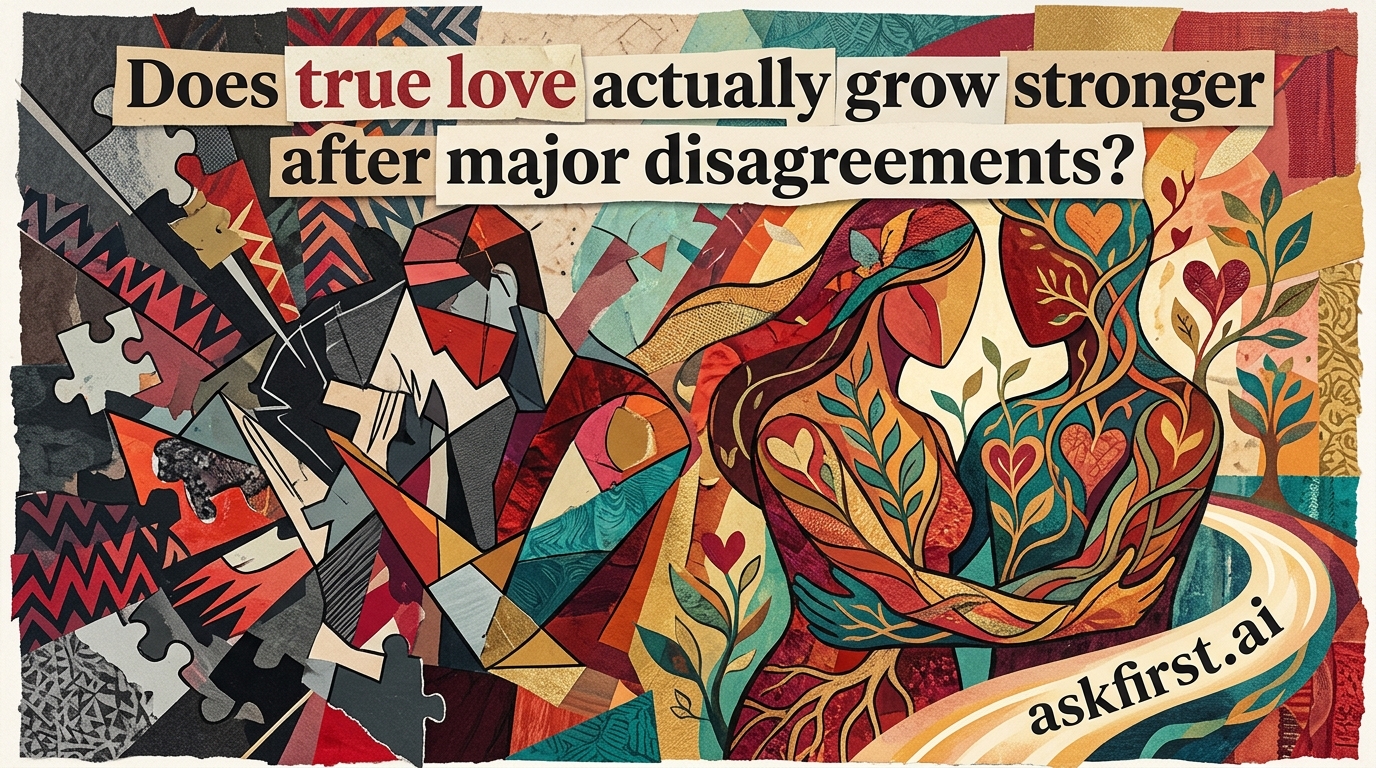
Common wisdom often suggests that true love is synonymous with harmony, tranquility, and a total absence of friction. However, psychological research into attachment theory and interpersonal dynamics reveals a startlingly different reality. Far from being a sign of failure, major disagreements can serve as the crucible in which lasting, resilient bonds are forged. When navigated with maturity and emotional intelligence, conflict functions as a vital diagnostic tool, revealing the underlying strength of a partnership.
The Mechanism of Growth Through Discord
True love does not thrive in a vacuum of agreement; it thrives in the successful navigation of disparate perspectives. When two individuals encounter a significant hurdle, they are forced to step outside their own cognitive silos. This process, known in psychology as differentiation, allows partners to recognize each other as independent entities rather than extensions of themselves.
- Cognitive Expansion: Engaging in healthy debate forces the brain to process alternative viewpoints, fostering intellectual empathy.
- Conflict Resolution Skills: Successfully resolving a major disagreement builds a repertoire of problem-solving techniques that the couple can draw upon in future crises.
- Emotional Regulation: Learning to manage surges of frustration and anger during an argument enhances individual emotional intelligence.
The 'Vulnerability-Trust' Feedback Loop
One of the primary reasons relationships deepen after conflict is the phenomenon of 'rupture and repair.' In healthy dynamics, the disagreement is the rupture, while the subsequent reconciliation is the repair. Sociologist Dr. John Gottman’s extensive research into 'the Sound Relationship House' suggests that it is not the frequency of conflict that determines the health of a relationship, but rather the quality of the repair attempts. When partners show they can withstand a storm, acknowledge their own faults, and offer forgiveness, they establish a profound layer of mutual trust. This trust is far more durable than the initial 'honeymoon' phase, as it is tested and proven through adversity.
Busting the Myth of the 'Perfect Match'
The notion that a perfect relationship is one without conflict is a modern fallacy that often leads to premature separation. When people believe that disagreement equals incompatibility, they tend to view friction as a signal to exit. Conversely, those who understand that 'friction equals growth' are more likely to lean in. This is the difference between a growth mindset and a fixed mindset in romantic love. A fixed mindset sees conflict as a catastrophic failure; a growth mindset sees conflict as an opportunity for recalibration.
Strategies for Productive Disagreement
For a disagreement to serve as a catalyst for love rather than a destructive force, specific psychological frameworks must be applied:
- The 'We vs. The Problem' Approach: Reframing the conflict so that both individuals stand on the same side of the table, facing the problem as an external object, reduces defensiveness.
- Active Listening without Rebuttal: Instead of preparing a defense, partners should practice listening to understand the underlying emotional need behind the other person's complaint. Is there a need for recognition, safety, or autonomy?
- The Time-Out Rule: High physiological arousal (the 'fight or flight' response) makes productive conversation impossible. Taking a temporary pause—and crucially, returning to the conversation—allows the nervous system to regulate, enabling rational discourse.
Long-term Relational Resilience
Evidence from longitudinal studies on long-term partnerships suggests that the most enduring unions are those where the partners have a history of navigating profound disagreements together. These couples develop a shorthand for resolving conflict and possess a shared history of triumph over misunderstanding. They no longer fear disagreement because they have historical evidence that their relationship is capable of sustaining it. This knowledge creates a psychological safety net, allowing both individuals to express their authentic needs more boldly, knowing that the foundation is sturdy enough to withstand the conversation.
Conclusion: The Architecture of True Love
True love is not the absence of conflict; it is the presence of an indestructible commitment to work through it. Major disagreements act as stress tests, clearing away superficial assumptions and forcing a deeper understanding of the partner's character. By embracing the tension of differences, couples move from the fragile intensity of infatuation to the rock-solid security of mature, deep, and ever-growing love. The next time a disagreement arises, view it not as a threat, but as an opportunity to build a more sophisticated and resilient version of the relationship. True love is not found—it is built, brick by brick, through the very arguments many people spend their lives trying to avoid.