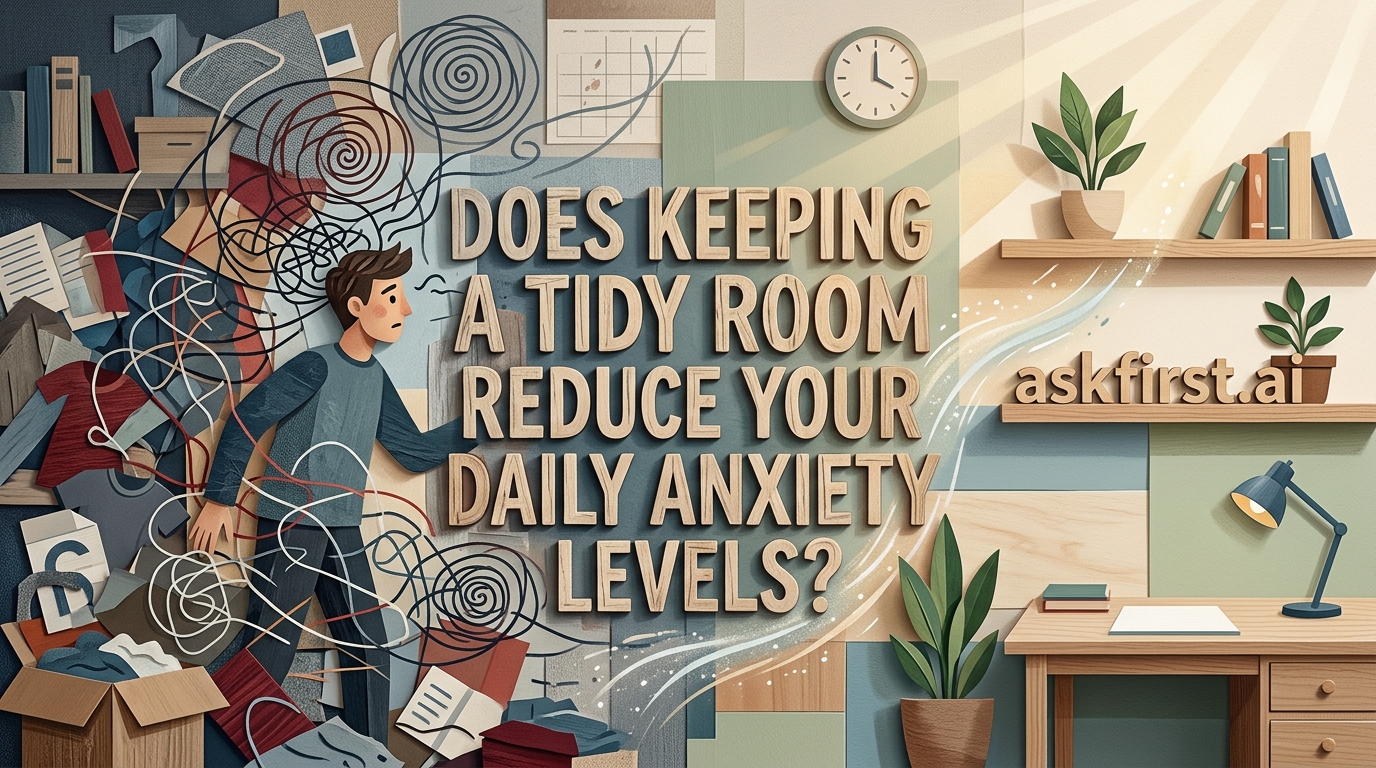
The Science of Order and Mental Serenity
Research in environmental psychology suggests that the physical space individuals inhabit serves as an external manifestation of their internal mental state. The concept that keeping a tidy room can significantly reduce daily anxiety levels is supported by numerous studies examining the relationship between clutter, cortisol production, and cognitive load. When a living environment is filled with disorganization, the brain often perceives this chaos as a series of unfinished tasks or stressors, which can prevent the nervous system from entering a state of complete relaxation.
The Impact of Clutter on Cortisol
Clutter acts as a persistent visual distraction. The human brain is evolutionarily hardwired to process environmental information constantly. When a room is filled with piles of laundry, unfiled paperwork, or miscellaneous objects, the brain must continuously allocate resources to scan and ignore these stimuli. Studies from the University of California, Los Angeles (UCLA) Center on Everyday Lives of Families found that individuals living in highly cluttered homes displayed significantly higher levels of cortisol—the body's primary stress hormone—compared to those who reported living in organized, tidy spaces. High cortisol levels are directly linked to elevated heart rate, restlessness, and a diminished ability to focus on complex mental tasks.
Cognitive Load and Decision Fatigue
Beyond hormonal changes, clutter contributes to cognitive overload. Every item within a visual field demands a micro-decision or recognition from the brain. By simplifying the environment, an individual reduces the amount of sensory input that must be processed, effectively clearing mental bandwidth for more productive or relaxing activities. This phenomenon is often referred to as 'reduction of cognitive load.' When the physical environment is orderly, the mind is free to engage in creative thought, deep work, or mindful rest rather than being trapped in a cycle of processing environmental noise.
Psychological Benefits of Tidy Environments
- Enhanced Focus: An organized desk or room removes visual friction, allowing for sustained attention on specific goals.
- Improved Sleep Hygiene: Research indicates that a clean bedroom promotes better sleep quality, as the brain associates a tidy space with restoration rather than activity.
- Increased Sense of Control: Establishing order in one's environment provides a tangible sense of mastery over the personal domain, which is a potent antidote to feelings of helplessness often associated with generalized anxiety.
- Heightened Productivity: By minimizing the time spent searching for misplaced items, individuals reduce frustration and unnecessary daily stress.
Environmental Psychology Perspectives
Environmental psychology posits that human beings possess an innate desire for 'environmental coherence.' When a space aligns with an individual's personal organizational needs, it creates a sense of sanctuary. Conversely, an unpredictable or messy space can induce a state of 'learned helplessness,' where the individual feels overwhelmed by the scale of the mess, leading to procrastination and increased anxiety. The act of tidying is often a form of 'proactive coping.' By categorizing and arranging objects, individuals perform a ritual that restores order and predictability to their world.
Implementing Sustainable Order
Reducing anxiety through tidiness does not require a perfectionist approach. In fact, extreme perfectionism can be another source of stress. Instead, the focus should be on:
- Functional Minimalism: Keep only what serves a purpose or provides genuine joy.
- The 'One-Touch' Rule: Commit to putting items away immediately after use to prevent accumulation.
- Structured Storage: Assign every object a specific 'home' so the brain does not need to decide where to store things repeatedly.
- Small Habits: Dedicating ten minutes at the end of the day to reset a room can prevent the overwhelming buildup that contributes to chronic stress.
Conclusion: The Mental Reward of Tidiness
Maintaining a tidy room acts as a low-cost, high-impact intervention for mental health. By stripping away physical distractions, individuals can cultivate a space that actively supports the nervous system's need for tranquility. While tidiness is not a cure-all for severe mental health conditions, it serves as a foundational pillar of environmental support. Embracing the rhythm of organizing one's home is not merely an aesthetic choice; it is a profound commitment to mental clarity and emotional stability. By viewing the environment as an extension of the self, individuals can turn their homes into partners in their journey toward reduced daily anxiety.