The Paradox of Prosperity: Analyzing the Financial-Wellbeing Connection
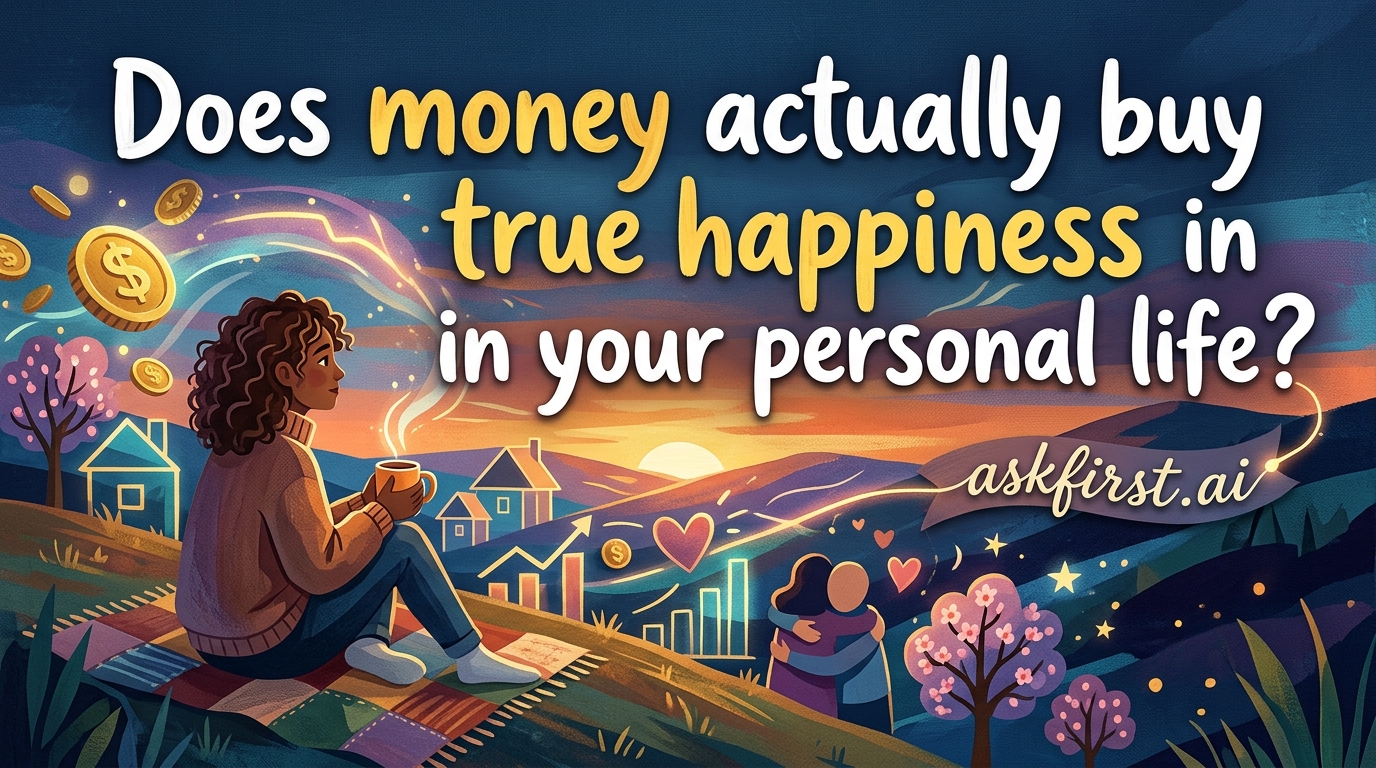
For centuries, the adage 'money cannot buy happiness' has served as a cultural anchor, suggesting that the pursuit of wealth is fundamentally disconnected from the pursuit of joy. However, modern psychological research reveals a much more nuanced reality. The relationship between currency and contentment is not a simple binary; rather, it is a sophisticated, non-linear dynamic that evolves based on how financial resources are utilized and perceived.
The Satiation Point: Where Utility Meets Diminishing Returns
Economists have long discussed the 'Easterlin Paradox,' which posits that while wealthier nations tend to be happier than poorer ones, this correlation plateaus once basic needs are met. This is often referred to as the 'satiation point.' Once an individual achieves a stable standard of living—where housing, nutrition, healthcare, and education are secure—the marginal utility of additional income decreases significantly. In essence, money effectively solves the problem of stress caused by scarcity. When those stressors are removed, the source of happiness shifts from acquisition to psychological fulfillment.
The Psychology of Spending: Experiences vs. Possessions
One of the most robust findings in behavioral economics is the distinction between experiential and material purchases. Research consistently demonstrates that people derive significantly more long-term satisfaction from experiences—travel, education, skill-building, or social events—than from physical goods.
- Material Hedonic Adaptation: Humans are hardwired to adapt to new possessions. A new car or the latest technological gadget provides an initial dopamine spike that fades as the object becomes integrated into daily life. This is known as 'hedonic treadmill' adaptation.
- Experiential Depth: Experiences become part of a person's identity and memory bank. They facilitate social connections and foster personal growth, both of which are high-leverage indicators of sustainable happiness.
The Currency of Time: Using Wealth to Reclaim Autonomy
Perhaps the most compelling way money influences happiness is through the purchase of time. When wealth is used to outsource mundane tasks—such as house cleaning, laundry, or tedious administrative labor—individuals buy back the most precious commodity of all: their own schedule. High-functioning individuals who leverage capital to reduce 'time poverty' report significantly lower cortisol levels and higher life satisfaction scores. This suggests that money does not buy 'happiness' directly, but it buys the freedom to cultivate a life filled with autonomy, deep work, and meaningful relationships.
The Danger of Comparison: The Social Wealth Trap
Happiness is fundamentally linked to relative wealth rather than absolute wealth. The sociological phenomenon of 'Keeping Up with the Joneses' serves as a massive psychological barrier to contentment. When wealth is used purely as a metric for social status, it creates an environment of constant comparison, leading to anxiety and dissatisfaction regardless of one's bank balance.
- Status Signaling: Focusing on external symbols of success often exacerbates feelings of inadequacy when compared to peers.
- Internal Valuation: Those who view wealth as a resource for internal development, rather than a score-keeping mechanism for social superiority, typically enjoy higher levels of mental clarity and emotional stability.
Altruism and the Expansion of Self
Groundbreaking studies from institutions like the University of British Columbia have shown that spending money on others—prosocial spending—has a more profound impact on happiness than spending on oneself. This creates a psychological feedback loop: using wealth to benefit a community, donate to causes, or support loved ones activates brain reward centers far more effectively than purely self-serving consumption. Generosity effectively transforms financial capital into social and emotional capital, providing a deep sense of purpose that transient material goods simply cannot replicate.
Conclusion: The Strategic Integration of Wealth
To answer the overarching question: money is a tool, not a solution. It serves as a powerful amplifier for a person's values and lifestyle choices. If used to minimize daily stress, invest in high-quality experiences, protect one's autonomy through the procurement of time, and facilitate generosity, money serves as a robust foundation for a flourishing life. Conversely, when it is viewed merely as an accumulation game for the sake of status, it becomes a vehicle for anxiety. True happiness resides in the deliberate mastery of one’s resources, ensuring that the wealth serves the individual rather than the individual being enslaved by the pursuit of wealth.