The Paradox of Prosperity: Deconstructing the Financial-Wellbeing Nexus
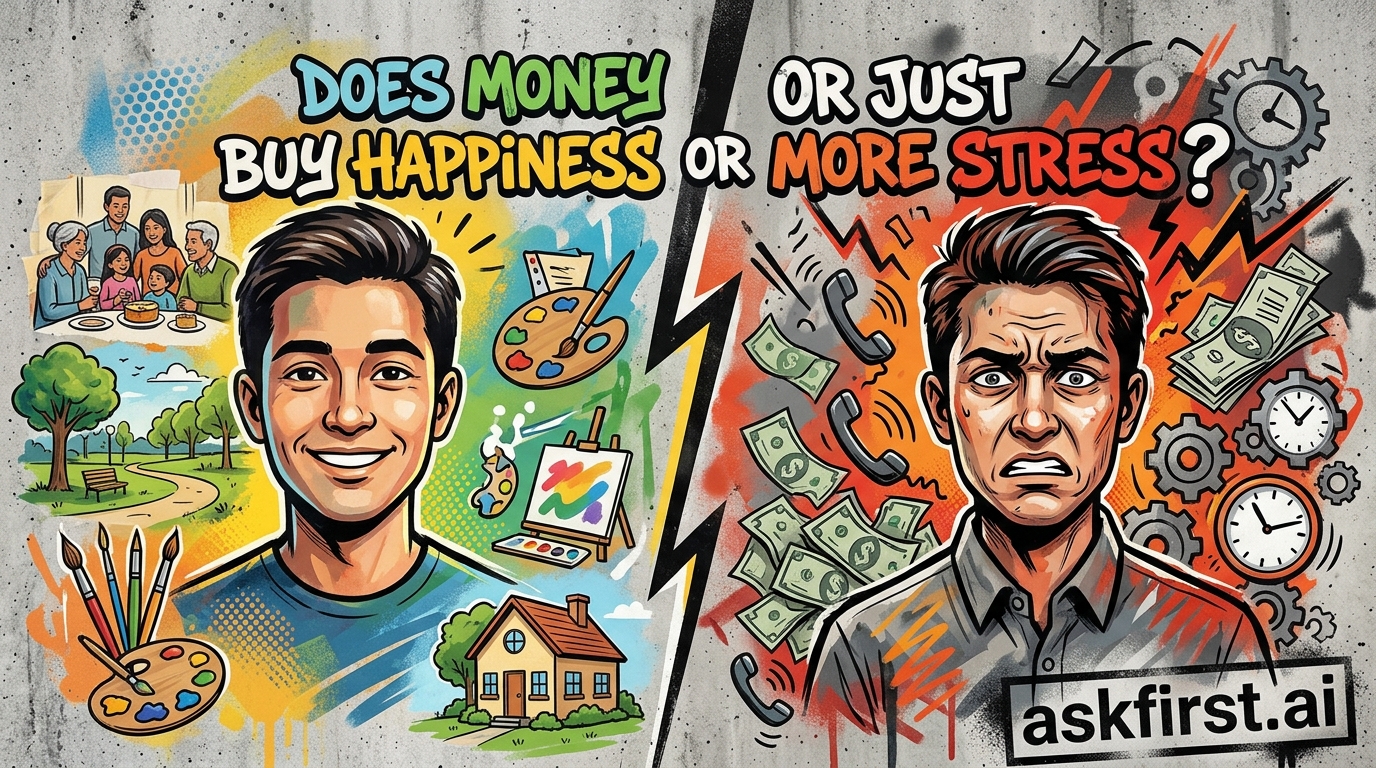
For generations, the interplay between financial capital and psychological contentment has been the subject of intense scrutiny. The common perception often dictates a linear relationship: more money equates to more happiness. However, modern psychological and economic research reveals a nuanced reality that challenges this simplistic assumption. The truth lies at the intersection of biological needs, hedonic adaptation, and the psychological burden of complex responsibility.
The Hierarchy of Financial Comfort
At the foundational level, money functions as a survival tool. The work of researchers like Daniel Kahneman and Angus Deaton, famously presented in their studies on the 'happiness plateau,' suggests that income correlates strongly with emotional wellbeing only up to the point of meeting fundamental needs. When an individual earns enough to secure high-quality nutrition, safe housing, healthcare, and educational access, the daily stressors of survival dissipate. In this context, money absolutely buys a form of happiness by removing the friction of anxiety caused by scarcity. Poverty forces the human brain into a 'scarcity mindset,' which demonstrably reduces cognitive bandwidth. When this burden is lifted, the mind is liberated to focus on higher-order creative and social pursuits.
The Hedonic Treadmill and Adaptation
Once basic security is achieved, the relationship between wealth and happiness shifts toward the phenomenon known as the 'hedonic treadmill.' Humans are biologically wired to adapt to new environmental circumstances. A significant pay raise or a luxury purchase provides a transient surge in dopamine—a spike in life satisfaction. However, within months, this new baseline becomes the 'new normal.' The psychological result is a constant yearning for more to replicate that initial peak. This creates a cycle where money does not necessarily buy sustained joy; rather, it buys an ever-evolving expectation that must be fed, leading to diminishing returns on psychological gratification.
The Hidden Costs of Accumulation
If money is supposed to liberate, why do so many affluent individuals report high levels of chronic stress? The answer lies in the Complexity Tax. As wealth increases, so does the complexity of one's life. The maintenance of high-value assets, the management of complex tax structures, the burden of investment portfolios, and the social pressure to maintain a specific lifestyle all create distinct psychological anchors.
- Cognitive Load: Managing significant assets requires mental energy that could otherwise be directed toward leisure or family connections.
- Social Isolation: High-wealth environments can sometimes foster competitive social circles rather than collaborative ones, potentially undermining the depth of human connection—which is, according to the Harvard Study of Adult Development, the single greatest predictor of long-term health and happiness.
- Time Poverty: Wealthy individuals often trade time for money. While they may have more material resources, they frequently report feeling 'time-poor' due to the demands of their professional roles, leading to a state of chronic 'hurry sickness.'
Redirecting Wealth for Sustainable Joy
Research indicates that money can buy happiness, but only if spent with intentionality. The shift in outcome depends on the direction of expenditure:
- Experiences over Possessions: Spending on travel, learning new skills, or events creates lasting memories and stories that become part of one's identity. Possessions, by contrast, are subject to rapid devaluation and hedonic adaptation.
- Buying Time: Using capital to outsource mundane, disliked, or stressful tasks—such as house cleaning or commuting—demonstrates a higher correlation with life satisfaction than upgrading to a luxury vehicle.
- Prosocial Spending: Contributing to others, whether through philanthropy or helping friends and family, triggers neural activity in regions associated with reward and social bonding. This creates a feedback loop of positive emotion that material consumption cannot replicate.
Conclusion: The Holistic Perspective
Ultimately, money is a neutral utility, an instrument of capacity. It is not an end state of happiness, but a tool that can either build a fortress against stress or construct a cage of complexity. Those who view wealth as a means to purchase autonomy—specifically, the autonomy to spend time on what matters most—tend to report higher life satisfaction. Conversely, those who seek wealth as a status symbol or a replacement for intrinsic fulfillment often find that they have simply traded survival stress for a more sophisticated, albeit equally persistent, form of existential anxiety. True prosperity is not found in the accumulation of digits in a ledger, but in the intelligent application of resources toward a life of purpose, connection, and time-freedom.