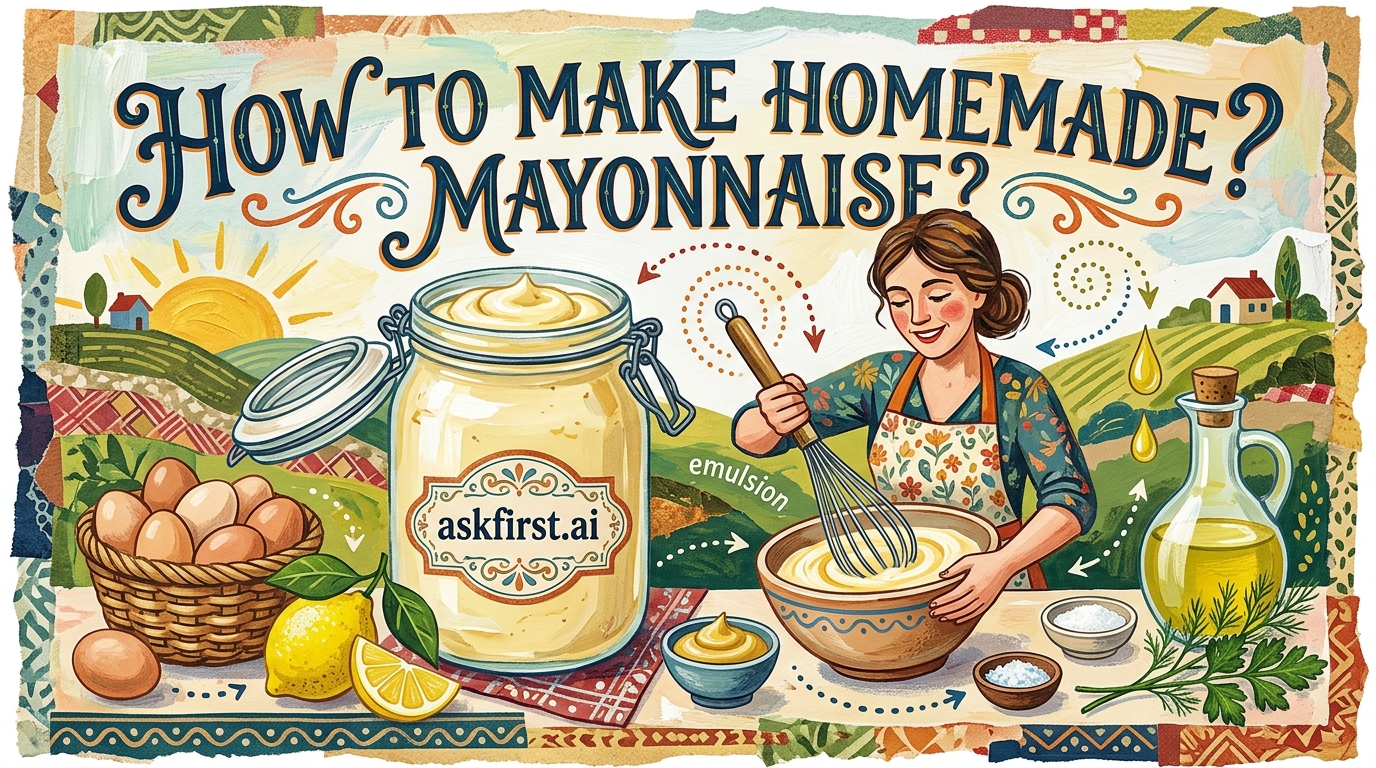
The Art and Science of Emulsion: Crafting Homemade Mayonnaise
Creating mayonnaise from scratch is one of the most rewarding endeavors in the culinary arts. While the commercial product found on supermarket shelves is often laden with stabilizers, preservatives, and low-quality seed oils, homemade mayonnaise is a vibrant, silky, and deeply flavorful condiment that elevates any dish it touches. At its core, mayonnaise is a lesson in the science of emulsification: the process of forcing two immiscible liquids—oil and an acidic water-based liquid (like lemon juice or vinegar)—to marry into a stable, creamy suspension.
The Fundamental Chemistry of the Emulsion
To understand how to make mayonnaise, one must respect the role of the egg yolk. According to Harold McGee in his seminal work On Food and Cooking: The Science and Lore of the Kitchen, the egg yolk is a biological powerhouse containing lecithin, a phospholipid that acts as the primary emulsifier. Lecithin has a dual nature: one end of the molecule is hydrophilic (water-loving), while the other is lipophilic (fat-loving).
When you whisk oil into a yolk, the lecithin molecules surround tiny droplets of oil, keeping them suspended within the aqueous environment of the vinegar and egg white proteins. If you add the oil too quickly, the emulsion breaks, resulting in a thin, greasy liquid. If you add it with patience and precision, you create a stable, thick matrix that can hold a surprisingly large volume of oil.
Essential Ingredients for the Perfect Batch
For a classic, foolproof mayonnaise, you will need the following high-quality components:
- 1 Large Egg Yolk: Ideally at room temperature to ensure easier blending.
- 1 Teaspoon Dijon Mustard: This acts as a secondary stabilizer and adds a necessary acidic "bite."
- 1 Tablespoon Fresh Lemon Juice or White Wine Vinegar: Provides the acidity required to balance the fat.
- 1 Cup Neutral Oil: Grapeseed, sunflower, or a mild light olive oil are preferred. Avoid extra virgin olive oil for the entire quantity, as its polyphenols can turn bitter when whipped at high speeds.
- A Pinch of Sea Salt: To taste.
Step-by-Step Methodology: The Manual Whisking Technique
- Preparation of the Base: In a medium-sized glass or stainless steel bowl, combine the egg yolk, Dijon mustard, and the lemon juice. Whisk these together vigorously for about 30 seconds until the mixture is pale and slightly frothy. This pre-emulsifies the protein base.
- The "Slow Drip" Phase: This is the most critical juncture. Begin by adding the oil literally drop by drop. Whisk constantly. You are looking for the mixture to thicken and turn opaque. If you see pools of oil sitting on top, stop pouring and whisk until they are fully incorporated before proceeding.
- The Steady Stream: Once you have incorporated about a quarter of the oil and the emulsion is stable, you can begin to pour the oil in a very thin, steady stream. Do not stop whisking. The mayonnaise should begin to take on a glossy, thick consistency that holds its shape.
- Final Adjustments: Once all the oil is incorporated, taste your creation. Add your salt, and perhaps a drop more lemon juice if you desire more brightness. If the mixture is too thick, a tiny teaspoon of warm water can thin it out to your preferred consistency.
Troubleshooting and Expert Tips
If your mayonnaise "breaks"—meaning the oil separates and the texture becomes curdled—do not panic. You can easily rescue it. Place a fresh egg yolk in a clean bowl and slowly whisk the broken, curdled mixture into the new yolk, exactly as you would have added the oil originally. The fresh yolk provides the necessary lecithin to re-stabilize the emulsion.
For those looking for efficiency, the Immersion Blender Method (popularized by chefs like J. Kenji López-Alt in The Food Lab) is a revolutionary shortcut. By placing all ingredients in a tall, narrow jar and using an immersion blender to pulse from the bottom up, you can create a perfect emulsion in less than 60 seconds. The narrow geometry of the jar forces the oil and yolk together under high shear, creating a near-instantaneous bond.
Culinary Applications and Storage
Homemade mayonnaise is a living product. Because it contains raw egg, it is highly perishable. Store it in an airtight glass jar in the coldest part of your refrigerator and consume it within 3 to 4 days.
To elevate your mayonnaise, consider folding in aromatics. A classic aïoli incorporates crushed garlic, while a remoulade adds capers, gherkins, and herbs. By mastering the basic emulsion, you gain the freedom to customize your condiments, moving away from the bland, mass-produced versions toward a bespoke culinary experience that highlights the richness of fresh, simple ingredients. Whether served alongside hand-cut fries, spread on a sourdough sandwich, or used as the base for a complex dressing, your homemade mayonnaise will undoubtedly be the star of the table.