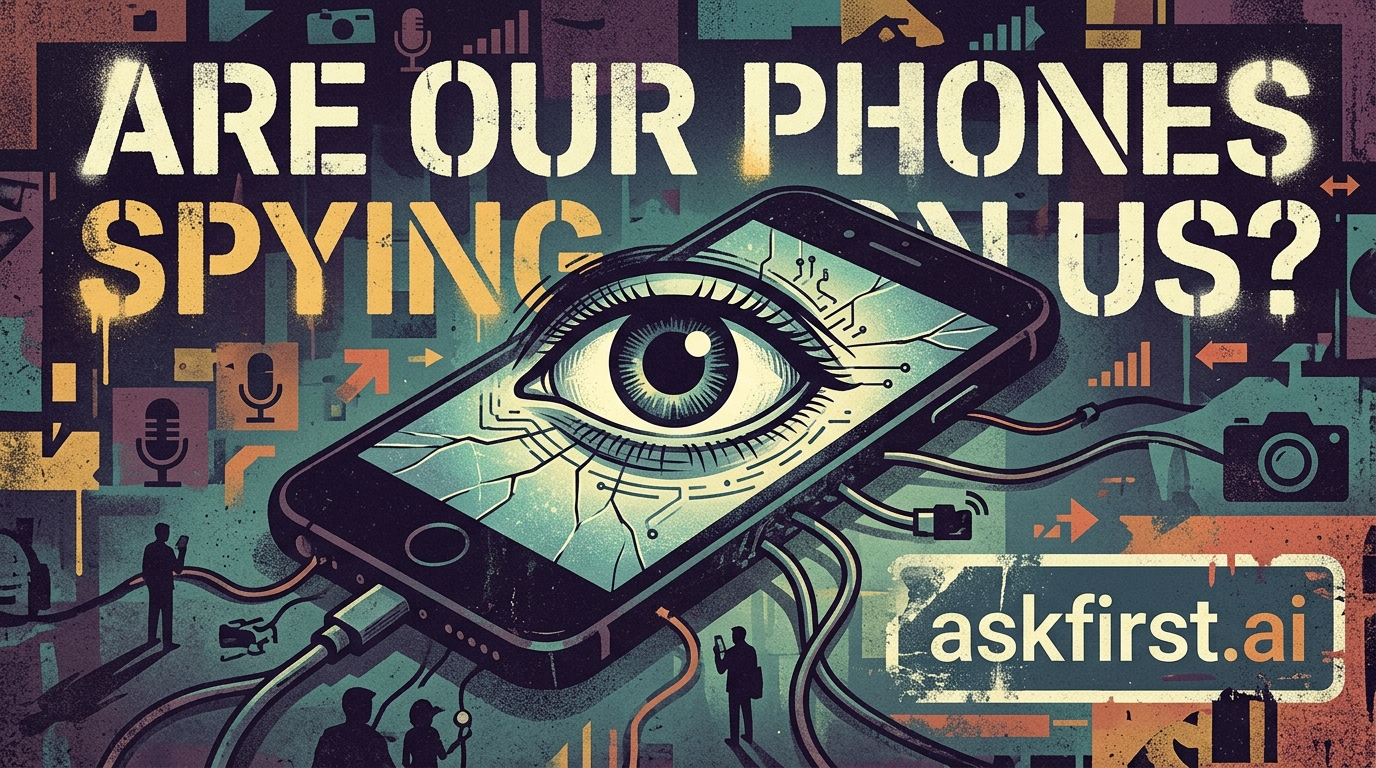
The question of whether our smartphones are actively "spying" on us is one of the most persistent anxieties of the digital age. While the popular myth suggests that your phone is constantly recording your private conversations to serve you targeted advertisements, the reality is far more nuanced, technical, and—in many ways—more pervasive than simple audio eavesdropping. To understand the relationship between your device and your privacy, we must dissect the mechanics of data harvesting, the role of predictive algorithms, and the legal frameworks of the modern tech ecosystem.
The Myth of Audio Eavesdropping
The most common fear is that smartphones act as "always-on" microphones, listening for keywords to sell products. In his seminal work The Age of Surveillance Capitalism, Professor Shoshana Zuboff of Harvard Business School explains that while companies like Meta (Facebook) and Google have the technical capacity to record audio, doing so would be inefficient, legally catastrophic, and technically unnecessary.
Processing millions of hours of audio in real-time to extract keywords would require an unprecedented amount of bandwidth and battery power—an activity that would be instantly detectable by security researchers monitoring smartphone traffic. Furthermore, these companies possess something far more accurate than your voice: your digital shadow. By analyzing your location history, search queries, social media interactions, and the behavior of your "lookalike" audiences (people with similar demographics), algorithms can predict what you want before you even speak it aloud. This phenomenon, known as predictive modeling, often feels like mind-reading, leading users to conclude they were overheard.
Data Harvesting: The Real Engine of Surveillance
If phones aren't listening to your bedroom conversations, how do they know so much? The answer lies in the Telemetry and Metadata ecosystem. Your smartphone is a sensor-rich environment. It tracks:
- Geospatial Data: GPS, Wi-Fi triangulation, and Bluetooth beacons in retail stores map your physical movements with high precision.
- App Permissions: Many apps request access to contacts, photos, and microphones under the guise of "improving user experience."
- Advertising Identifiers (IDFA/AAID): These unique strings of numbers act as a permanent digital fingerprint, allowing third-party trackers to follow your activity across different apps and websites.
In the book Privacy is Power by Carissa Véliz, the author argues that our data is the raw material for a global industry. When you download a "free" flashlight app or a weather tracker, you are not the customer; you are the product. These apps often contain Software Development Kits (SDKs) from data brokers that scrape your device’s unique identifiers and sell them to aggregators. These aggregators then build a "psychographic profile" of you, which is used by advertisers to push content that exploits your specific psychological vulnerabilities.
The Legal and Technical Safeguards
While the landscape sounds bleak, there have been significant shifts in how data is handled. Apple’s introduction of App Tracking Transparency (ATT) in iOS 14.5 was a watershed moment. By forcing apps to ask for explicit permission before tracking users across other companies' apps and websites, Apple effectively crippled a massive segment of the data-broker industry.
Similarly, the European Union’s General Data Protection Regulation (GDPR) has forced tech giants to be more transparent about data collection. However, these regulations often act as a "cat and mouse" game. As documented in The Privacy Engineer’s Manifesto by Michelle Dennedy and Jonathan Fox, companies often pivot to "first-party data" collection—where they gather information through their own ecosystem rather than buying it from third parties—to bypass these restrictions.
Concrete Examples of Predictive Analytics
To see the system in action, consider the famous case of the Target department store, as detailed by Charles Duhigg in The Power of Habit. Target’s data scientists were able to identify a teenager’s pregnancy before her own father knew, simply by analyzing her changing purchasing habits (buying unscented lotion, magnesium supplements, and cotton balls). The phone doesn't need to hear your conversation about being pregnant; it only needs to observe the subtle shifts in your digital behavior that correlate with major life events. This is not "spying" in the sense of an agent listening to a phone call; it is pattern recognition at scale.
Conclusion: Navigating the Digital Panopticon
Are our phones spying on us? If you define spying as a human monitoring your daily life, the answer is generally no. If you define it as the automated, continuous, and systematic collection of your behavioral data for the purpose of profit and prediction, the answer is a resounding yes.
The modern smartphone is designed to be an extension of the self, but it is also a permanent tether to a vast, invisible economy of surveillance. Protecting oneself requires more than just skepticism; it requires active management. This includes disabling personalized advertising, auditing app permissions, using encrypted communication tools like Signal, and utilizing privacy-focused browsers. We live in an era where privacy is no longer a default setting; it is a deliberate, ongoing choice that requires constant vigilance against the convenience-driven erosion of our digital boundaries.