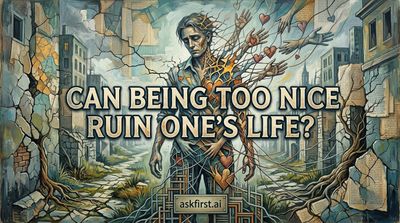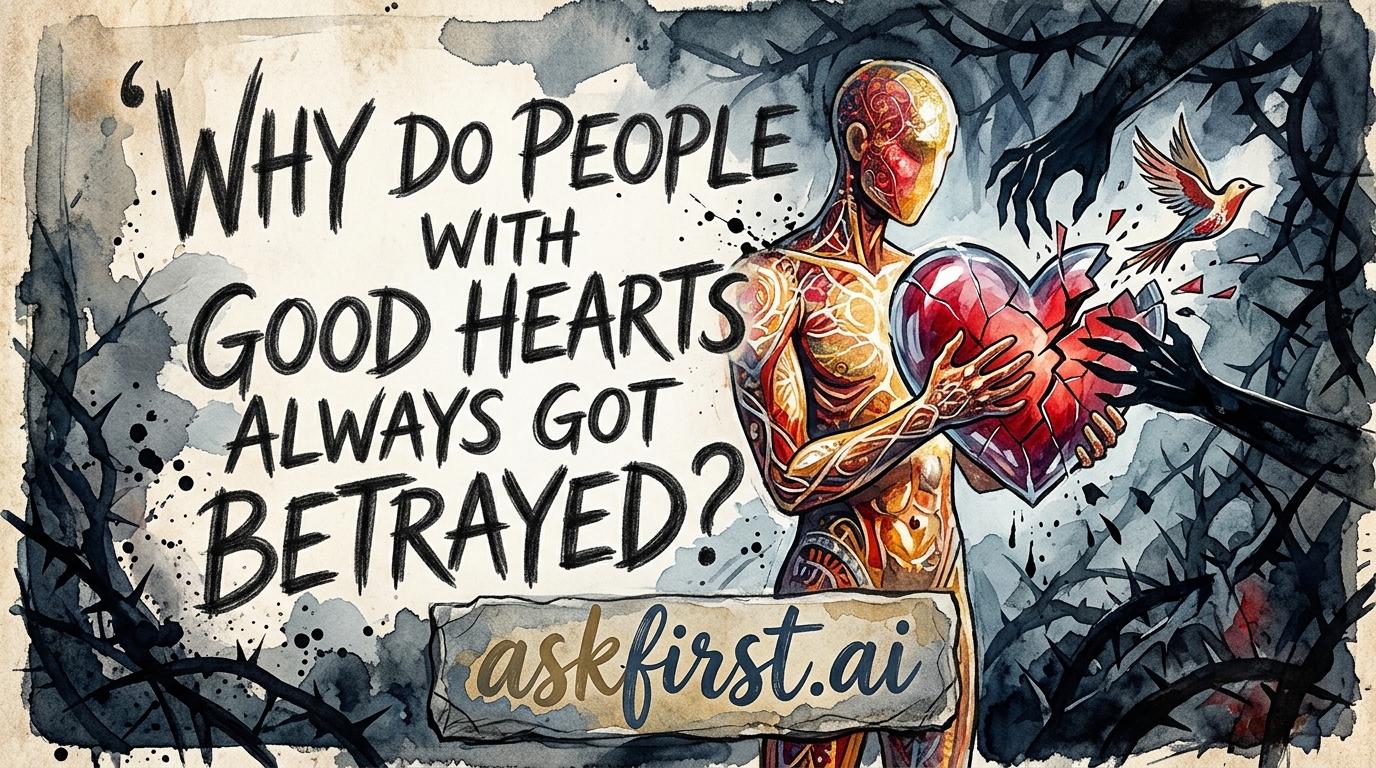
The phenomenon of individuals with empathetic, altruistic, or "good" hearts frequently experiencing betrayal is a recurring theme in human psychology, sociology, and literature. While it may feel like a cruel paradox—that those who offer the most kindness receive the least in return—there are concrete, analytical reasons why this dynamic persists. Understanding this requires looking past the emotional sting and examining the behavioral patterns of both the "kind-hearted" and the "predatory."
The Psychology of Vulnerability and Over-Giving
People with "good hearts" often operate from a place of high empathy and agreeableness. In psychological terms, these individuals frequently score high on the "Agreeableness" scale of the Big Five personality traits. While this trait fosters strong social bonds, it also creates specific vulnerabilities.
According to Dr. Robert Cialdini, in his seminal work Influence: The Psychology of Persuasion, humans have an innate psychological need for reciprocity. Kind-hearted people often over-extend themselves, assuming that others operate by the same moral code of fairness and gratitude. When they encounter individuals who lack these values—often termed "dark triad" personalities (narcissism, Machiavellianism, and psychopathy)—the kind-hearted individual’s generosity is interpreted not as a virtue, but as a resource to be exploited.
For instance, a person who consistently puts others' needs before their own may inadvertently signal to toxic individuals that they have poor personal boundaries. This lack of "defensive" behavior makes them easy targets for those who seek to gain status, resources, or emotional labor without providing anything in return.
The "Sucker’s Payoff" and Social Dynamics
In game theory, a field popularized by scholars like Robert Axelrod in The Evolution of Cooperation, there is a concept known as the "Sucker’s Payoff." This occurs in a "Prisoner’s Dilemma" scenario where one party chooses to cooperate (the good-hearted person) while the other chooses to defect (the betrayer).
The betrayer gains the maximum benefit because they receive the cooperation of the other without having to reciprocate. If the kind-hearted individual does not have a mechanism for "tit-for-tat"—meaning they do not withdraw their kindness when met with betrayal—they remain in a cycle of exploitation.
A concrete example of this is seen in workplace dynamics. A high-achieving, supportive team member who mentors others and shares credit for success is often targeted by an ambitious, Machiavellian colleague. The colleague steals the credit, knowing the kind-hearted individual is unlikely to retaliate or make a scene. The betrayal is not a reflection of the victim’s worth, but a strategic move by the betrayer who perceives the victim’s goodness as an absence of self-preservation.
The Projection of Moral Integrity
A significant reason kind-hearted people are betrayed is the "Projection Bias." Most people assume that others share their internal moral framework. If you are honest, you assume others are honest. If you are loyal, you assume others are loyal.
In The Gift of Fear, Gavin de Becker argues that people often ignore their intuition—the "gut feeling" that warns them of danger—because it contradicts their desire to be seen as a "good person." A kind-hearted person might notice small red flags in a partner or friend but dismiss them, telling themselves, "They didn't mean it," or "I should be more forgiving." This cognitive dissonance prevents them from seeing the betrayal coming until it is too late. The betrayer relies on this expectation of forgiveness; they know that the kind-hearted person will likely blame themselves or search for an excuse for the betrayer’s behavior rather than holding them accountable.
Why "Goodness" Isn't a Guarantee of Safety
It is a common misconception that goodness acts as a protective shield. In reality, goodness is a social lubricant, not a defensive armor. When we treat kindness as a moral currency that "buys" loyalty, we are often disappointed because the world does not operate on a ledger system.
- Selection of Social Circles: Kind people are often drawn to "fixers" or those who seem to be in need. This unconsciously leads them to surround themselves with people who are struggling or emotionally unstable, increasing the statistical likelihood of experiencing betrayal.
- Lack of Consequences: Betrayal thrives where there are no consequences. A person with a "good heart" may struggle to set firm boundaries or cut ties, which essentially gives the betrayer a "free pass" to continue their behavior.
- The Contrast Effect: To a person with a dark, manipulative personality, a truly kind heart is an anomaly. They may feel a subconscious need to "break" that goodness to validate their own cynical worldview.
Conclusion
The betrayal of the kind-hearted is rarely a commentary on their inherent character, but rather a tragic interaction between high empathy and predatory opportunism. As noted by the Stoic philosopher Marcus Aurelius in Meditations, one must be prepared to encounter ungrateful and arrogant people, yet remain committed to one's own integrity.
To break this cycle, one must transition from "blind kindness" to "strategic kindness." This means maintaining a heart that is open, but protected by the wisdom of setting firm, non-negotiable boundaries. Betrayal is a reflection of the betrayer’s lack of character; the kind-hearted person’s task is not to become cynical, but to become discerning—ensuring that their light is offered to those who have the capacity to honor it, rather than those who seek to extinguish it.