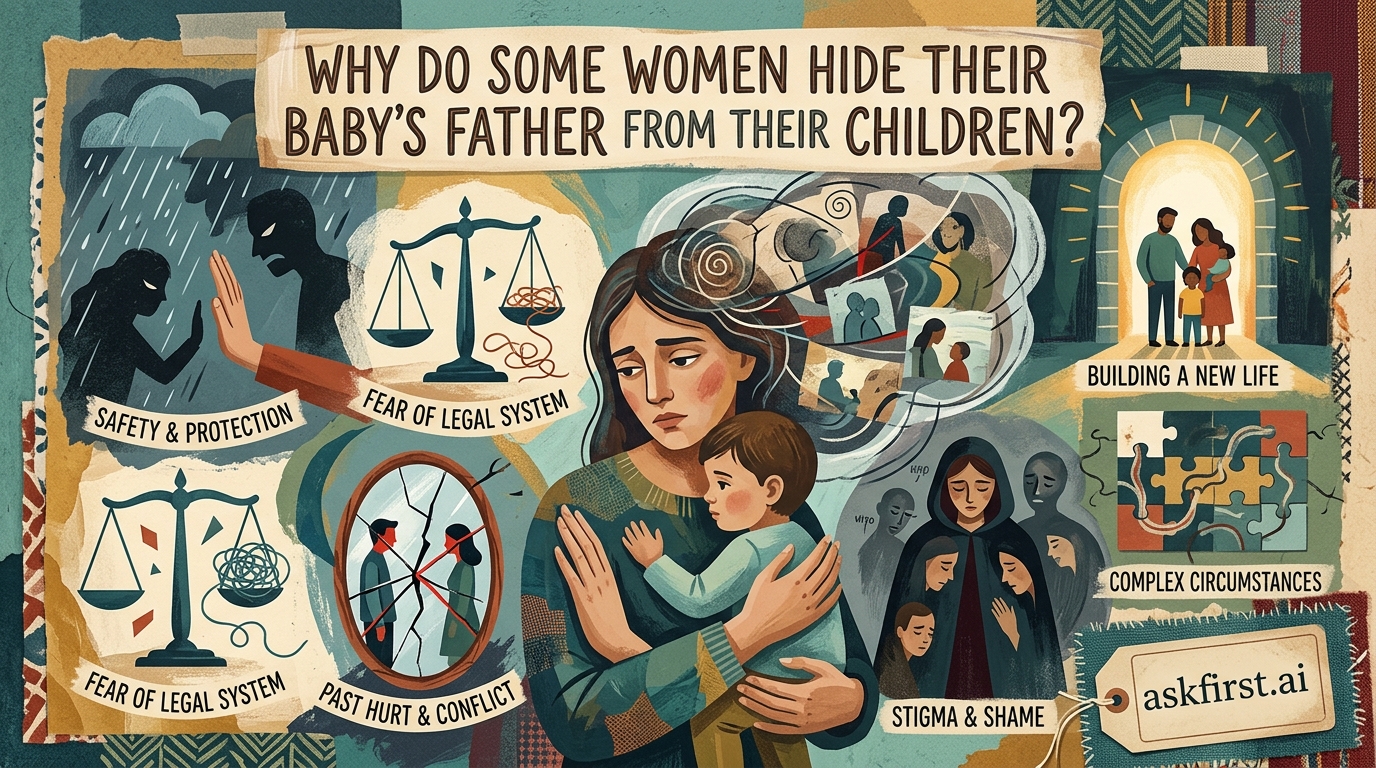
The dynamics of modern family structures are complex, often shaped by profound psychological, legal, and emotional catalysts. When a mother chooses to withhold the identity or presence of a biological father from her child, it is rarely a decision made lightly. While external observers may perceive this as a simple omission, it is frequently a defensive maneuver intended to preserve the child's stability or the mother’s own psychological safety. Understanding this phenomenon requires an examination of attachment theory, protective parenting, and the legal realities of domestic conflict.
The Protective Instinct and Psychological Safety
The most common reason for concealing a biological father’s identity is the preservation of the child's emotional well-being. In cases where the father has a history of domestic violence, substance abuse, or severe personality disorders, mothers often view the father’s absence as a necessary barrier against trauma.
According to Dr. Lundy Bancroft in his seminal work, Why Does He Do That? Inside the Minds of Angry and Controlling Men, children exposed to abusive paternal dynamics often suffer from long-term developmental trauma. When a mother perceives the father as a direct threat to the child’s safety, the "hiding" of that person becomes an act of protective custody. By keeping the father’s identity or whereabouts unknown, the mother effectively eliminates the risk of coercive control or physical harm spilling over into the child's life. This is not merely about keeping a secret; it is about curating an environment where the child can grow without the shadow of a volatile parent.
Navigating High-Conflict Custody and Legal Peril
Legal complexity is a significant driver of parental concealment. In jurisdictions where family law courts prioritize "parental alienation" concerns, a mother may fear that introducing a problematic father into the child’s life will trigger a cascade of litigation that she cannot afford or survive.
If a mother has been granted sole legal custody, she may decide that the father’s lack of involvement is a status quo that should not be disturbed. In The Case for Fatherhood by Dr. Kyle Pruett, the author highlights that while paternal involvement is generally beneficial, it is contingent upon the quality of the interaction. If the father is absent, abusive, or historically negligent, the mother may choose to provide a "clean slate" for the child, fearing that the introduction of a father figure who is likely to abandon the child again would be more damaging than never having known him at all. This is often a pragmatic decision to prevent the child from experiencing the "abandonment trauma" that occurs when a parent drifts in and out of a child's life.
The "Idealization" Strategy
Some mothers choose to hide the biological father to replace him with a more stable, consistent, or present father figure—often a stepfather or a long-term partner. This is a controversial but common practice. The logic here, often discussed in sociological studies regarding "blended families" (such as those found in The Unexpected Legacy of Divorce by Judith Wallerstein), is that the child’s primary developmental need is for a consistent, loving caregiver rather than a biological link.
In these instances, the mother may fear that the biological father’s influence—be it through negative behavioral traits or ideological differences—will disrupt the child’s current development. By keeping the biological father’s identity obscured, the mother minimizes the potential for the child to undergo a "crisis of identity" or to feel torn between two conflicting parental models. The goal is to provide the child with a singular, unified narrative of the family unit.
Shame, Stigma, and the "Secret" Burden
We must also acknowledge the role of societal stigma. In many cultures, children born out of wedlock or from short-term encounters are still subject to social judgment. A mother may hide the identity of the father to protect her child from the social ramifications of their origin story.
Furthermore, the father’s own circumstances—such as incarceration or a criminal lifestyle—are often sources of deep shame for the mother. In The Politics of Motherhood by Joya Misra, the author discusses how mothers often feel an immense pressure to "present" their children in a way that conforms to middle-class ideals of success. Hiding a father who is perceived as a "failure" or a "danger" is, in the mother's eyes, a way to ensure the child starts their life without the weight of a tainted reputation.
Conclusion: The Complexity of Parental Choice
It is critical to distinguish between malicious alienation and protective silence. While critics often argue that a child has an "inherent right" to know their biological origins, this right is frequently balanced against the child’s right to a safe, secure, and predictable childhood.
When a mother hides a father, she is usually acting as the architect of the child’s early emotional landscape. Whether the motivation is to shield the child from violence, prevent the trauma of erratic abandonment, or preserve the integrity of a new family structure, the decision is almost always rooted in a desire to optimize the child's future. While the long-term consequences of these secrets can be significant—often leading to difficult revelations during the child's adolescence or adulthood—the decision is rarely made without the weight of profound personal and protective calculation.