The Psychology of Cinematic Immersion: Solitude Versus Social Viewing
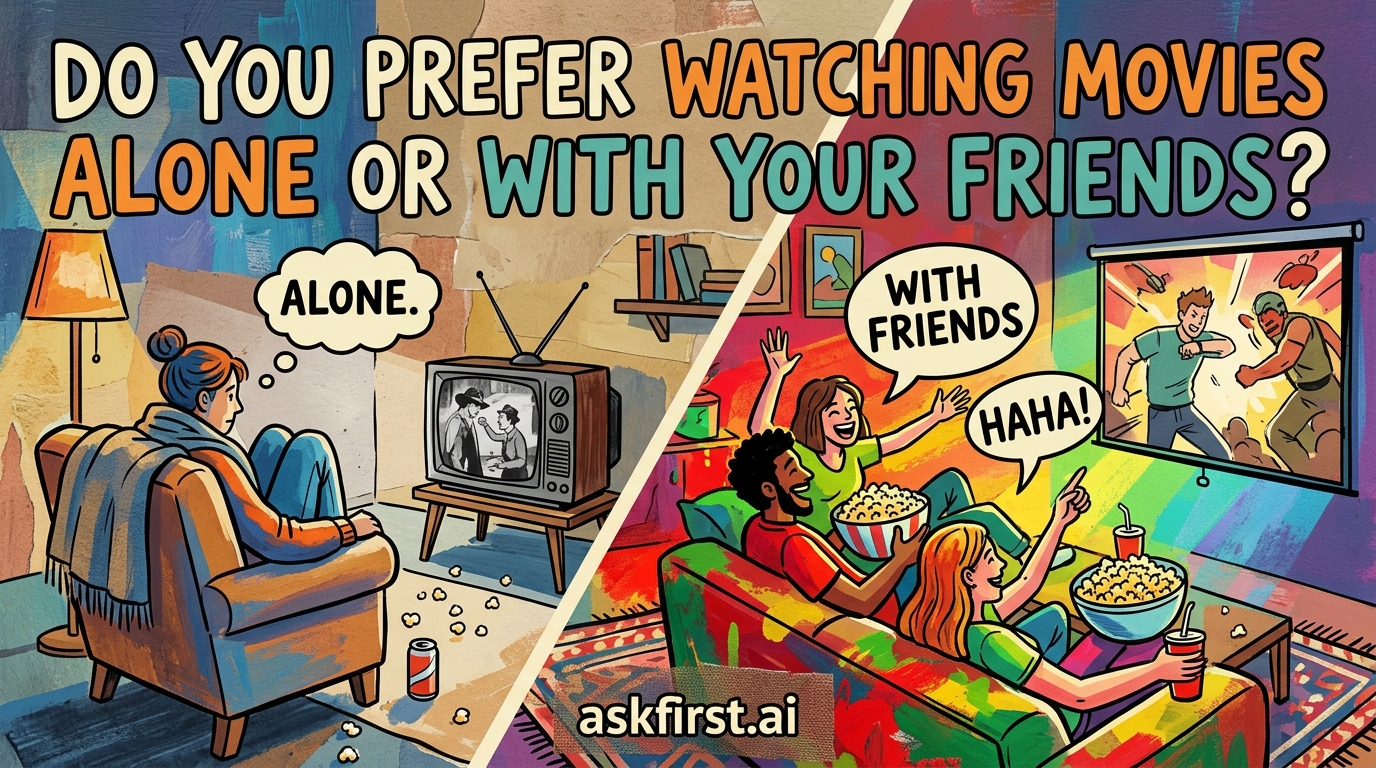
The choice between watching a film in solitude versus a social setting is a nuanced psychological debate that touches upon personality traits, emotional regulation, and the specific architecture of the cinematic experience. While individual preferences often feel like mere habit, they reflect deeper cognitive engagement patterns and social needs. Analyzing these dynamics reveals why neither approach is objectively superior, but rather uniquely tailored to different types of media consumption.
The Case for Solitary Cinematic Immersion
Watching movies alone is often categorized as a form of 'parasocial high-intensity engagement.' When an individual views a film in isolation, there is a total absence of social monitoring—the subconscious performance of reactions to appease or entertain companions. Research in cognitive psychology suggests that solitary viewing allows for:
- Unfiltered Emotional Vulnerability: Without the presence of peers, viewers are more likely to experience raw emotional responses, such as weeping during tragic scenes or feeling genuine fear, without the 'cool' exterior often projected in social settings.
- Cognitive Flow State: Solitude removes the 'interruption factor.' Conversations, side comments, or shifts in body language from others break the 'fourth wall' of immersion. Solo viewers often reach a state of flow, where their entire focus is anchored to the narrative arc.
- Full Sensory Control: Personal volume levels, lighting, and pausing capabilities create a curated environment optimized for the individual’s specific neuro-sensory needs.
The Social Synergy of Shared Viewing
Conversely, watching a film with friends taps into the concept of 'co-regulation of affect.' Humans are evolutionarily wired for collective experience, and communal viewing acts as a bonding mechanism that leverages shared reality. This social context provides several key advantages:
- Social Anchoring: During horror or intense suspense, the presence of others acts as a psychological buffer, mitigating distress while enhancing the thrill. This is often termed the 'arousal transfer' phenomenon, where the tension of the film is shared across a group.
- Collaborative Meaning-Making: The act of discussing a movie immediately after it finishes is a form of social cognitive synthesis. Friends decode subtext, debate character motivations, and identify motifs together, which expands the overall comprehension of the narrative structure.
- The 'Mirror Neuron' Effect: Collective laughter or collective tension creates a feedback loop. Observing others react intensifies the intensity of one's own internal reactions, as mirror neurons trigger similar neurological states across the group.
Identifying the Optimal Experience
To determine which approach serves a particular viewer best, one must categorize the intent of the viewing session. If the goal is analytical depth or emotional catharsis, solitude is statistically superior. The absence of social distraction allows the brain to process complex motifs and subtle character cues without the interference of external social cues. For instance, watching a classic arthouse film or a heavy psychological drama is often best handled alone, where the lack of distraction respects the director's pacing.
If the goal is social bonding or entertainment-as-event, group viewing is optimal. Comedies, blockbusters, and thrillers are intentionally designed with pacing that benefits from shared audience reaction. The release of dopamine associated with social laughter or shared excitement is a proven contributor to social cohesion and relationship fortification.
Conclusion: The Hybrid Approach
Ultimately, the distinction is not binary. The most sophisticated viewers adopt a hybrid approach: they consume intellectually dense or emotionally demanding narratives in isolation to honor the work, while utilizing social settings as a venue for communal joy and relationship building. Recognizing these psychological drivers allows viewers to intentionally craft their environment, ensuring that the act of watching a movie is not just a passive pastime, but a deliberate method of emotional and cognitive curation. Whether alone or in a crowd, the power of cinema remains rooted in its ability to transport the consciousness—the only variable that changes is who is along for the journey.