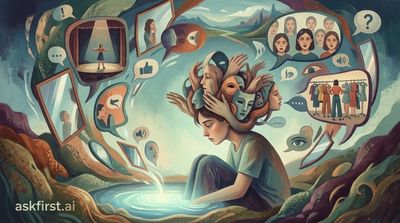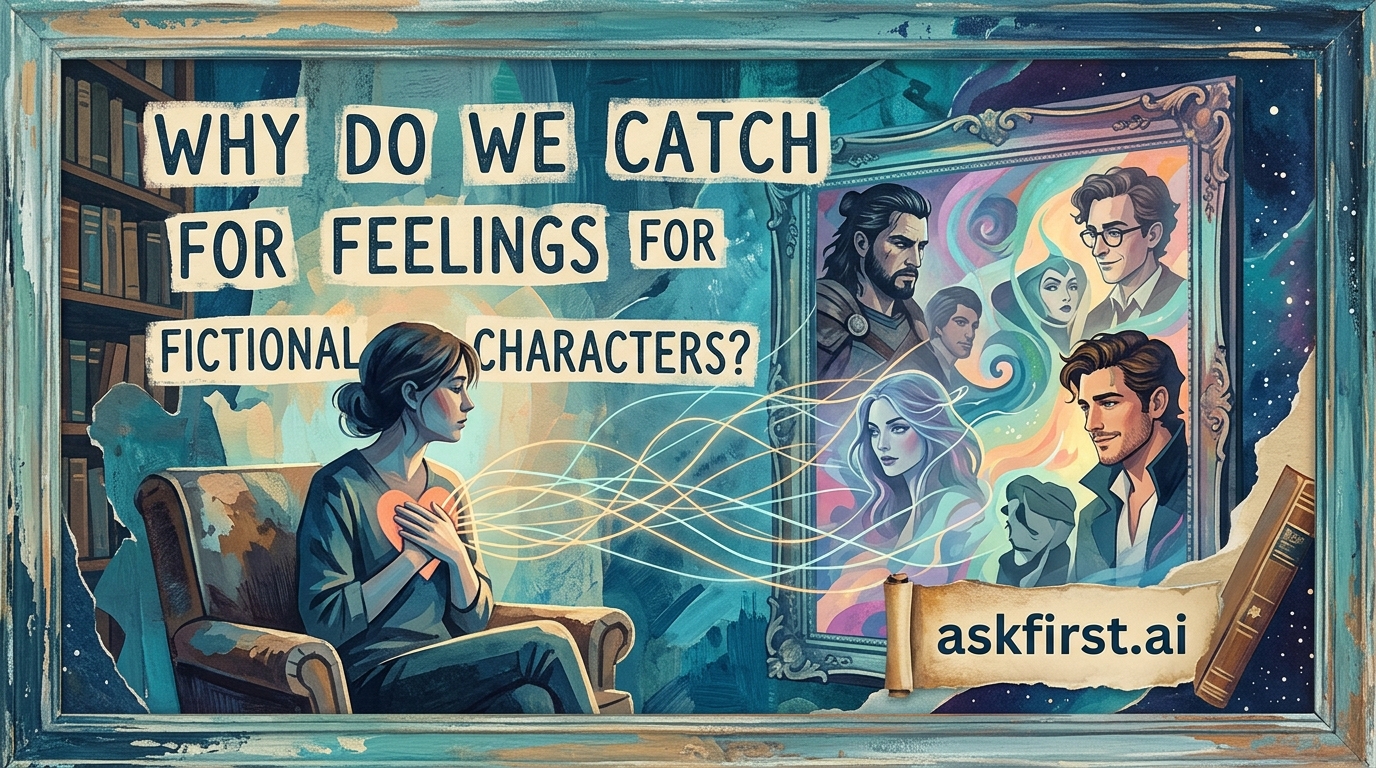
The phenomenon of developing deep, emotional attachments to fictional characters—often referred to as "parasocial relationships"—is a profound intersection of cognitive psychology, evolutionary biology, and narrative immersion. While it may seem irrational to experience genuine grief, love, or longing for a being that exists only as ink on a page or pixels on a screen, the human brain is wired to respond to stories with the same neurological intensity as real-life interactions.
The Evolutionary Architecture of Empathy
At the core of this experience is the concept of Theory of Mind (ToM). This is the cognitive ability to attribute mental states—beliefs, intents, desires, and emotions—to oneself and others. Evolutionary psychologists, such as Robin Dunbar in his seminal work Grooming, Gossip, and the Evolution of Language, suggest that humans evolved to live in complex social groups. To survive, our ancestors needed to track the emotional states of others constantly.
Because our brains have not evolved to distinguish between "real" people and "simulated" people in terms of emotional processing, the same neurons fire when we empathize with a character’s struggle as when we observe a friend. When a character in a novel experiences a heartbreak, our mirror neurons activate, simulating that pain within our own neural pathways. This is not a glitch; it is an extension of the social intelligence that allowed our species to thrive.
The Psychology of Narrative Transportation
Psychologists Melanie Green and Timothy Brock coined the term "Narrative Transportation" to describe the state where a reader or viewer becomes so immersed in a story that they lose touch with their actual physical surroundings. When we are "transported," our critical faculties are temporarily suspended. We cease to view the character as a static construct and begin to treat them as a social partner.
This process is facilitated by the "Autobiographical Memory" system. We often project our own experiences, values, and desires onto characters. If a character possesses traits we admire or wish to embody, we experience what researchers call "Parasocial Interaction" (PSI). The more time we spend with a character—perhaps through a long-running television series or a multi-volume book series—the more our brain treats them as a consistent presence in our life. We grow accustomed to their "company," leading to the same feelings of intimacy we would have with a long-distance friend.
The "Idealization" Factor: The Safety of Fictional Romance
One of the most compelling reasons we "catch feelings" for fictional characters is the lack of risk involved. In real-world relationships, vulnerability is fraught with the potential for rejection, betrayal, or conflict. Fictional characters are static; they are curated versions of humanity designed by authors to evoke specific emotional responses.
In The Pleasure of Reading by Antonia Fraser, the author discusses how literature acts as a sanctuary. Because we control the pacing and the depth of our exposure to these characters, we can explore intense emotional landscapes without the chaotic variables of real-life human interaction. We fall for the idea of the character, which is often a perfect mirror of our own psychological needs at that moment. We essentially "edit" the character in our minds, filling in their gaps with the traits we find most desirable, creating a bespoke emotional partner who never disappoints us.
The Neurochemistry of Attachment
When we engage with a character we feel strongly about, our brain releases oxytocin, often dubbed the "cuddle hormone." This chemical is responsible for social bonding and trust. Studies conducted by Paul Zak, a neuroeconomist and author of The Moral Molecule, have shown that storytelling is a highly effective way to induce oxytocin production. When a character faces a crisis and overcomes it, our brain rewards us with a hit of dopamine and oxytocin. This creates a physiological addiction to the character’s journey. We aren't just "liking" a character; we are experiencing a chemical reward cycle that mimics real-world bonding.
The Role of Parasocial Grief
The intensity of these feelings becomes most apparent when a character is killed off or a series ends. This is "parasocial grief." Because our brains have processed the character as a social entity, the loss is experienced as a genuine bereavement. The loss of a fictional character is often minimized by society, yet for the individual, the absence of that "presence" in their daily routine creates a void. This confirms that the brain treats these entities as legitimate parts of our social ecosystem.
Conclusion
Catching feelings for fictional characters is a testament to the sophistication of the human brain. It is the result of our innate desire for connection, our capacity for empathy, and the powerful way stories shape our internal reality. Whether it is a sense of companionship, a placeholder for unfulfilled desires, or a mirror for our own growth, these characters serve as vital psychological companions. We do not love them because they are real; we love them because they allow us to explore the depths of our own humanity in a way that feels safe, profound, and deeply personal. We are, fundamentally, storytelling creatures, and we find our own reflections in the lives of those who exist only in the imagination.