The Psychology of Companion Viewing: Navigating the "Talking Partner" Phenomenon
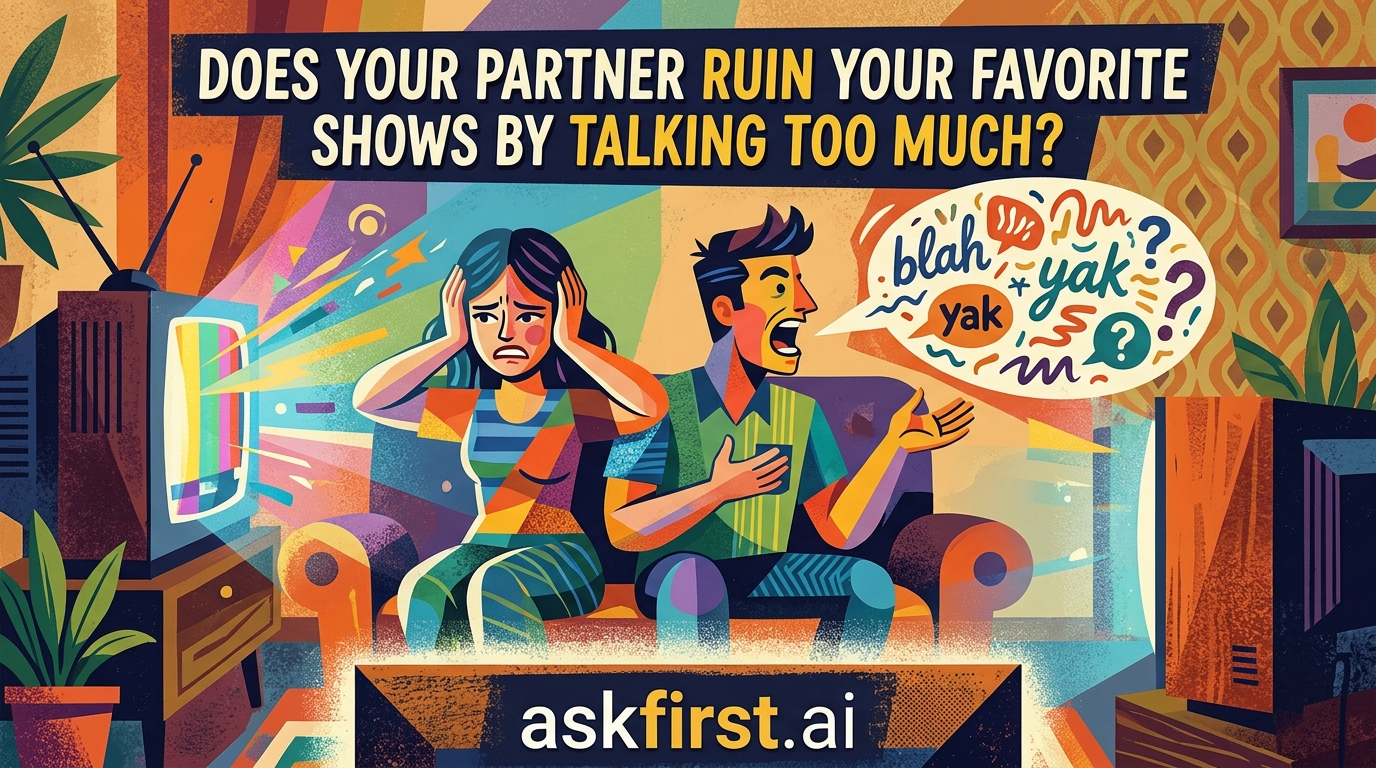
In the modern landscape of home entertainment, the television has evolved from a passive broadcast medium into a centerpiece of domestic interaction. However, this evolution has created a significant point of friction in many relationships: the struggle between the desire for immersive narrative consumption and the human impulse for social connection. If you find yourself frequently hitting the pause button because your partner is narrating, critiquing, or questioning the plot of your favorite series, you are experiencing a common yet complex psychological phenomenon known as "companion viewing dissonance."
The Neurobiology of Narrative Immersion
To understand why this is so frustrating, one must first look at the concept of "flow state." When we engage with a high-quality television drama or a complex thriller, our brains enter a state of narrative transportation. According to psychologist Melanie Green in her seminal work Narrative Impact: Social and Cognitive Foundations, when viewers are fully immersed in a story, they experience a loss of self-awareness and a suspension of disbelief. This state requires significant cognitive resources.
When a partner interrupts this flow to ask, "Wait, who is that guy again?" or to predict the ending, they aren't just making noise; they are effectively yanking your brain out of its cognitive "flow." This forced mental task-switching is exhausting. It disrupts the emotional connection you have built with the characters and forces your brain to recalibrate from an empathetic, internal state back to an analytical, external state.
The "Social Grooming" Theory of Television
Conversely, why do partners insist on talking? From an evolutionary perspective, human beings are social animals hardwired for "social grooming." In his book Grooming, Gossip, and the Evolution of Language, anthropologist Robin Dunbar argues that language serves as a primary tool for bonding.
For many, watching a show is not about the show itself; it is about the shared experience. When your partner talks during a program, they are often attempting to bridge the gap between their internal thoughts and your shared reality. They are seeking validation, connection, or shared humor. They view the show as a "third participant" in the conversation, rather than a sacred text that must be observed in silence. Recognizing that this behavior is often a misplaced bid for intimacy—rather than a malicious attempt to ruin your evening—is the first step toward resolution.
Categorizing the "Chatty Viewer"
Not all interruptions are created equal. It is helpful to categorize the type of "commentator" you are dealing with to address the behavior effectively:
- The Clarifier: This person feels anxious when they don’t understand the plot. They fear missing a detail and often ask questions that could be answered by simply watching the next five minutes.
- The Predictor: This person uses the show as a game, constantly shouting out theories or guessing the culprit. For them, the act of consumption is a collaborative puzzle.
- The Emotional Reactor: This person needs to verbalize their feelings—gasps, groans, or expressions of shock—to process the intensity of the scene.
- The Second-Screen Distractor: This is the partner who is scrolling through social media or checking emails and feels the need to share every trivial thought that crosses their mind, effectively turning the TV into background noise.
Strategies for Harmonious Viewing
If you wish to preserve both your relationship and your enjoyment of high-quality television, consider these evidence-based strategies:
- Implement the "Pause and Chat" Protocol: Instead of letting the conversation bleed into the action, agree to pause the show entirely when a comment is made. This forces the talker to realize that their comment is significant enough to stop the entertainment. Frequently, the effort of pausing makes the partner realize their observation wasn't actually that important.
- The "Debrief" Session: For couples who love to discuss plot twists, designate the final ten minutes of the hour for a "debrief." Agree that while the show is playing, the room remains silent, but once the credits roll, the floor is open for theories, critiques, and analysis.
- Parallel Play: Sometimes, the healthiest solution is to recognize that you and your partner have different viewing styles. It is perfectly acceptable to watch your "prestige dramas" alone or with friends who share your silent-viewing preference, while saving "background" shows or reality television for times when you and your partner can chat freely.
Conclusion
The conflict between wanting to lose yourself in a masterpiece and wanting to connect with a loved one is a classic dilemma of modern domestic life. It is not necessarily a sign of a failing relationship, but rather a clash of differing cognitive needs. By understanding the science of narrative immersion and recognizing the social drives behind verbal commentary, you can move from a place of frustration to a place of negotiation. Whether through scheduled pauses or separate viewing habits, finding a balance ensures that you can enjoy your favorite stories without sacrificing the harmony of your home.