The Paradox of Fragility and Affluence
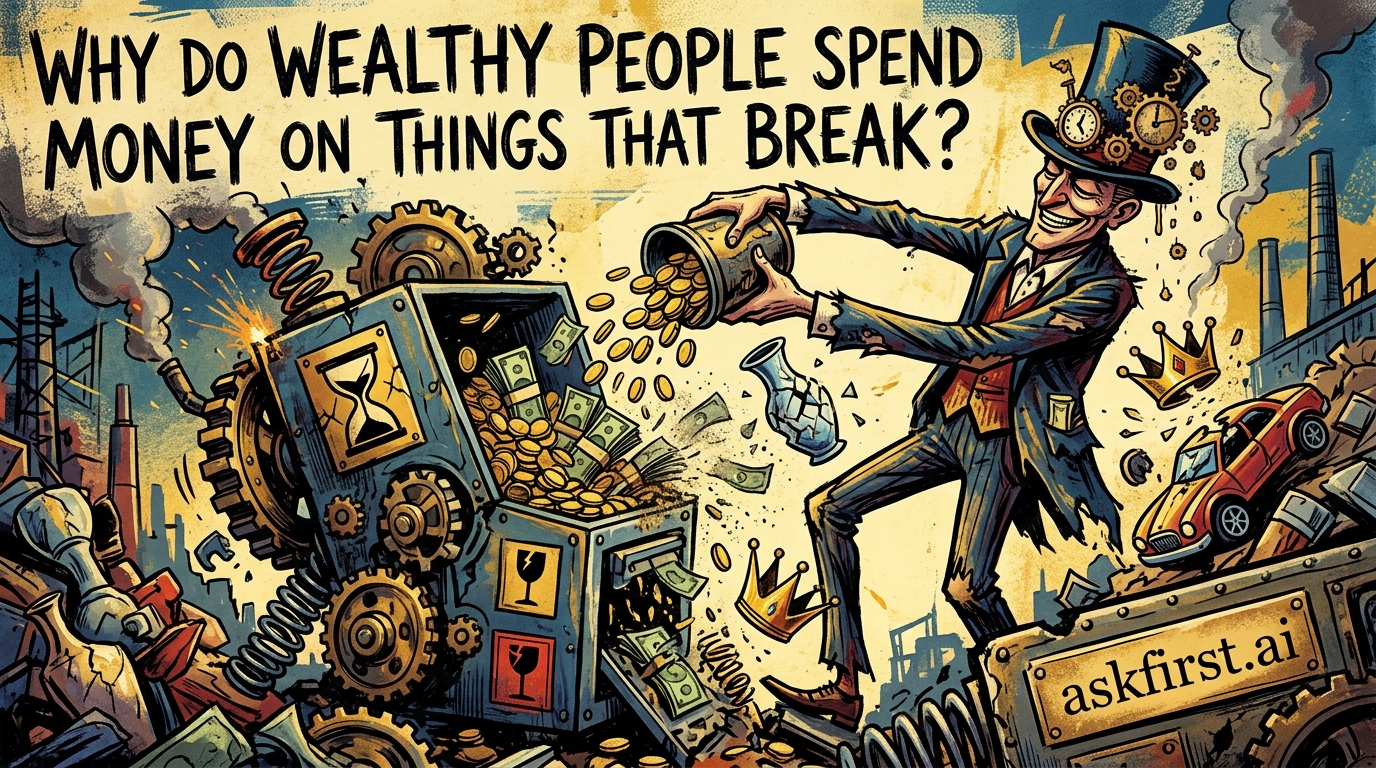
It often appears counter-intuitive: why would individuals with significant financial resources intentionally purchase items characterized by high fragility, high maintenance, or rapid obsolescence? The phenomenon of the wealthy favoring seemingly 'unreliable' goods is rooted in a complex interplay of hedonic adaptation, status signaling, and the pursuit of unique experiences. To understand this, one must move beyond the basic utility of an object and look at the psychological and social architecture of luxury consumption.
1. The Superiority of Perishable Luxury
Many luxury items are designed for performance rather than durability. Consider the high-end sports car. A vehicle built for maximum aerodynamics and raw engine power often utilizes carbon fiber components and tightly tuned mechanical systems. These materials are technically 'fragile' compared to a heavy-duty, mass-produced sedan designed for a million-mile lifespan. For the affluent consumer, the trade-off is deliberate: performance is prioritized over longevity. The fragility of the machine is a direct byproduct of its advanced engineering. If it were built to last forever, it would be heavy, slow, and unexciting. Here, the 'breaking' is a symptom of extreme refinement.
2. The Signaling Value of 'Disposable' Opulence
Economists have long discussed 'signaling'—using consumption to demonstrate wealth and taste to peers. A durable, indestructible object, while practical, often signals a utilitarian mindset. Conversely, owning items that require constant upkeep, frequent replacement, or specialized care signals the possession of 'conspicuous leisure'. If someone owns a delicate, hand-painted silk garment that cannot be machine-washed or a rare botanical collection that requires a dedicated greenhouse and climate control, they are signaling that they have the time, money, and staff to maintain such fragility. It is a flex of resources: 'I can afford to maintain the impossible.'
3. Hedonic Adaptation and the Novelty Loop
Psychologically, human beings are subject to hedonic adaptation, a process where the joy derived from a new purchase fades as it becomes 'normal' in daily life. Wealthy consumers often gravitate toward items that offer intense, singular experiences that might be fleeting. A vintage wine, an extravagant seasonal floral arrangement, or a complex piece of haute couture designed for a single gala event serves a specific psychological purpose. These items provide a peak experience. By the time the item might begin to wear out or expire, the novelty has already been extracted. The 'breakage' is merely the end of the lifecycle of the experience, not a failure of the product itself.
4. Aesthetic Perfection vs. Industrial Durability
Industrial products are designed for the masses to withstand the lowest common denominator of care. This leads to heavy plastics, thick coatings, and over-engineered durability. In contrast, artisanal, high-end luxury goods often prioritize aesthetic purity. Fine china, delicate glassware, or artisanal furniture made from rare, porous woods are susceptible to damage precisely because of their refinement. They possess a tactile quality and visual depth that mass-market, indestructible materials cannot replicate. Wealthy collectors accept the inherent fragility of these materials because the alternative—indestructible synthetic materials—lacks the soul and prestige of the natural or hand-crafted material.
5. Curated Experiences and the 'Service Economy'
For the very wealthy, the concept of 'maintenance' is often outsourced. When an item breaks, a person of modest means experiences stress and financial loss. When an individual of significant wealth experiences a breakage, they initiate a process of repair that often involves specialized craftsmen, designers, or artisans. This creates a cycle of engagement. The repair becomes part of the journey. In some high-level collector circles, the process of restoring an item is considered as valuable as the item itself. It becomes a social experience, an opportunity to interact with experts, and a way to preserve history. Therefore, the vulnerability of the item is an invitation to participate in a curated world of high-level service.
Conclusion
Ultimately, the choice to consume fragile, high-maintenance items is not a lack of judgment, but a redefinition of value. In a world where the vast majority of products are engineered for safety, longevity, and mass appeal, the wealthy choose objects that demand attention, care, and investment. The fragility is not a bug; it is a feature. It is a badge of honor that signals a life lived with a high tolerance for complexity and a commitment to experiences that are intense, rare, and deeply personal. By embracing the ephemeral nature of these goods, they distinguish themselves from the utilitarian mainstream, proving that their true wealth lies in the freedom to choose beauty over permanence.