The Psychology of Consumerism: Unraveling the 'Why' Behind Impulse Purchases
Human behavior is governed by complex evolutionary, psychological, and social drivers. When an individual purchases a product they do not strictly need, they are rarely engaging in a purely logical transaction. Instead, they are responding to deeply ingrained neurobiological rewards and societal pressures that have been expertly engineered into the modern marketplace. Understanding this phenomenon requires an examination of several core pillars of behavioral science.
1. The Dopamine Loop and Instant Gratification
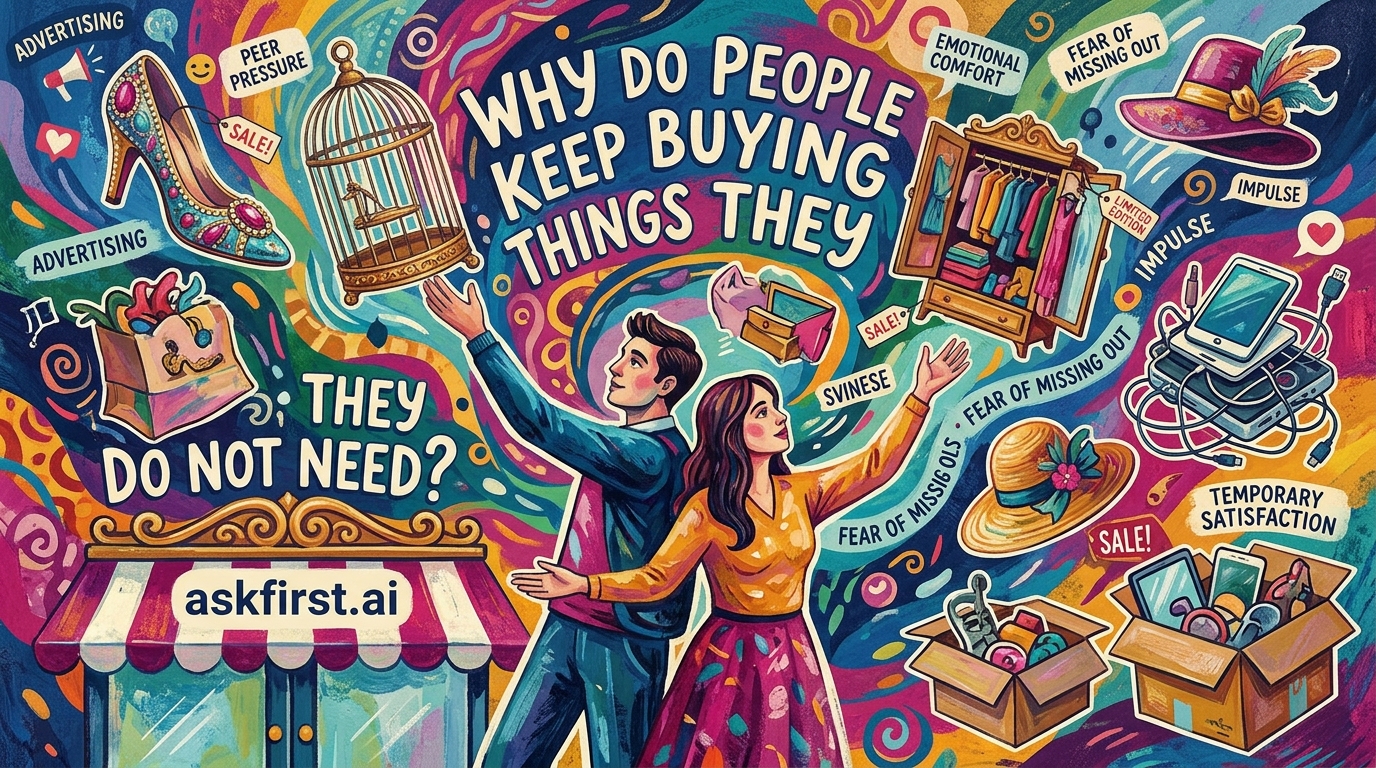
At the neurological level, the anticipation of a purchase often triggers a higher release of dopamine than the actual ownership of the item. This is known as the 'pleasure of anticipation.' When a person browses an online store or walks through a mall, the brain anticipates a potential reward. The act of clicking 'buy' or reaching for a credit card provides a fleeting spike in excitement. This loop is the foundation of modern habit formation, where the brain becomes conditioned to seek out the stimulus of shopping to alleviate boredom, stress, or mild anxiety.
2. Scarcity and Social Proof
Marketers frequently employ psychological triggers to bypass rational thinking. Two of the most effective are Scarcity and Social Proof.
- Scarcity: Phrases like 'only three items left' or 'sale ends in two hours' trigger a primitive 'fear of missing out' (FOMO). Evolutionary biology prioritized gathering resources quickly when they were rare. Today, this instinct causes panic buying, even for products that will be restocked tomorrow.
- Social Proof: Humans are inherently social creatures. When we see others purchasing a product, our brains interpret this as a signal of safety and desirability. Whether it is an influencer endorsement or a bestseller list, social validation diminishes our critical assessment of the product's actual utility.
3. The Identity and Symbolic Value of Goods
In affluent societies, products often serve as signifiers of identity rather than utility. People purchase items that they believe communicate who they are (or who they wish to be) to the rest of the world. This is referred to as 'extended self-theory.' A luxury watch is rarely bought merely to tell the time; it is bought to signal status, taste, and success. This desire to curate a public persona often leads to the acquisition of unnecessary items that promise, but fail to deliver, a transformation of the buyer's internal happiness.
4. The Hedonic Treadmill
Psychologists define the Hedonic Treadmill as the observed tendency of humans to quickly return to a relatively stable level of happiness despite major positive or negative events. Once a new item is purchased, the initial satisfaction fades as the item becomes the 'new normal.' To regain that previous spike of joy, the individual is compelled to seek out another, newer, or better item. This continuous cycle ensures that the goalpost for satisfaction is always just out of reach, fueling a permanent state of consumption.
5. Emotional Regulation and Retail Therapy
'Retail therapy' is not merely a colloquialism; it is a behavioral coping mechanism. Studies have shown that making choices—even small, trivial ones like choosing a product to buy—can help people feel more in control when they perceive their external circumstances as chaotic or stressful. Shopping offers a temporary sense of agency. By acquiring objects, individuals feel they are 'improving' their lives or creating a buffer against future discomfort, even when the objects themselves add no functional value.
How to Break the Cycle
To transcend these impulses, experts suggest several evidence-based strategies:
- The 72-Hour Rule: Wait three days before purchasing any non-essential item. This cooling-off period allows the emotional rush to subside, enabling the logical prefrontal cortex to regain control.
- Identify the 'Why': Ask yourself if you are buying the item for its utility or to fill an emotional void. If the latter, identify the source of the emotion and address it without the purchase.
- Environment Design: Unsubscribe from marketing emails and limit exposure to platforms designed to trigger impulse buys. By reducing the frequency of the stimulus, the strength of the compulsion diminishes significantly.
In conclusion, buying things we do not need is not necessarily a sign of a moral failing, but a reflection of the human condition navigating a world designed to capture attention. By recognizing the biological and psychological triggers at play, individuals can reclaim their agency and make more intentional, value-based choices.