The Architecture of Solitude: Understanding the Human Fear of Being Alone
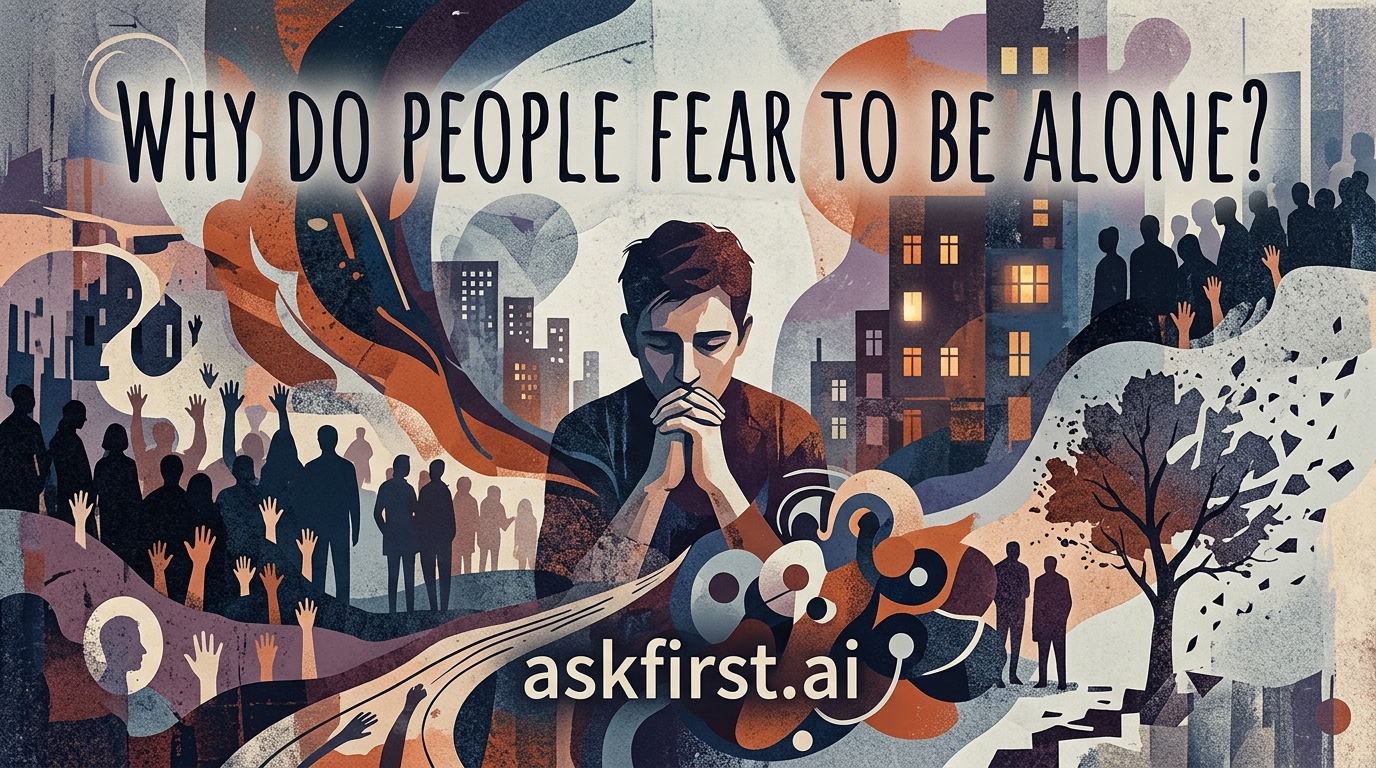
The human experience is defined by a paradox: while we crave autonomy and independence, we are biologically and psychologically wired for connection. When that connection is severed, or when we are forced into prolonged periods of solitude, many individuals experience a profound, visceral anxiety often termed "autophobia" or "monophobia." This fear is not merely a preference for company; it is a complex intersection of evolutionary survival mechanisms, psychological conditioning, and the modern erosion of inner silence.
The Evolutionary Imperative: Safety in Numbers
To understand why being alone triggers an alarm bell in the human psyche, one must look at our evolutionary history. For the vast majority of our existence, being alone was synonymous with being vulnerable. In The Social Animal, social psychologist Elliot Aronson explains that humans evolved as obligatorily gregarious creatures. In the Pleistocene era, separation from the tribe meant the loss of protection against predators, difficulty in securing food, and the inability to reproduce.
Our brains evolved to interpret social exclusion as a physical threat. Neuroscientific research, such as the studies conducted by Matthew Lieberman at UCLA, suggests that the neural pathways activated during social rejection overlap significantly with those that process physical pain. When we are alone, the brain’s "social monitoring system" goes into overdrive, scanning the environment for threats. For many, the discomfort of being alone is an ancient, vestigial warning system screaming that we are "out of the herd" and therefore in danger.
The Mirror of the Self: Why Solitude Forces Confrontation
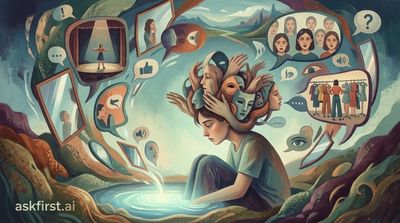
Beyond evolutionary biology, the fear of being alone is often a fear of what we encounter when the external noise of the world fades. In his seminal work The Courage to Be, theologian and philosopher Paul Tillich argues that modern individuals struggle with "the anxiety of emptiness and meaninglessness." When we are surrounded by others, we can hide behind roles, masks, and social scripts. We are defined by our relationships—as an employee, a spouse, or a parent.
When we are alone, these external anchors vanish. We are left only with our own thoughts, many of which may be intrusive, self-critical, or existential in nature. Many people fear being alone because they fear the "internal monologue" that reveals their insecurities, regrets, and unresolved traumas. Blaise Pascal, the 17th-century French mathematician and philosopher, famously wrote in his Pensées: "All of humanity's problems stem from man's inability to sit quietly in a room alone." He argued that we seek distractions—what he called divertissement—specifically to avoid the terrifying depth of our own consciousness.
The Modern Erosion of Solitude
In the 21st century, the fear of being alone has been exacerbated by the digital revolution. Sherry Turkle, an MIT professor and author of Alone Together: Why We Expect More from Technology and Less from Each Other, posits that we are living in a state of "connected isolation." Because we have constant access to digital companionship, we have lost the capacity to be alone without feeling lonely.
We have trained our brains to require constant external stimulation. When we feel the slightest pang of solitude, we reach for a smartphone, scrolling through social media feeds to feel a phantom sense of connection. This creates a feedback loop: because we never practice being alone, we never develop the psychological "muscle" to tolerate it. We lose the ability to self-soothe, making the prospect of actual solitude feel increasingly unbearable. This is not just a social preference; it is a structural change in how we process our own existence.
The Difference Between Loneliness and Solitude
It is vital to distinguish between loneliness and solitude. Loneliness is a state of deprivation—the painful feeling that one is missing connection. Solitude, conversely, is a state of enrichment. As the author Anthony Storr emphasizes in his book Solitude: A Return to the Self, the ability to be alone is a hallmark of emotional maturity and creative potential. Many of history’s greatest thinkers, artists, and leaders—from Henry David Thoreau, who documented his experience in Walden, to modern-day innovators—have utilized solitude as a crucible for deep work and self-discovery.
The fear of being alone often prevents individuals from reaching this state of creative and emotional independence. By avoiding the silence, they avoid the very environment necessary for self-reflection and personal growth.
Conclusion
The fear of being alone is a multifaceted phenomenon rooted in our primal need for safety, our modern addiction to digital distraction, and the profound difficulty of confronting one's own inner landscape. While it is natural to seek out the warmth of human connection, the inability to be alone acts as a barrier to authentic self-knowledge. To overcome this fear, one must recognize it not as a character flaw, but as a biological and cultural byproduct that can be unlearned. By intentionally practicing periods of solitude—turning off the screens, sitting with one's thoughts, and engaging in quiet reflection—we can transform the anxiety of being alone into the strength of being self-contained. As we learn to bridge the gap between our internal worlds and our external lives, we find that the most important relationship we will ever nurture is the one we hold with ourselves.