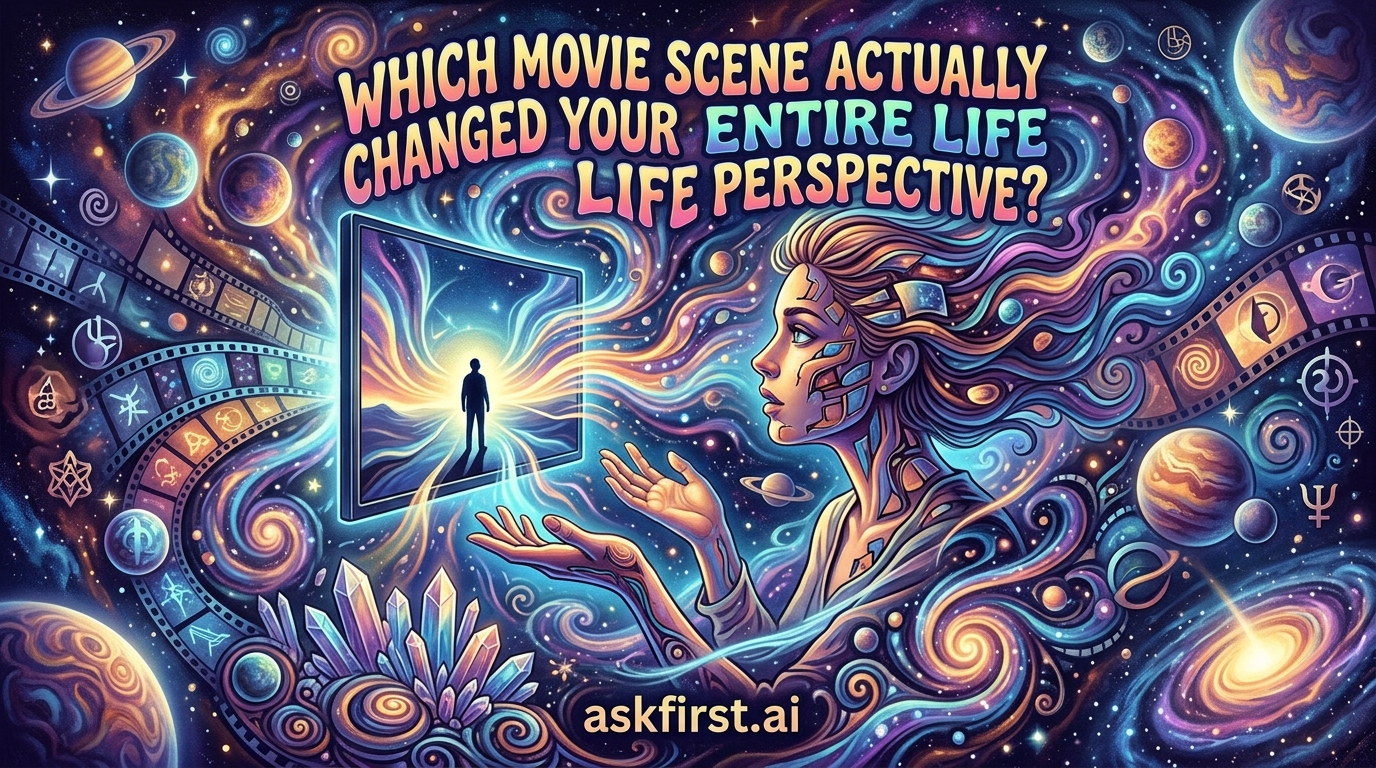
The Power of Cinematic Epiphany
Cinema serves as more than mere entertainment; it acts as a mirror to the human condition and a catalyst for profound psychological shifts. Among the vast library of film history, the 'transcendence scene' from the 1989 film Dead Poets Society, specifically the moment John Keating stands upon his desk to challenge his students' perspectives, stands as a masterclass in shifting worldview. This scene, and others like it, utilizes the psychological concept of 'cognitive reframing' to alter how individuals perceive their agency and environment.
Deconstructing the 'Desk-Standing' Moment
In this pivotal sequence, the character John Keating invites students to stand upon their desks. While seemingly a simple classroom activity, it represents the act of viewing the world from a different vantage point. This is not just a metaphor; it is a neurological prompt. When an individual physically changes their relationship to their surroundings, the brain is forced to process spatial data differently. This sensory input serves as a bridge for cognitive dissonance, allowing students to challenge the dogma of their rigid, traditionalist education.
Why Cinema Shifts Perspectives
- Mirror Neurons: Human beings possess mirror neurons that allow for the simulation of the experiences of others. When a viewer watches a character experience a breakthrough, the viewer's brain experiences a similar neural activation.
- Narrative Transportation: This is the psychological state of being completely absorbed into a story. During this state, the viewer’s real-world beliefs are temporarily suspended, creating a 'window of opportunity' for the introduction of new, more empowering ideas.
- Cognitive Reframing: Movies often present a problem that seems insurmountable, only to reveal that the perspective was the primary obstacle. This teaches the audience that their reality is often a construct of their own mental frame.
The Science of 'Carpe Diem'
The philosophical underpinning of the scene—'Carpe Diem'—is frequently misunderstood as mere hedonism. However, in a professional and philosophical context, it relates to the concept of 'Temporal Scarcity.' Understanding that time is finite allows individuals to prioritize goals that align with personal values rather than societal expectations. By observing a character commit to this philosophy, viewers often experience an 'epiphanic surge'—a surge of dopamine and adrenaline triggered by the realization of personal potential.
Implementing Cinematic Lessons in Daily Life
To effectively internalize the perspective shift seen on screen, one must move from passive consumption to active application. Consider the following structural framework for personal change inspired by cinematic breakthroughs:
- The Inciting Incident: Acknowledge the moment in life where the current path feels insufficient. Just as characters have an inciting incident, individuals must label their 'pre-change' status.
- The Vantage Point Shift: Adopt the physical or mental practice of looking at a problem from an 'inverted' position. If a project is failing, ask: 'What would an expert from an entirely different field suggest?'
- The Commitment to Action: A film provides no value if the character refuses the 'call to adventure.' Similarly, a perspective shift must be followed by a concrete action—a physical ritual that marks the transition from the old self to the new.
The Enduring Legacy of Perspective
Perspective is a fluid construct. By repeatedly engaging with high-quality, thought-provoking cinema, the brain builds new neural pathways that make adaptability a natural response rather than an arduous effort. The scene mentioned earlier remains a staple of humanistic study because it encapsulates the universal desire for agency. Whether viewed today or in the year 2030, the core message remains the same: the environment dictates reality only as far as one allows it to. True change begins by standing upon the 'desk' of one's own assumptions and looking at the world with the clarity of a fresh observer. This is the enduring mechanism behind the transformative power of storytelling, ensuring that cinema remains a vital tool for self-actualization and personal growth across generations.