The Psychology of Aspirational Consumption and Status Signaling
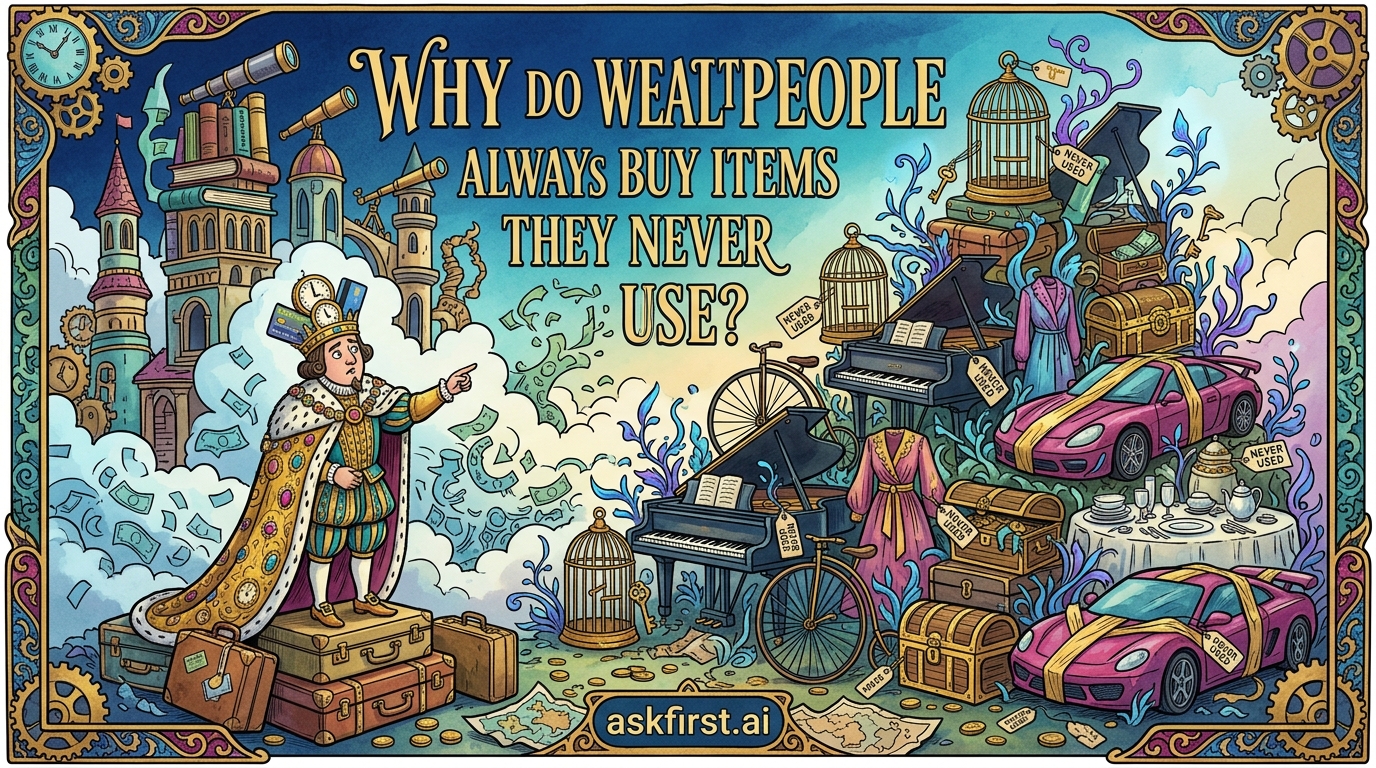
Wealthy individuals often engage in purchasing patterns that appear baffling to the casual observer. Items such as luxury vehicles that sit idle in temperature-controlled garages, designer fashion worn only once for a social media appearance, or vast collections of art kept in storage facilities are hallmarks of extreme wealth. To understand this phenomenon, one must look beyond utility and into the realms of behavioral economics, sociology, and evolutionary biology.
1. Signaling and Social Capital
In the hierarchy of social structures, consumption serves as a primary language of communication. The theory of 'Conspicuous Consumption,' famously introduced by Thorstein Veblen, suggests that luxury goods are purchased not for their functional purpose, but as a mechanism to signal economic status and social hierarchy. When a person buys a high-end item they do not use, they are often purchasing the symbol of that item. The object acts as a marker of 'social distance'—demonstrating that the owner possesses enough excess capital to waste it on underutilized assets. This behavior solidifies the owner's place within a specific peer group where the ability to acquire such goods is the ultimate validator of success.
2. The Diderot Effect and Habitual Expansion
Named after the French philosopher Denis Diderot, this psychological effect describes how acquiring a new possession often creates a spiral of consumption. When a wealthy individual purchases a significant luxury item, it often shifts their identity and sense of self. To maintain the coherence of this new identity, the individual feels compelled to acquire auxiliary items that 'fit' the new standard of living. Often, the original purchase loses its thrill or utility, but it remains in the collection because it anchors the individual's lifestyle to a higher tier of luxury. The item is not discarded because it represents the threshold they crossed to reach their current social standing.
3. Investment and Asset Diversification
It is a common myth that all unused luxury items are frivolous waste. Many high-net-worth individuals purchase items—such as rare watches, classic cars, or fine wine—specifically as alternative investment vehicles. In these scenarios, the 'use' is not consumption; the 'use' is asset appreciation. An unused car is a mechanical asset that may gain value over time due to scarcity, whereas a driven car experiences depreciation. Here, the lack of usage is a strategic choice designed to preserve the physical condition of an asset for future liquidation.
4. The Endowment Effect and Future Self
Wealthy individuals are prone to the 'endowment effect,' a cognitive bias where people ascribe more value to things simply because they own them. Furthermore, many luxury purchases are made based on the 'future self' ideal. An individual might buy an expensive set of scuba gear, a professional-grade telescope, or a complex musical instrument because they envision a version of themselves who utilizes these tools. Even if the current lifestyle does not permit the usage, the ownership of the item provides a psychological placeholder for personal aspirations. The item serves as a promise to the self, a potential activity that remains ready whenever the individual chooses to embrace that specific hobby.
5. Scarcity and Psychological Security
In a world where wealth can fluctuate, the accumulation of high-value goods provides a sense of psychological security. Even if the items are never 'used' in the traditional sense, their presence provides a tangible buffer against instability. The act of collecting rare items is fundamentally an act of capturing and holding value in a portable, physical form. By owning rare and high-value objects, wealthy individuals create a personal ecosystem of wealth that is insulated from traditional market volatility.
Summary of Motivations
- Status Signaling: Using items as shorthand for success and social standing within elite circles.
- Asset Management: Preserving the value of investments by intentionally avoiding wear and tear.
- Identity Anchoring: Keeping items that symbolize past milestones or desired future versions of the self.
- Cognitive Bias: Overvaluing objects due to ownership and the illusion of 'future utility.'
Ultimately, the 'unused' nature of these items is irrelevant to their true purpose. Whether serving as a social signal, a diversified investment, or an aspirational anchor, these objects fulfill a role that exists entirely within the mind of the consumer. In the luxury market, the value is rarely found in the function; it is found in the meaning.