The landscape of professional employment has undergone a seismic shift over the past several years. What was once considered an exclusive perk for tech-savvy freelancers or specific corporate roles has evolved into a standard operating model for millions worldwide. As we navigate the mid-2020s, the debate regarding remote work—often referred to as telecommuting or distributed work—remains a focal point for organizational psychologists, economists, and business leaders. Evaluating this model requires a balanced perspective that weighs individual autonomy against the structural integrity of corporate culture.
The Advantages: Autonomy and Global Efficiency
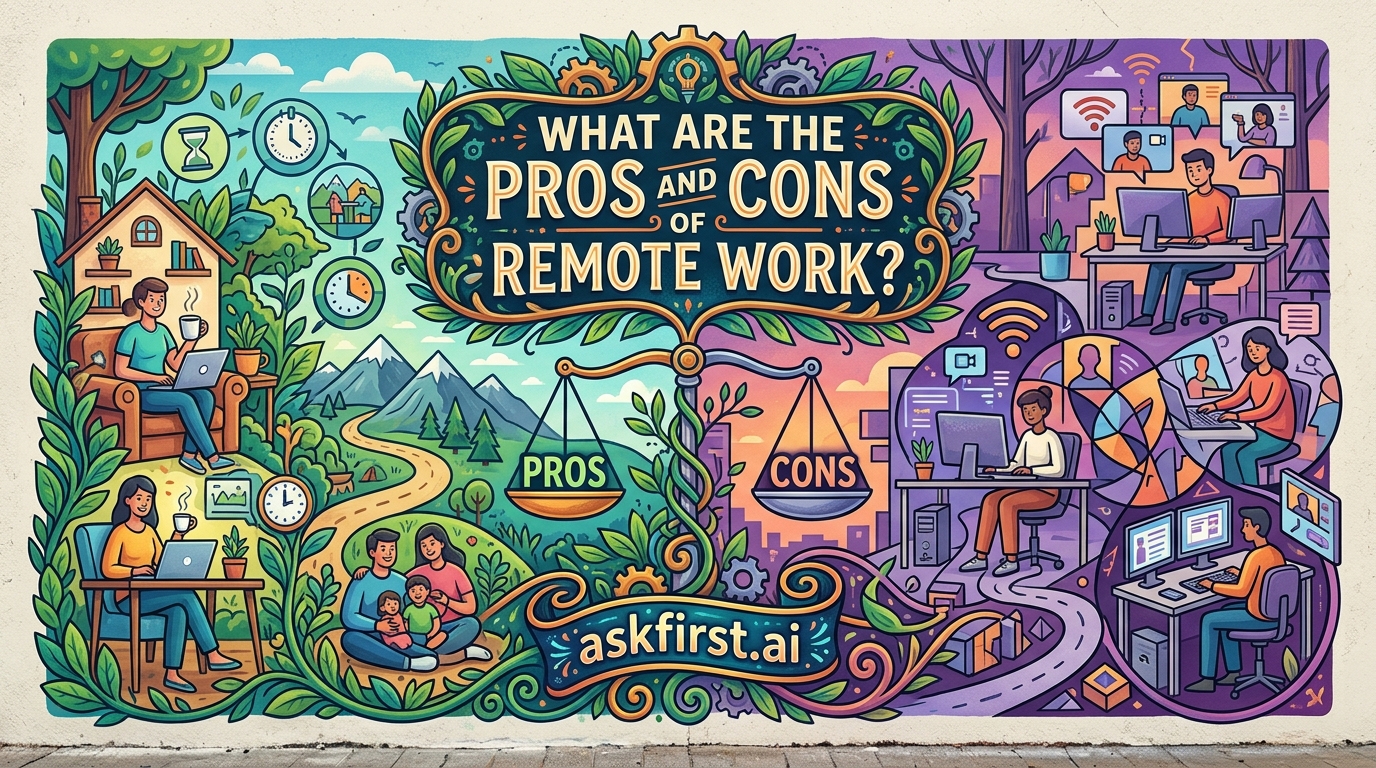
The primary allure of remote work is the radical reclamation of time. According to Nicholas Bloom, a Stanford University economist whose extensive studies on remote work have become foundational to modern labor economics, the elimination of the daily commute is the single most significant factor in employee satisfaction. By removing the "dead time" spent in traffic or on public transit, workers often reinvest a portion of that energy back into their professional tasks or personal well-being.
1. Geographic Flexibility and Talent Acquisition:
Organizations are no longer restricted by the "commuter radius." Companies can now hire the best talent regardless of whether they reside in London, New York, or a rural village. This democratization of opportunity allows businesses to build diverse, cross-cultural teams that bring varied perspectives to problem-solving.
2. Increased Focus and Productivity:
While critics argue that home environments are distracting, many high-output professionals find the opposite to be true. Without the constant interruptions of an open-plan office—often characterized by "drive-by" meetings and ambient noise—employees can engage in what Cal Newport, author of Deep Work: Rules for Focused Success in a Distracted World, calls "deep work." This state of flow is easier to achieve when an individual has full control over their sensory environment.
3. Cost Reduction for Both Parties:
For the employee, the savings on commuting, professional wardrobes, and expensive city-center lunches are substantial. For the employer, the overhead costs associated with maintaining massive real estate footprints—including rent, utilities, and office supplies—can be drastically reduced, allowing capital to be reinvested into research, development, or employee benefits.
The Challenges: Isolation and Cultural Erosion
Despite the clear benefits, the transition to a fully remote or hybrid model is not without significant friction. The loss of spontaneous interaction is perhaps the most difficult hurdle for organizations to overcome.
1. The Erosion of Social Capital:
In his book Bowling Alone, Robert Putnam articulated how social structures weaken when community interaction decreases. Within a corporate context, "social capital" is built through small, seemingly insignificant interactions: the coffee machine chat, the shared lunch, or the quick desk-side brainstorm. When all communication is mediated through screens, these "weak ties"—the professional connections that often lead to innovation and internal networking—begin to wither.
2. The "Always-On" Culture and Burnout:
The boundary between "home" and "work" has become dangerously porous. When your office is your living room, the psychological cue to "leave work" vanishes. Many remote employees report working longer hours than they did in the office, fueled by a fear that their productivity is not being "seen" by management. This phenomenon, often termed "digital presenteeism," leads to rapid burnout and emotional exhaustion.
3. Challenges in Mentorship and Onboarding:
Junior employees and new hires face the steepest learning curve in a remote environment. Much of professional development occurs through osmosis—watching how a senior leader navigates a difficult client call or how a team handles a crisis. Without physical proximity, this tacit knowledge transfer is significantly hampered. Companies must now be much more intentional and structured in their mentorship programs, as organic learning opportunities have largely disappeared.
Navigating the Future: The Hybrid Synthesis
The evidence suggests that the future of work will not be a binary choice between "all office" or "all remote." Instead, the most successful organizations are adopting a "Hybrid-Intentional" model. This approach dictates that remote work is used for tasks requiring deep concentration, while the office is used as a "collaboration hub" for brainstorming, onboarding, and relationship building.
To succeed in this environment, leaders must move away from measuring hours spent at a desk and move toward measuring outcomes. This shift requires a high degree of trust and clear communication protocols. As noted in Remote: Office Not Required by Jason Fried and David Heinemeier Hansson, the most successful remote-first companies prioritize writing as their primary mode of communication. By documenting processes and decisions, they eliminate the ambiguity that often plagues distributed teams.
Conclusion
Remote work is not a panacea for professional dissatisfaction, nor is it the death knell of corporate culture. It is a powerful tool that, when implemented with care, can lead to a more balanced and efficient workforce. The pros—flexibility, productivity, and global reach—are transformative, but they must be balanced against the cons of isolation and the difficulty of building long-term organizational cohesion. Ultimately, the success of remote work depends on a company’s ability to foster a culture of intentionality, where communication is prioritized, boundaries are respected, and the human element of professional life is nurtured, regardless of the physical distance between team members.