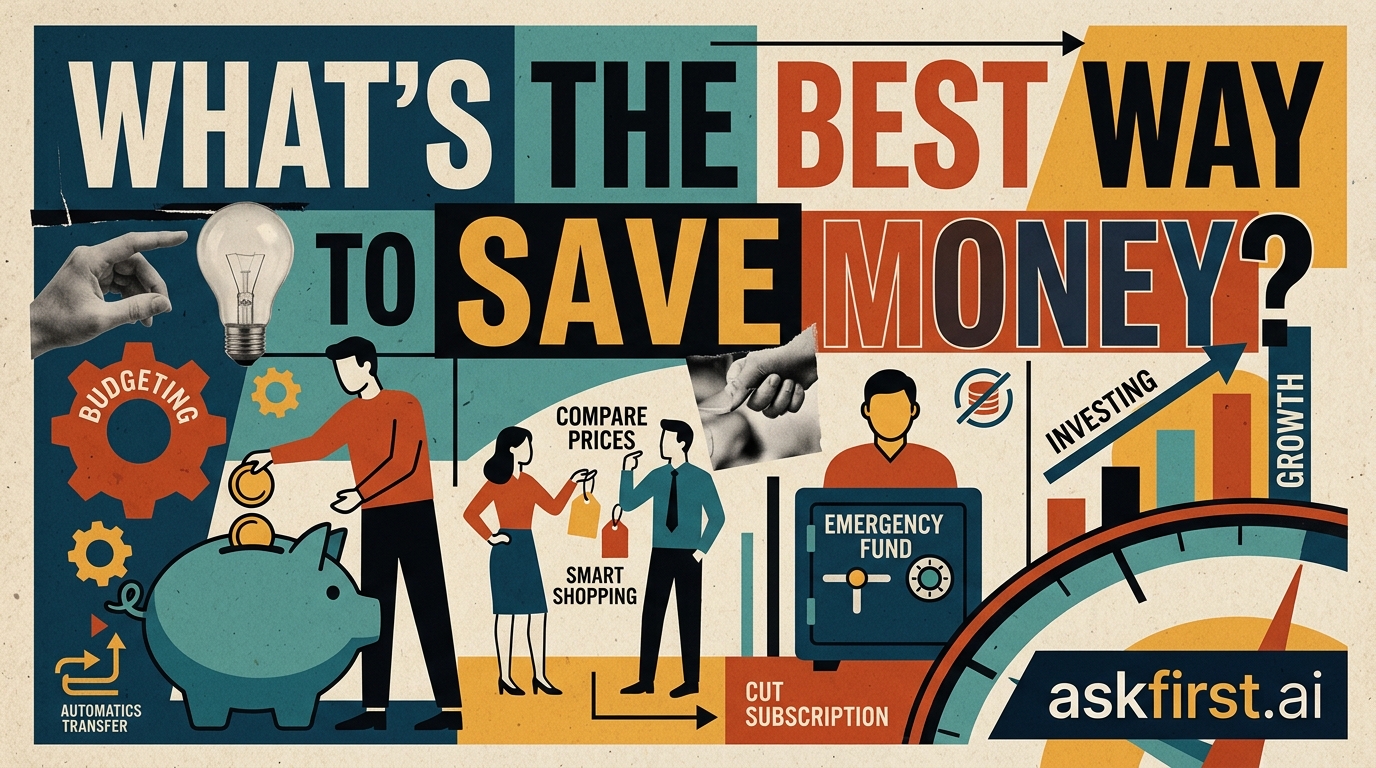
Saving money is not merely a matter of willpower or deprivation; it is a sophisticated exercise in behavioral psychology, financial systems engineering, and long-term strategic planning. To achieve genuine financial security, one must move beyond the amateur advice of "cutting out lattes" and instead adopt a holistic framework that addresses income, expenditure, and capital growth simultaneously.
The Foundation: The 50/30/20 Rule and Beyond
The most robust starting point for any financial strategy is the 50/30/20 rule, popularized by Senator Elizabeth Warren and Amelia Warren Tyagi in their seminal book, All Your Worth: The Ultimate Lifetime Money Plan. This framework suggests that 50% of your after-tax income should cover "needs" (housing, utilities, groceries), 30% should be allocated to "wants" (discretionary spending), and 20% must be dedicated to "savings and debt repayment."
However, in today’s volatile economic climate, static percentages often fail. A more advanced approach is to utilize "Zero-Based Budgeting," a method famously championed by financial expert Dave Ramsey in The Total Money Makeover. In this system, every single dollar of your monthly income is assigned a specific job before the month begins. If you earn $4,000, your expenses, savings, and investments must total exactly $4,000, leaving a balance of zero. This prevents "lifestyle creep," where spending rises in tandem with income.
Automating the Wealth-Building Engine
The greatest enemy of savings is human friction. If you rely on your own decision-making to transfer money to a savings account at the end of the month, you will inevitably fail. Behavioral economist Richard Thaler, in his book Nudge: Improving Decisions About Health, Wealth, and Happiness, argues that "choice architecture" is essential for success.
To implement this, you must automate your finances. Set up an automatic transfer that moves a fixed percentage of your paycheck directly into a high-yield savings account or an investment vehicle the moment it hits your bank account. By treating your savings as a non-negotiable "bill" that must be paid to your future self, you remove the emotional burden of choice. This is known as "paying yourself first," a concept highlighted by George S. Clason in the classic personal finance text, The Richest Man in Babylon.
The Psychology of Spending and the "Latte Factor"
While cutting small expenses is often mocked, the underlying principle—the "Latte Factor," coined by David Bach in The Automatic Millionaire—is about the power of compound interest. Bach demonstrates that small, recurring daily expenses, when invested at a 7-10% annual return over decades, equate to hundreds of thousands of dollars.
To master your spending, you must conduct a "Financial Audit." Print your bank statements for the last three months and categorize every transaction. You will likely find "leaks"—subscriptions you don't use, recurring fees, and impulsive micro-transactions. Use the "24-hour rule" for non-essential purchases: if you want to buy something over $50, wait 24 hours. This cooling-off period allows the prefrontal cortex to regain control from the impulsive amygdala, often leading to the realization that the item is unnecessary.
Strategic Debt Management
Saving money is impossible if you are leaking capital through high-interest debt. The "Debt Avalanche" method is mathematically superior to any other strategy. According to research from the Kellogg School of Management, focusing on the debt with the highest interest rate first (the Avalanche) saves the most money over time. Conversely, the "Debt Snowball" method (paying off the smallest balance first) provides psychological momentum.
Regardless of the method, the goal is to eliminate high-interest liabilities, such as credit card debt, which often carries an Annual Percentage Rate (APR) exceeding 20%. In his book I Will Teach You to Be Rich, Ramit Sethi emphasizes that you should negotiate lower interest rates with your providers and automate your debt payments to avoid late fees, which are essentially "taxes" on disorganization.
Investing: The Final Frontier of Saving
True saving is not hoarding cash in a low-interest checking account; it is the strategic allocation of capital into assets that grow faster than inflation. Inflation, as tracked by the Bureau of Labor Statistics (BLS) and discussed extensively by economist Thomas Sowell in Basic Economics, acts as a silent tax on cash. To preserve wealth, you must invest in low-cost, diversified index funds, such as those tracking the S&P 500 or the total stock market.
By utilizing tax-advantaged accounts like a 401(k) or an Individual Retirement Account (IRA), you leverage the power of tax deferral and, in the case of a Roth IRA, tax-free growth. As John Bogle, the founder of The Vanguard Group and author of The Little Book of Common Sense Investing, famously argued, the cost of investment fees is the primary destroyer of long-term returns. Stick to low-expense ratio index funds to ensure your savings work for you, not for your broker.
Conclusion
Saving money is a multifaceted discipline that requires automating your systems, auditing your psychology, and investing in high-growth assets. It is not about living a life of scarcity; it is about prioritizing your future freedom over momentary impulses. By adopting the methods of Clason, Bach, and Bogle, and maintaining a rigorous, zero-based approach to your cash flow, you transition from a passive consumer to an active architect of your own financial destiny. Start today by automating your savings, and let the mathematics of compound interest handle the rest.