The Psychology of Human Adaptation: Routine vs. Change
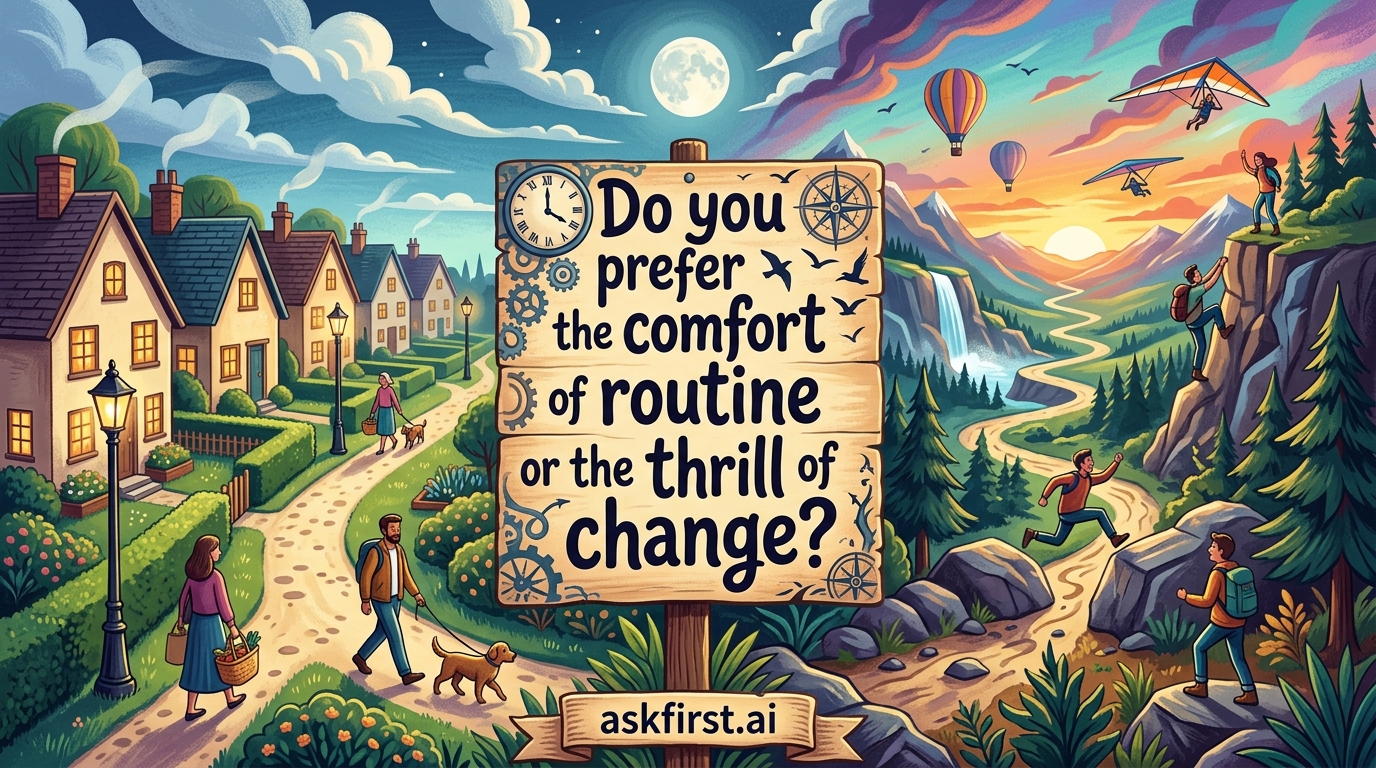
Human behavior is governed by a perpetual internal tug-of-war between the safety of predictability and the expansion found in novelty. This conflict, rooted in evolutionary biology and neurological wiring, defines how individuals approach career paths, personal growth, and societal advancement. Understanding these dynamics is essential for mastering the art of life satisfaction.
The Neurobiology of Routine: Seeking the Safety of Predictability
From an evolutionary standpoint, routine acts as a protective shield. The brain consumes approximately 20% of the body’s energy, and constant decision-making is metabolically expensive. By automating behaviors through habits and routines, the brain conserves glucose and oxygen, allowing for optimal performance in high-stress situations. This is known as the "economy of cognition."
- Efficiency and Flow: Routine allows for the "flow state," where individuals perform complex tasks with minimal conscious effort.
- Lowered Cortisol: Predictability signals to the amygdala that the environment is secure, keeping stress hormones at bay.
- Mastery: According to K. Anders Ericsson’s research on expertise, mastery is impossible without the disciplined repetition of core routines.
The Allure of Novelty: Dopamine and the Expansion of Self
Conversely, the human brain is hardwired to seek new stimuli. The dopaminergic system, often misunderstood as a simple "pleasure center," functions more as a "seeking mechanism." Novelty triggers the release of dopamine, which encourages exploration and information gathering. This drive for change is the engine behind human discovery and technological innovation.
- Neuroplasticity: Engaging with the unknown forces the brain to form new neural pathways, preserving cognitive flexibility well into old age.
- Growth Mindset: Carol Dweck’s research indicates that embracing change—or "growth"—is the primary predictor of long-term success over those who remain static.
- The Curiosity Gap: Humans are naturally drawn to what they do not know, as a means to resolve uncertainty and expand their mastery of the environment.
The Strategic Synthesis: Finding Balance
Successful individuals do not choose one over the other; they employ a strategic alternation between routine and change. This duality is often referred to as "Exploration versus Exploitation" in behavioral economics.
1. Exploiting the Known (Routine)
This phase involves optimizing existing skills and establishing high-performance habits. It is the time for production, execution, and deep work. Without exploitation, an individual never achieves a high level of competency.
2. Exploring the Unknown (Change)
This phase involves experimentation, risk-taking, and learning new skills. It prevents stagnation and "mental calcification." Without exploration, an individual risks obsolescence in a shifting world.
Practical Frameworks for Implementation
To balance these forces, consider these professional strategies:
- The 80/20 Habit Rule: Dedicate 80% of the day to high-performance, proven routines to secure baseline progress. Use the remaining 20% to experiment with new methodologies, technologies, or environments.
- Controlled Novelty: Introduce small, low-stakes changes into daily routines. Changing a commuting path or learning a new tool can provide the psychological "thrill" of change without destabilizing the foundation of work.
- The Sunk Cost Audit: Periodically review which routines remain useful and which have become "mental prisons." If a routine no longer produces an optimal result, it is time to disrupt it.
Conclusion: The Dynamic Stability
True mastery is not the absence of change, nor is it the total abandonment of routine. It is the practice of Dynamic Stability—the ability to maintain a strong, productive core while remaining fluid enough to adapt to the external environment.
By viewing routine as a tool for efficiency rather than a cage, and viewing change as an opportunity for evolution rather than a threat to safety, individuals can unlock a sustainable trajectory of excellence. The most effective way to navigate the future is to build a foundation that is robust enough to handle change, yet flexible enough to benefit from it. Emphasizing this balance is the hallmark of those who not only survive the tides of time but thrive amidst them.