The Intersection of Logic and Love
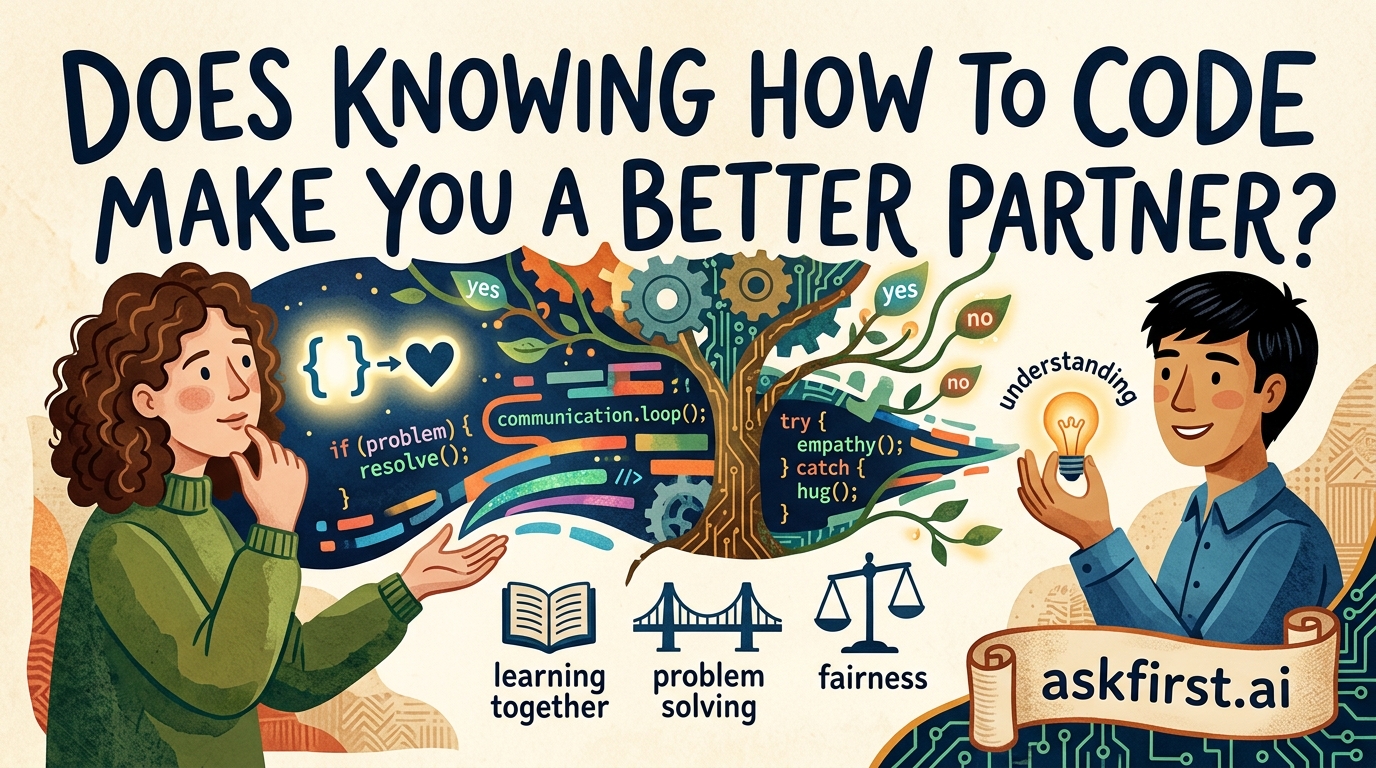
There exists a long-standing myth that software development and interpersonal intimacy occupy entirely different, and perhaps conflicting, realms of the human experience. However, an analysis of the cognitive skills developed through programming—such as systems thinking, patience, and iterative problem-solving—reveals that knowing how to code can significantly enhance one’s capacity for emotional intelligence and relational stability. This phenomenon is rooted in the transferability of structured cognitive habits from the machine to the heart.
The Art of Iterative Communication
One of the most valuable lessons extracted from the world of software development is the concept of the iteration loop. In coding, a developer rarely writes perfect code on the first attempt. Instead, code is written, tested, debugged, and refined. When applied to romantic relationships, this mindset shifts the perspective on conflict. Instead of viewing a disagreement as a terminal system failure, a coder-minded individual is more likely to view it as a 'bug' in the communication process that requires debugging. This prevents the personalization of conflict and encourages a collaborative approach where both partners work together to optimize their dynamic. By adopting an iterative mindset, partners move from 'you are the problem' to 'how can we refactor our communication for better performance?'
Cognitive Empathy and Documentation
Software development is fundamentally an act of communication—specifically, writing instructions that others (or future versions of oneself) can understand. The documentation process requires a high level of cognitive empathy: the ability to step outside one's own internal logic to anticipate how an external user will interpret an interface. In a relationship, this translates into a heightened ability to see a partner's perspective. The mental framework used to write clean, readable code requires identifying ambiguity and clarifying intent. When a person practices this daily, they are more adept at articulating their own needs clearly and interpreting the non-verbal cues and underlying messages of a partner. It fosters a space where 'comments'—or open, vulnerable discussions—become standard protocol rather than an afterthought.
Debugging Emotional Latency
Every relationship faces moments of 'latency'—periods of distance or misunderstanding. The analytical rigor required to track down a complex technical bug often involves trace logs, variable monitoring, and hypothesis testing. Applying this systematic approach to relationship health can be transformative. Rather than reacting to an emotional 'error' with immediate frustration, the partner who understands logic is more likely to engage in root cause analysis. This might involve asking questions like, 'Is this irritability caused by lack of sleep, or an unmet need?' This approach moves beyond surface-level symptoms to address the deeper structural issues, ultimately leading to more robust and long-lasting connection.
The Scalability of Patience
Programming is notoriously fraught with 'heisenbugs'—errors that disappear when you look at them or are incredibly difficult to replicate. This profession inevitably instills a profound sense of patience and the acceptance that some things take time, focus, and a methodical approach to resolve. This patience is a superpower in a romantic partnership. Knowing that even the most complex system can be optimized given enough time and testing allows a partner to remain calm during turbulent times. It replaces impulsivity with thoughtful consideration, fostering a secure attachment style where the partner feels safe knowing that their relationship is being 'maintained' with intention and care.
Avoiding the 'Single Point of Failure' Myth
In system architecture, the 'single point of failure' is a design flaw that must be mitigated through redundancy and decentralization. Many relationship breakdowns occur because the partners have placed too much pressure on one single source of validation or support. A coder recognizes the inherent risk in such architectures. By understanding the value of a balanced life—having personal hobbies, social networks, and intellectual outlets—a programmer is more likely to advocate for individual independence within the partnership. This creates a healthy 'decentralized' relationship where both partners thrive as individuals, thereby strengthening the central connection between them.
Final Synthesis: Complexity as a Feature
Ultimately, viewing a relationship as a dynamic system rather than a static state changes everything. It acknowledges that human interaction is complex and requires constant maintenance, updates, and occasional 'refactoring.' The skills acquired through coding are not merely technical; they are deeply humanistic tools for navigation. Whether it is through the practice of active listening, the commitment to transparent documentation of needs, or the resilience developed through years of debugging, the software-minded partner brings a unique toolkit to the table. They understand that perfection is a myth, but optimization is a lifelong, rewarding journey that makes the partnership more robust, more responsive, and undeniably better.