The Case for Strategic Idleness: Normalizing the "Unproductive" Pause
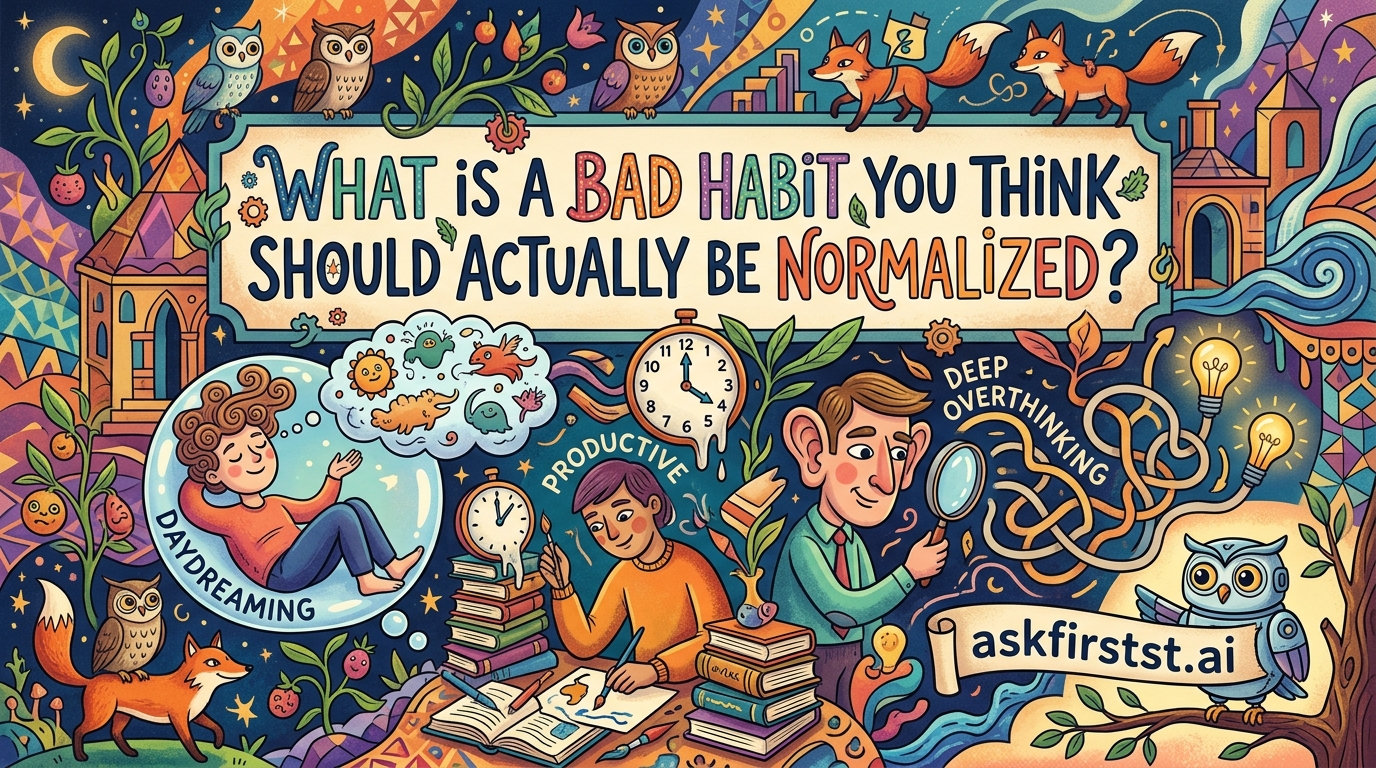
In our hyper-accelerated culture, we are conditioned to view every waking moment as a commodity to be optimized. We track our sleep cycles, gamify our fitness routines, and treat leisure time as a precursor to "recharging" so we can return to the grind more efficiently. However, there is one habit that is consistently labeled as a vice or a personal failing, yet is fundamentally essential for human cognitive health: Strategic Idleness, or what the Italians call il dolce far niente—the sweetness of doing nothing.
While modern society treats "doing nothing" as synonymous with laziness or lack of ambition, it is actually a vital neurological necessity. Normalizing the act of purposeful, non-productive stillness is not an invitation to apathy; it is a reclamation of the human capacity for deep thought.
The Neurology of the "Default Mode Network"
The primary scientific argument for normalizing idleness lies in the Default Mode Network (DMN). Neuroscientist Marcus Raichle, who pioneered research into this brain region at Washington University in St. Louis, discovered that when we stop focusing on a specific task, our brains do not turn off. Instead, they activate a complex, interconnected web of regions associated with memory, imagination, and self-reflection.
When you are staring out a window, walking without a podcast, or simply sitting on a park bench, your DMN is at its most active. It is during these periods of "idleness" that the brain consolidates memories, synthesizes disparate pieces of information, and solves complex problems that remained stagnant while you were actively "working." By labeling this habit as "bad," we are effectively stifling the very biological mechanism responsible for our most creative breakthroughs.
Breaking the Cult of Productivity
In his seminal work Digital Minimalism, Cal Newport argues that the modern obsession with constant connectivity has eroded our ability to engage in "solitude deprivation." We are terrified of being alone with our thoughts, filling every gap—waiting in line, riding the subway, or sitting in a car—with a steady stream of digital input.
Normalizing the habit of "doing nothing" means normalizing the act of unplugging. Consider the example of the legendary physicist Richard Feynman, who was known to frequent strip clubs or sit in diners for hours with nothing but a notebook, simply to let his mind wander. He wasn't "wasting time"; he was allowing his subconscious to chew on the quantum mechanics problems that eventually earned him a Nobel Prize. If we normalize the idea that staring at a wall is a legitimate professional activity, we create space for the kind of profound insight that "hustle culture" actively destroys.
The Social Stigma of Stillness
The reason we struggle to normalize idleness is the pervasive Protestant Work Ethic, which equates movement and output with moral virtue. We feel guilty if we aren't "productive." This guilt is a social construct, not a biological reality.
To normalize this, we must look at concrete ways to integrate stillness into our daily lives:
- The "Gap" Practice: Instead of reaching for your phone the moment you have a spare three minutes, commit to doing absolutely nothing. Observe the environment, notice the temperature, or simply observe your own breathing.
- Non-Goal Oriented Walking: Take walks without a destination or a podcast. Rebecca Solnit, in her book Wanderlust: A History of Walking, illustrates how the act of walking is intrinsically linked to the act of thinking. By removing the "exercise" or "productivity" goal from the walk, you allow your brain to enter a flow state.
- The "Do Nothing" Meeting: In some innovative corporate cultures, leaders are beginning to schedule 15-minute windows where no talking is allowed. This is a radical, yet necessary, step toward normalizing the idea that quiet reflection is a core component of high-level output.
The Cost of Perpetual Motion
When we fail to normalize idleness, we pay a heavy price in the form of burnout and cognitive fatigue. Author and organizational psychologist Adam Grant has written extensively on how the lack of "white space" in our calendars prevents us from thinking clearly about our long-term trajectories. We become reactive rather than proactive. We are so busy "doing" that we lose the ability to determine if what we are doing is actually worth the effort.
By normalizing the habit of intentional stillness, we aren't advocating for a lack of goals. We are advocating for a higher quality of execution. Just as a forest requires a fallow season to regenerate the soil for the next planting, the human mind requires periods of non-productive stillness to maintain its sharpness.
Conclusion
Normalizing the habit of "doing nothing" is an act of rebellion against a system that profits from our constant distraction. Whether it is taking a moment to stare at the horizon or allowing yourself an afternoon where no tasks are completed, these actions are not signs of weakness. They are the essential maintenance required for a high-functioning, creative, and healthy human life. If we want to cultivate a society of innovators and deep thinkers, we must stop shaming the pause and start viewing the "unproductive" moment as the most important part of our day. It is time to treat idleness not as a bad habit, but as the foundation of our best work.