The Art of Cultivating Generosity: Guiding Preschoolers Toward Natural Sharing
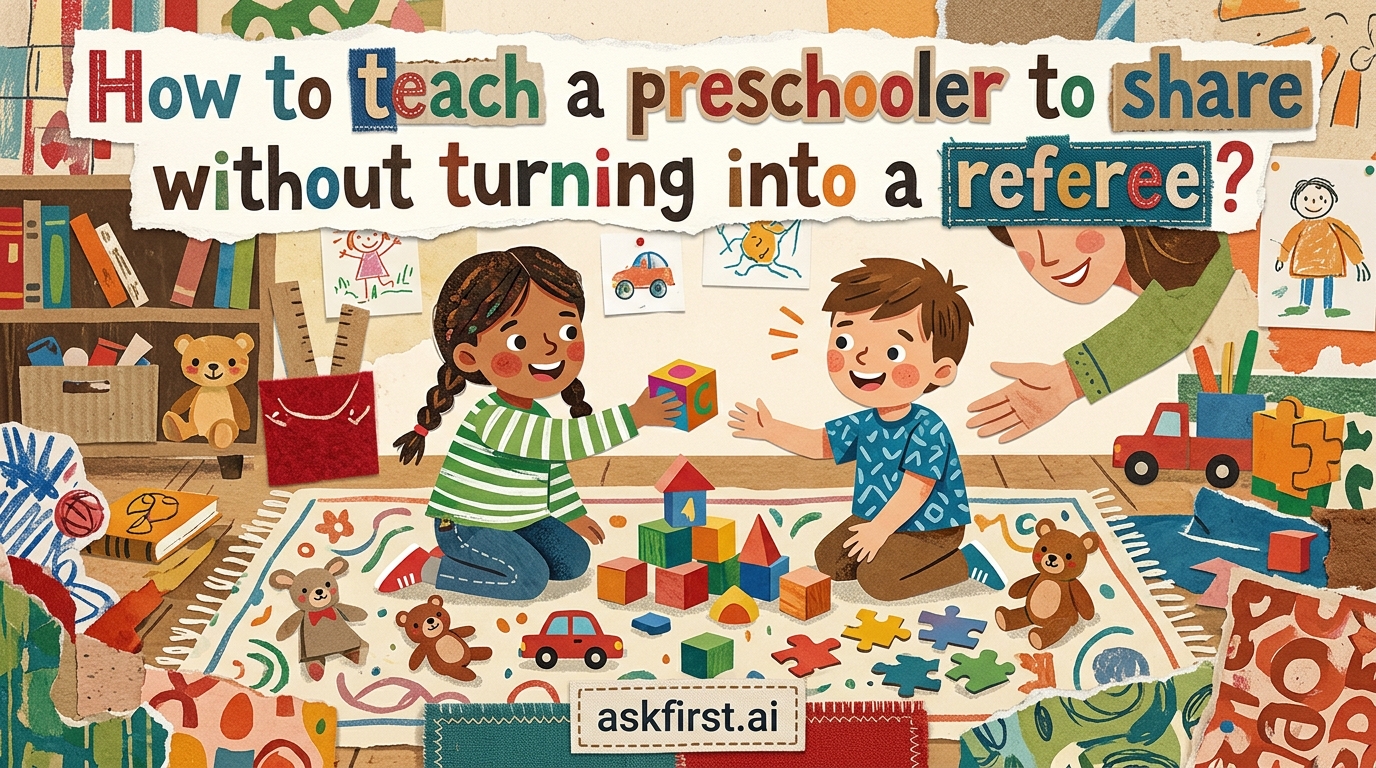
Teaching a preschooler to share is often one of the most exhausting hurdles for parents. We frequently find ourselves hovering over the sandbox like high-stakes referees, blowing the whistle every time a toy is snatched or a tantrum erupts. However, the goal of early childhood development is not to force compliance through constant intervention, but to foster an internal sense of empathy and social competence. By shifting our role from "referee" to "facilitator," we can create an environment where sharing becomes a natural expression of social intelligence rather than a begrudging act of obedience.
Understanding the Developmental Reality
To stop refereeing, one must first accept a hard truth: young children are inherently egocentric. According to Jean Piaget’s theory of cognitive development, as detailed in his seminal work The Psychology of the Child, preschoolers are still developing the ability to see the world from another person’s perspective. Their possessiveness is not "selfishness" in the adult sense; it is a manifestation of their need for security and their limited understanding of time and social dynamics.
When we force a child to "share" by ripping a toy out of their hands to give to a peer, we inadvertently teach them that their possessions are insecure and that the adult is an unpredictable authority figure. Instead, we must move toward a model that respects the child's autonomy while teaching the value of turn-taking.
Strategy 1: The "Turn-Taking" Paradigm Shift
The word "sharing" is often too abstract for a three-year-old. It implies a permanent loss of an item. Instead, replace the concept of sharing with "taking turns." This provides the child with a sense of security—they know they will get the item back.
- Implement a Timer: Use a visual timer or a simple sand clock. When a child is playing with a popular toy, explain: "You can play with the truck for five minutes. When the timer goes off, it will be Leo’s turn."
- The Power of Anticipation: By setting a clear boundary, you remove the element of surprise. The child understands the rules of engagement, and you no longer need to intervene emotionally. You simply point to the timer as the ultimate authority.
Strategy 2: Modeling and Narrative Observation
Children are prolific mimics. They observe how adults share resources, space, and time. If you constantly hoard your own belongings or struggle to yield in traffic, your child will notice.
In How to Talk So Kids Will Listen & Listen So Kids Will Talk by Adele Faber and Elaine Mazlish, the authors emphasize the importance of "narrating the positive." Instead of pointing out the child’s failure to share, narrate the social interaction as it happens. If you see your child hand a block to a friend, say, "I noticed you gave that block to Sarah. That helped her finish her tower." This positive reinforcement builds the child's identity as a "giver" rather than a "taker."
Strategy 3: The "Wait and See" Approach
One of the greatest mistakes parents make is intervening the moment a disagreement begins. In the book Simplicity Parenting by Kim John Payne, the author argues that children need space to resolve their own conflicts.
If two children are fighting over a shovel, stay back. Watch their body language. Often, children will negotiate a trade—a truck for a shovel—if the adult does not immediately jump in to mediate. If the situation escalates to hitting, step in calmly, not as a judge, but as a guide: "I see two children who both want this toy. We have a problem. How can we solve this?" By asking the children to participate in the solution, you move the responsibility from your shoulders to theirs.
Strategy 4: Managing "High-Value" Items
Not all toys are created equal. Every child has a "lovey," a special car, or a blanket that represents deep emotional security. Forcing a child to share these items is counterproductive and can cause significant anxiety.
- The "Special Box": Before a playdate, ask your child to pick three toys they are not ready to share. Put these in a special box out of sight. Everything else in the room is considered "shared toys." This gives the child a sense of control and makes the sharing of the remaining toys much easier, as they feel their boundaries were respected.
Cultivating Long-Term Empathy
The goal of these strategies is to move away from the "referee" dynamic and toward a "coaching" dynamic. When you stop acting as the judge and jury, you empower your child to navigate social landscapes independently. You are not just teaching them to hand over a toy; you are teaching them to negotiate, to wait, and to understand the needs of others.
Sharing is a milestone of social maturity, not a personality trait that can be demanded. By providing structure, modeling patience, and allowing children the space to solve their own minor disputes, you facilitate a natural progression toward generosity. Over time, you will find that the referee whistle is no longer needed—because the children have learned the rules of the game themselves.