The Cognitive Edge: Sleep as a Strategic Asset
In the high-stakes world of entrepreneurship and executive leadership, the narrative of 'hustle culture'—the belief that working eighty hours a week is the sole path to success—has been systematically dismantled by cognitive science. High achievers no longer view sleep as a luxury or a sign of weakness. Instead, they treat it as a foundational performance enhancer, recognizing that the brain is a biological engine that requires restorative downtime to maintain peak executive function. When professional success depends on complex decision-making, emotional intelligence, and creative problem-solving, sleep deprivation is not an asset; it is a profound professional liability.
The Neurobiology of Optimization
Scientific research consistently demonstrates that the brain undergoes critical housekeeping during the REM and deep-sleep cycles. During these phases, the glymphatic system clears out metabolic waste products that accumulate during waking hours. This process is essential for preventing the 'brain fog' that hampers analytical thinking.
- Consolidation of Knowledge: During sleep, the hippocampus processes information gathered throughout the day, effectively shifting it into long-term storage. Without adequate rest, this synaptic consolidation is interrupted, leading to diminished memory retention.
- Prefrontal Cortex Integrity: The prefrontal cortex, the area of the brain responsible for impulse control, focus, and strategic planning, is the first region to suffer from sleep deprivation. Research by Dr. Matthew Walker, a preeminent sleep scientist, indicates that even mild sleep debt can impair cognitive processing to a level comparable to clinical intoxication.
Strategic Decision-Making and Emotional Intelligence
Successful leaders operate in environments that demand rapid, high-stakes decisions. Sleep-deprived individuals struggle to accurately assess risk, often defaulting to aggressive or impulsive choices that lack long-term foresight. Furthermore, emotional regulation—a cornerstone of effective leadership—is severely compromised without rest. When an individual is well-rested, the amygdala (the brain's emotional center) communicates effectively with the prefrontal cortex. Lack of sleep creates a disconnection, making individuals more prone to reactive, temperamental, or erratic outbursts, which erode professional trust and team culture.
The Myth of the 'Super-Human' Hustler
Many emerging professionals fall into the trap of believing they can 'train' themselves to require less sleep. This is a physiological fallacy. Genetic mutations, such as those related to the DEC2 gene, allow a tiny fraction of the global population to thrive on shorter rest, but this is statistically insignificant for the general workforce.
The Reality of Diminishing Returns:
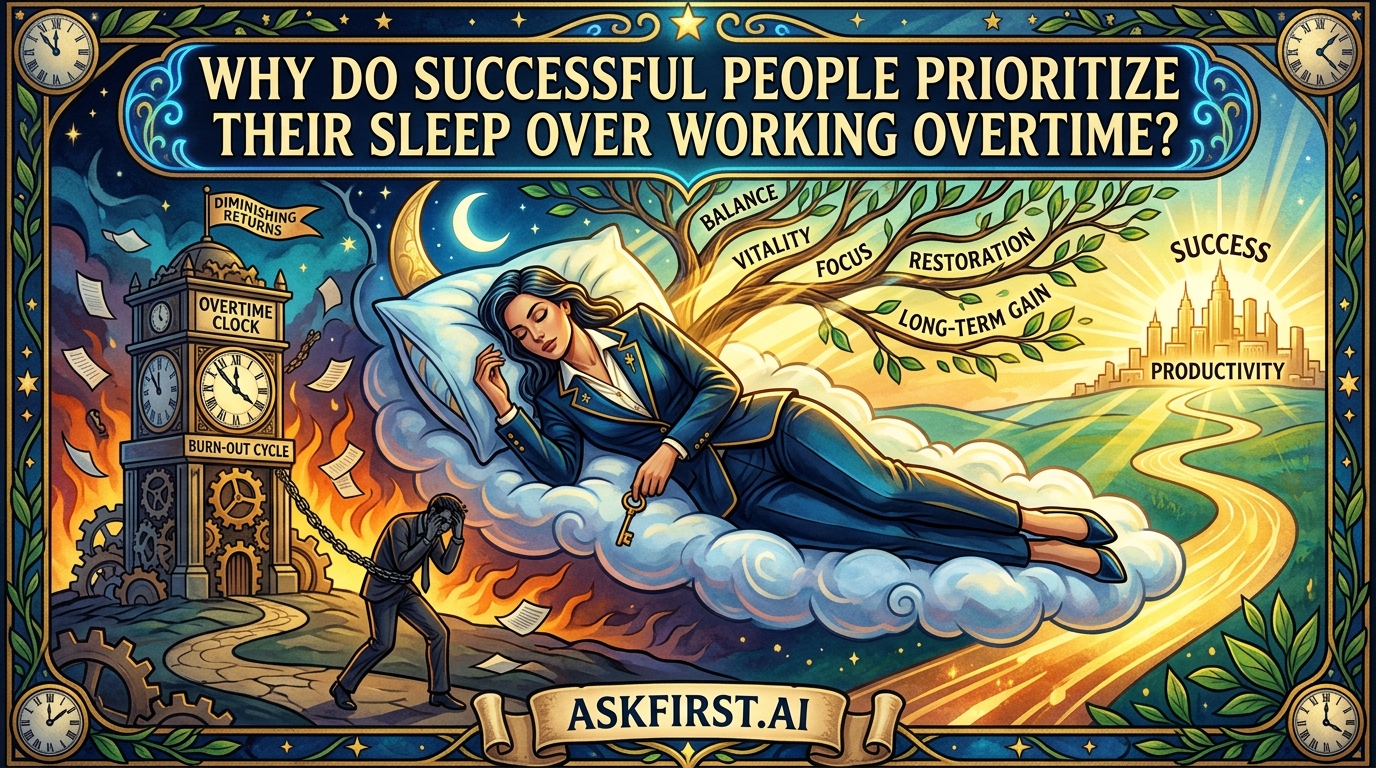
Working an extra three hours of overtime often yields lower quality output than the same amount of time spent refreshed the following morning. It is a classic case of diminishing returns: the physical body and cognitive hardware degrade as the clock ticks into the late night, leading to an increased probability of errors that require subsequent rework. Successful people realize that three hours of high-intensity, laser-focused work at 9:00 AM is objectively more valuable than six hours of fatigued, repetitive task-completion at 11:00 PM.
Building a High-Performance Lifestyle
To adopt this mindset, high-performance individuals implement specific structural changes in their professional lives:
- Strict Boundary Setting: Protecting the sleep window is a non-negotiable professional boundary. By prioritizing 7-9 hours of rest, they ensure the machine is ready for the day's challenges.
- Productivity over Hours: They track output quality rather than time spent at a desk. By shifting focus to results, they eliminate the need for the late-night performance theater often seen in corporate environments.
- Cyclical Energy Management: Rather than pushing through exhaustion, successful individuals use downtime to recharge. This creates a sustainable, repeatable pattern of excellence rather than a 'burn-and-crash' trajectory.
Conclusion: The Longevity Dividend
Success is rarely defined by a single sprint; it is defined by the ability to operate at a high level consistently over decades. Working overtime at the expense of sleep invites chronic stress and systemic inflammation, both of which are documented precursors to long-term health decline. By choosing sleep, successful people aren't choosing to do less; they are choosing to do more with their mental energy, effectively 'buying' clarity, creativity, and longevity. In the final analysis, prioritizing sleep is not about laziness. It is about maximizing the return on investment (ROI) of every waking hour. To win the game of professional excellence, one must first ensure that the internal instrument is perfectly tuned.